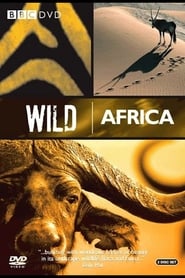
Wild Africa
دانلود زیرنویس English
هماهنگ با نسخههای زیر
برچسبها
پیشنمایش زیرنویس English
نخستین 186 خط.
From out at sea the ancient sailors could smell the approaching land,
the scent of rivers and swamps.
...but Africa was already beneath them.
The oceans are vital to Africa.
...They control the destiny of the land...
allowing wildlife to thrive in the most unexpected places.
This is a story of living on the edge.
An epic journey along Africa's greatest frontier.
Africa is an island...
washed by warm and cold seas...
Nowhere is the contrast more extreme than at its southern tip.
This is the Cape of Good Hope,
where Africa faces the Antarctic.
Here are animals few would associate with warm Africa...
...like penguins... and fur seals.
Life thrives in these icy waters...
rich in nutrients... rising from the deep.
Sardines feast on the prolific plankton...
In turn these shoals support hunters from the sky.
Every year nearly 200,000 gannets gather off the coast of South Africa
to raise their young.
The chicks are about to learn to fend for themselves,
after months of being fattened on the plentiful fish.
Now they must take the first step to independence.
But they face a huge challenge...
making their maiden flight on Africa's stormiest coast.
So they join other trainees in "flying schools"...
tip-toeing on the cusp of flight...
...revving up into the wind... building muscles...
Making the first flight isn't easy...
...many are overwhelmed by the raw power of the ocean...
This wasn't the plan...
being thrown in at the deep end.
Here at sea level it's harder to take off...
the wind is around and above them... not beneath them.
...but the rough sea is the very least of their problems...
Fur seals are clever predators.
Normally fish-eaters,
they've learned to seize this rare feast...
But soon the chicks are soaring above the jaws of danger.
These southern waters teem with life...
and they also provide for the land.
Cold, damp air, rising off the ocean, flows across the Cape.
Here at the end of Africa the influence of the ocean causes unlikely encounters.
Ostriches. Birds who can survive the hottest deserts relish the cool breeze...
and a refreshing paddle.
But the sea provides much more than this...
...for those in the know.
In summer Chacma baboons struggle to find enough food on land.
They've learned to keep an eye on the sea.
Baboons know that at low water there are riches among the rocks.
Exposed by the retreating tide, a favourite prize... limpets.
With their strong canines and dextrous thumbs the baboons
can harvest this protein-rich seafood meal.
But on a very low tide,
baboons have discovered there's an even
better meal to be had -right at the water's edge
concealed among the weed.
A shark egg!
The eggs, hidden in their purses,
should be safely camouflaged here...
were it not for this keen-eyed and intelligent primate.
Monkeys eating sharks...
who would have thought it possible?
This delicacy is a rare treat...
only available at the turn of a spring tide.
The ocean is quick to reclaim its territory.
With the sea's return, great forests of kelp sway into life.
Kelp is the world's largest and fastest growing algae...
it thrives on nutrients churned up by these cold, rich waters.
Anchored firmly to the rocks,
kelp is built for heavy weather.
It's just as well...
these are the roaring southern seas.
Further east there is a new frontier where the waters are warmer...
...it's a mecca for surfers.
Bottle-nosed dolphins!
Southern Africa's coast has such magnificent variety
because it's the meeting place of two powerful currents:
A cold one and a warm one.
To the West, the cold Benguela current...
rising from the bottom of the Atlantic...
And from the East, the powerful Agulhas current...
a great warm river in the ocean sweeping down from the equator.
Here in East Africa, for over 30 million years,
the Indian Ocean has brought moisture to the land...
supporting thick swamps and forests.
From as far away as Portugal and China ships
came to these green shores
lured by the promise of trade and conquest.
They came riding on the monsoon winds.
Winds, which twice a year carry the promise of rain.
Far out on the Indian Ocean the tropical heat
causes sea water to evaporate and rise.
The clouds steadily build.
Strong easterly winds hurl them against the land
where they shed their load.
This belt of coastal forest nurtures animals
found nowhere else in the world...
Like the Zanzibar red colobus.
These treetop monkeys are specialist leaf-eaters,
able to digest a whole range of plants.
Though they spend most of their time high in the canopy,
red colobus sometimes venture into a very different world...
Here on the margins of the Indian ocean is a mysterious forest
with its roots in sea water.
The mangrove swamp.
Mangroves are pioneers from the land, gradually encroaching on the sea.
They can survive being submerged in salt water
at high tide and being blasted by the sun at low tide...
...they also provide a feast for sea creatures... Crabs...
the most successful invaders...
Soldier crabs emerge on the falling tide
to harvest microscopic algae from the rich mud...
Other crabs specialise in leaf-eating.
Fallen leaves feed most of the mangroves' inhabitants,
but competition is fierce.
And if you don't want to wait around for your leaf to fall,
you need to be bold and go to the source of this bounty...
...which is what the climbing crabs of East Africa do twice a day... everyday!
At dawn, before the sun is too hot, the crabs start climbing.
In human terms it's the equivalent of scaling a thousand metre cliff.
But it's worth it.
Once on top,
the crabs can munch away to their hearts' content...
scratching on the underside of tender young leaves.
Up here they are not alone...
red colobus also like young mangrove leaves...
With the heat of the day now rising...
the colobus rest and digest,
but the crabs can't afford a siesta:
They might die of dehydration.
Still dependent on the sea for moisture, they're only visitors to the canopy.
Nesting in amongst the roots of the mangroves,
a strange creature...
The mudskipper.
Not so much a fish - but "half a fish".
Mudskippers fear the water... for it's full of predators...
so when the tide floods in it's time to take drastic action.
These fish can even climb trees and breathe out of water...
perfectly suited to this strange frontier of land and sea.
...On this coast of pioneers, people are the most recent...
From here the early Arabs traded in slaves,
precious metal and spices.
For more than 2000 years
humans have exploited the reversal of the monsoon winds.
For six months they blow north... then they turn south...
ferrying traders and fishermen up and down the coast.
North of the tropics is a land of burning shores.
Around the Horn of Africa is a sea trapped between Africa and Arabia,
a small turquoise jewel separating desert from desert...
the Red Sea.
This enclosed sea gets hardly any rain...
and evaporation is intense in the dry heat.
Its waters can only refill from the Indian ocean,
rushing through a narrow passage...
a place of powerful currents.
Here in the Bab el Mendeb strait,
life has adapted to the racing current.
Soft corals and weeds bend with the flow...
Red-toothed trigger fish are streamlined,
intercepting plankton as it flushes past.
And through the narrow straits come ghostly invaders from the Indian ocean...
Devil Rays!
In the heart of the Red Sea, in calmer water,
chevron barracuda can relax.
Hunters by night,
this great barrel of silver is a resting formation.
The Red Sea waters are crystal clear.
On this desert coast there's no silting from rivers...
it's warm water... full of light...
...perfect conditions for the growth of coral
and the empire of colour it supports...
...like the Leopard moray...
...fluorescent coral...
the clown fish and its anemone.
Every year the monsoon winds turn this Bay in Sudan
into a great plankton trap.
Manta Rays - giant filter feeders gather from miles around,
forming long chains...
By swimming in formation...
like a flock of birds,
with each slightly to the side of the one in front,
the mantas can best filter the water...
The leaders peel away and join the back of the queue in a circle of feeding.
The manta is one of the largest living fish
Wild Africa subtitles in other languages
More English subtitles for Wild Africa
- NL PAL DVD9 · 44 downloads · 2020-12-07
- Part 6of6 Lakes and Rivers Xvid AC3 www mvgroup org ENG · 16 downloads · 2007-08-26
- Part 3of6 Deserts Xvid AC3 www mvgroup org ENG · 15 downloads · 2007-08-26
- Part 5of6 Jungle Xvid AC3 www mvgroup org ENG · 19 downloads · 2007-08-26
- Part 2of6 Savannah Xvid AC3 www mvgroup org ENG · 18 downloads · 2007-08-26
- Part 1of6 Mountains Xvid AC3 www mvgroup org ENG · 13 downloads · 2007-08-26
- -=complete=- Xvid AC3 www mvgroup org ENG · 20 downloads · 2007-08-26
نظرات
No comments yet. Be the first to leave one.