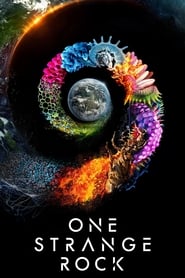
One Strange Rock
دانلود زیرنویس English
هماهنگ با نسخههای زیر
برچسبها
پیشنمایش زیرنویس English
نخستین 200 خط.
I am gonna tell you about the most incredible place.
We think we know our home, but once you've seen it from space it hits you.
It might be the weirdest place in the whole universe.
Eight astronauts, with over a thousand days in space between them,
can tell us how being up there helped them to truly understand
what goes on down here.
I've been a stargazer ever since I was a kid.
My grandmother even gave me a compass to make it easier to find the North Star.
I love looking out into space and imagining are there other worlds out there?
Is anything living on them?
You know, every day you're finding a new planetary system that
looks pretty similar to Earth.
The possibilities of life somewhere else other than Earth I think are very high.
I like to think that, that there's other life out there.
If there is life out there what would it be like?
Could we talk to it?
I mean, is it gonna wanna fight?
Or will it like romantic movies?
Is there anything out there like you and me?
To find out, we can't just look into space, we also need to look down here.
I'm gonna tell you how clues to alien life are hidden on our strange rock.
Mae Jemison was the first African American woman in space.
But Earth's orbit was not enough for her, she's now head of a star ship initiative,
its 100 year mission to boldly go where no one has gone before.
Growing up, science fiction was my go-to storytelling.
As a little girl as I watched Star Trek , I was fascinated,
because science was one of the characters.
It was right in the middle of it.
And so my love for science really met an incredibly interesting vision.
I was fortunate enough to meet Nichelle Nichols who played Lieutenant Uhura
at a Star Trek convention.
She was really instrumental in the recruitment of some of the first women astronauts
and the first minority astronauts in the US Space Program.
I wasn't one of her recruits, but I'm really happy to say
that she's one of my best friends now.
You're an Andorian, huh?
Yes.
People are always asking me, "Will we find aliens on other worlds?"
And I know they really mean will we find Vulcans or Klingons?
Well, to know how likely that is, we really have to understand how we got diverse,
complex life on this planet.
Scientists believe that somewhere around four billion years ago
life emerged on Earth.
One might imagine that, once we get life out of this primordial soup,
the road to complex creatures like flowers and humans is pretty straightforward.
But hold on, it's not quite that easy.
There was no rule that life had to get bigger.
There was no rule that life had to become more complex.
Life could have stayed simple and small, but it didn't.
Today, we live in a planet inhabited by over eight million different species.
And for that to happen is so unlikely that it makes you wonder
if it could happen anywhere else.
As you look down at the Earth from space, you see the ocean,
the desert,
the grasslands,
you know that life exists in every one of those locations.
And the type of life that's there?
Well, that depends on what food is available.
The caves have no light source.
When you're away from the entrance it's as dark as dark things get.
The creatures that choose to live in a cave, they do it for a reason.
In a totally dark place any light is incredibly effective.
The glow worms glow when they are hungry.
The bugs have no idea.
They think, oh light, instinctively fly towards it.
All of a sudden, they're stuck.
The glow worm is a deceptive creature.
The more you know, the more you see, the more disgusting
and ferocious you realize these creatures are.
When the glow worm's got its bug, it will bite or puncture into the wall
of the insect and suck out the inside.
Surely it's a law of nature that life evolves to fit its surroundings.
If we find life on other planets it's likely that it was the best suited to prosper
in the conditions there, an extra-terrestrial Darwinian evolution, if you please.
As human beings, we are constantly asking questions.
Who am I?
Why are we here?
What is the meaning of existence?
Well, it turns out the big question for life is what are we having for dinner?
Food is energy, everything living needs it, and it's a big reason creatures live,
act and look the way they do.
The complexity of life here is staggering.
Just imagine how peculiar a camel might appear if you'd never seen one before.
You might think it was a creature from another planet
but its strange design makes perfect sense
for the way it gets and uses energy,
like its wide,
flat teeth for chewing tough plants.
Or its hump, a mound of fat, stored energy, that allows it to survive months in a harsh
environment without eating.
To sustain a complex creature like a camel requires vast amounts of energy.
Even something like a fly with millions of complex cells is breathtakingly complicated and
requires a steady flow of energy.
But even if you're a tiny microbe, smaller than a pinhead,
you still have energy demands.
When we think about life we usually think of the big stuff,
you know plants and animals, but the majority of life on Earth are small,
single-celled organisms.
Bacteria.
And they have evolved to eat almost anything.
So I think, yeah, you go down the King Mast and then you jump into the third hole.
Okay. Well, you know, I've done the checklist, I've got the comms ready.
So good luck.
This is one of the biggest graveyards of ships in the world.
Around 50 Japanese boats and over 250 aircraft were sunk here
by American forces during the Second World War.
Some were blown up with torpedoes,
others were bombed.
It might seem like useless junk now, but for some kinds of life it's a perfect home.
All that energy that was poured in to make the vessels of the war
is there waiting to be released.
Rusticles look like stalactites and they are part metal and part microbes.
Microbes extract the chemical energy from the metal, using it to grow and reproduce.
To us iron is just a metal, but for these microbes it's food.
The rusticle is crawling with billions of happy bacteria, all chomping on an
all-the-iron-you-can-eat underwater buffet.
The first creatures on Earth were microbes.
And in the future when all human life has gone,
bacteria will still be there doing their business.
I love my food but, I mean, I'm a little picky, and that's because I'm not a microbe.
They will eat anything, metal, rocks, oil, plastic,
even human flesh.
But having a big palate like that comes in handy.
Bacteria can survive up on mountain tops.
They can survive in deserts.
They're in the soil.
They're thousands of feet up in the atmosphere.
They're everywhere.
So it doesn't matter what a planet is made of or how poisonous its atmosphere.
Even if there is just a tiny bit of energy to extract,
simple microbes will work out a way to get it.
Out in the universe there, there's gotta be that stuff,
there's gotta be these single cell organisms that are living in environments that life
as we know it here on Earth could probably never tolerate.
Given an unlimited number of planets in an unlimited amount of time,
it's a little bit delusional to think that this is the only place
life could have ever evolved.
Maybe there are microbes on other planets, but there's a big leap between them
and something I can talk to.
Here on Earth, that leap couldn't have happened without a visitor from
93 million miles away.
Over the years, I've had many encounters with aliens and this may come
as a shock to you, but they weren't real.
But if Hollywood is right and there are aliens, they're gonna have needs
and it's gonna be all about energy.
Up to a point in Earth's history, energy came from heat, from volcanic vents,
from lightning strikes.
This energy was readily around.
But, as the Earth started to cool and to change, the weather changed.
A new source of energy was needed.
Some bacteria came up with a new mechanism, let's use the energy from the Sun,
which is readily available.
It was a really pivotal moment in the history of life on Earth.
On the space station, we have this vast array of solar cells that collect
and harness the solar energy from the Sun,
and we use this to run all the systems to sustain life.
If things don't work the way they're supposed to, that can get very tricky very fast.
When you look out the window you see these solar panels that extend the length
of a football field and these eight ginormous solar rays.
They would go from blue to gold to copper color.
Just beautiful.
So I'm out doing a spacewalk and one of the things you're worried about is
the solar panel, trying to maneuver my way around those solar panels and looking down
at plant Earth and the greenery down there and I realize, hey,
planet Earth is really one big solar panel also.
Plants have been converting solar energy and storing it effectively
for billions of years.
This biological magic trick means that, even when there is only
the faintest trickle of sunlight, plants can grow.
Photosynthesis, we've all heard about it, right?
But have you ever really considered what it means?
What plants do is eat sunlight, streaming from our sun 93 million miles away.
And they use it to make carbon dioxide into starch, granules of stored energy
which plants use to power their growth.
When I see a live plant, their green makes me know life is possible.
Plants make a place feel welcoming, like home.
Every leaf on every plant is like a tiny battery.
Photosynthesis from plants worldwide generate around 100 terawatts of power each year.
To put that into perspective, it's enough to match the energy demand of the modern
world nearly six times over.
Running a planet packed with life takes a lot of energy.
Kudos to the big ball of fire in the sky.
Plants dine out on it.
Once they started, they spread all over the world.
But those first plants were missing something,
which meant there was one place they couldn't go, up.
Bamboo can grow so high because it contains a molecule called lignin.
It's the bamboo's own internal scaffolding.
Lignin evolved around 400 million years ago and it changed the world.
It provides structural strength for plants and they get to grow tall.
From the outside, plants and trees are beautiful,
but it's the inside that reveals their dynamic, intricate structure.
These memorizing patterns are the storybook of its life.
Because of lignin plants have given our rock a solar-powered skin that harvests energy from
the cosmos, and that harvest supports almost all life here on Earth.
The truth is money doesn't make the world go around, energy does.
Plants store energy.
So, it didn't take long for something to evolve to take advantage.
When an animal eats a plant it gains the energy that a plant captured from sunlight.
Animals could not exist without plants.
One Strange Rock subtitles in other languages
More English subtitles for One Strange Rock
- One Strange Rock Season 1 Complete 720p HDTV x264 [i c] · 132 downloads · 2019-12-31
- One Strange Rock S01 720p AMZN WEBRip · 150 downloads · 2018-08-11
- One Strange Rock 2018 Complete 1080p AMZN WEB-DL DDP5 1 H 264-NTb · 179 downloads · 2018-06-02
- one strange rock s01e10 home 720p HDTV x264-DHD · 69 downloads · 2018-05-29
- one strange rock s01e09 awakening 480p webrip x264 rmteam · 48 downloads · 2018-05-22
- one strange rock s01e07 terraform 480p hdtv x264 rmteam · 108 downloads · 2018-05-08
- one strange rock s01e06 escape 480p web dl x264 rmteam · 107 downloads · 2018-05-03
- one strange rock s01e05 survival 480p webrip x264 rmteam · 116 downloads · 2018-04-25
نظرات
No comments yet. Be the first to leave one.