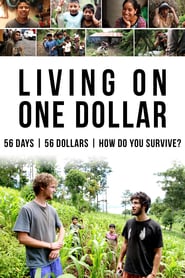
Living on One Dollar
دانلود زیرنویس English
هماهنگ با نسخههای زیر
برچسبها
پیشنمایش زیرنویس English
نخستین 200 خط.
>> You guys want to eat eggs? >> You got food?
Filming. My name is Chris, and I grew up just outside of New York City.
This is Zach, and he's a close friend of mine from Seattle. We've grown up with very
similar lives. These are the houses we were born in...
Our families... the awkward middle-school phase...
The sports we played... and these are the things we did for fun...
I met Zach during my first year at college, and we quickly became close friends.
Our lives are fast-paced, and these are the things that we're used to seeing every day.
[ Horns honking ]
This is chino. He is 12 years old and lives in a rural village in Guatemala.
He lives in extreme poverty, on less than one dollar a day. How can we begin to understand
what his life is like, about what it means to live every day with no clean water, little
food, and poor shelter? And just like chino, there are over 1.1 billion people around
the world that survive on one dollar a day. Zach and I study international
development in school, but there are some things that a textbook just can't answer.
So we're creating a plan to spend our summer living on only one dollar a day in a rural
Guatemalan village -- in chino's village.
Okay. Bye, mom. I love you. Muah!
I mean, I think it's just an amazing opportunity to learn for myself what it really means
to live under a dollar a day... which, coming from this reality, I can't really say I have any
idea.
I love you. >> I love you, too. >> I'll see you.
We're bringing along two filmmakers... And setting out to better
understand the reality of extreme poverty firsthand. Let's do this.
Hello!
[ Mid-tempo music plays ] We're beginning our journey in
Guatemala city with a six-hour ride on the back of a crowded chicken bus.
We are headed to the village of peña blanca that's representative of rural poverty
in many parts of the world. In these remote areas of Guatemala, 7 out of 10 people
live under the poverty line.
Is that -- are you hitting stuff there? >> Well, I think we've got a
boundary of, like, a big rock right here, so this might have to be our edge.
Sweet. >> Maybe it can be chipped away. >> Yeah.
It can.
Okay. >> Why is it going out like that?
You're pulling it too hard. >> Pulling it too hard? No.
Sadness. >> Right. We're getting everything...
Eight weeks of this is going to be pretty intense I'm not going to lie.
>> Oh, God.
I cannot believe it came together this is so one of those ideas
that we'd talk about and never do. Well we're here...
Audio recording. >> Filming, filming. >>
>> [ Chuckles ] >> Well...
>> We're here in the rural highlands, in the small village
of peña blanca. There are about 300 people living here, most of whom are
Mayan. >> Most of the people only spoke a Mayan dialect called
Kaqchikel, and it was impossible to learn.
We want to live as close as possible to the reality of poverty, so we're replicating a
few key aspects of it. Our budget for the trip is one dollar a day each, for 56
days. But instead of giving ourselves one dollar every day, we're
making our income unpredictable. This way, we do not know when
we'll get paid. We're doing this because many of our neighbors are employed
informally as day laborers or farmers, so they never know when they'll get paid or how
much they'll make. We're simulating this by taking our total budget of one dollar
a day each and splitting it into random numbers between zero and nine.
Then, every morning, we'll pick a number out of a hat. If we pick a nine, we make
nine dollars that day. >> Pulled a nine. >> No way!
You got a nine? >> Or it's a six. >> That's a nine, for sure.
It's great, ain't it? >> Well-picked. >> Dude. He's good.
A second aspect of poverty we want to simulate is the process of starting our own business.
So we're taking out a loan of $125 to pay for somewhere to live and for a plot of land to
grow radishes on. Our small loan is part of a service for the poor called
microfinance. Zach and I have heard both good and bad things about these
banks but wanted to see firsthand if they were helping in peña blanca, both from our
neighbors and by taking out a loan ourselves. This means that, every 15 days,
we'll have to pay back small installments of $6.25, or else have to default on our loan.
What would you say? >> I mean, we've got 1,312 quetzales.
That's pretty decent. >> That's how much we have left, yeah.
So... >> Get a chick and sell some eggs.
Yeah, I mean, out of that, we could get -- I mean, if we buy a chicken out of that, that's...
Dude, we're not buying a chicken out of that. >> I think we should buy a
chicken out of that. >> No, dude. Like, chickens don't, like,
automatically lay eggs. >> [ Chuckles ] >> We don't have money for feed.
And we can buy, like, fruit or anything else that's so much better for us.
Okay, we'll research, dude. We'll research the chicken-egg complex.
I will be so angry if our chicken doesn't lay eggs. >>
Hola. >> Is that really where we're gonna get water
from?
Oh, dude, there's a bug in there. >> Sean, you should check this
out. That's actually how much stuff is in there.
Hey, we have a water source. >>
That was the whole point. >> Then we can't grow anything that's gonna finish by the time
we leave. >> But if we can actually grow radishes, essentially, in time,
does that sort of switch our idea back? >> Well, except for that I still
don't know how to really grow radishes. >>
Yeah. >> Like, anything depends on the soil content, which we have no
idea about. Like, it depends on how much fertilizer we need.
You just need to know how to farm, and we just don't. I mean, we could wing it and try
and hope that it works. >> Yeah. >> ¿diez?
>> Ah. Diez. >> Sí. >> Ah.
>> ¿Es muy caro? >> Muy caro. >> Yeah.
Qué mala. >> ¿como así? >> Sí. Como así.
>> Gracias don Carlos. >>
>> Sí. Muchísimas gracias. Mm-hmm.
>> >> Oh, no. Oh!
>> Oh! [ Speaks indistinctly ] Holy cow! Oh, man!
>> Six. >> Hey. Gracias. >> De nada.
>>
>> One of my questions was, were the people living in extreme poverty, like, really thinking
about how they manage money, or was it this survival mode, and it's like just trying to scrape
together anything they have just to feed their children?
[ Cash register dings ]
[ Chicks chirping ] We can't buy that.
Firewood is probably the most expensive thing that we were buying in our budget.
But we are living on the line, on the edge, always, of being able to drop into a really bad
situation. [ Cash register dings ] >> A little bit bumpy, too.
>> Whoa! Ooh. >> [ Chuckles ] >> Ooh.
>> >> All right.
>>
Ahh! >> This is the best thing I've
ever eaten. [ Pencil scratching paper ]
1 pounds of black beans gives us 1,600 calories. 1 pounds of yellow rice gives
us 2,000, roughly. But, still, like, 3,600 calories split amongst four people is not
good enough for our daily value.
>> Yeah. >> Zach fell flat on his ass after.
Every time we stand up, for some reason, like, get huge head rushes.
I've almost passed out, like -- I don't know -- today probably like three times.
And I don't know if that's a lack of nutrition or what the deal is, but Zach actually went
for it today. We had our first full-on fall, and when he came to, he was only
speaking in Spanish. [ Thunder rumbling ] >> I'm used to eating a lot.
I'm used to being active a lot. But when you're not eating anything -- when you're eating
like 500 calories, you become incredibly lethargic. You have zero energy to do
anything.
>>
>> This is only my second week actually in peña blanca, and I feel like we're already showing
signs of being worn down and dejected. We all have these pulgas.
We all kind of got destroyed on our dirt floors.
>> And, you know, that was that was the point where I was like, "I want to go "
home. Like, I need to get out of here.
"Why am I doing this?" And we were eating better than a lot of the people in the
community.
>> Jose enrico just brought us a gift. He wrote us a letter.
¿sí? >> Aw, gracias, Jose.
Sí.
>> Oh.
[ Children giggling ] Oh.
Yay! >> Okay. [ Speaking Spanish ]
>> Sí.
[ Indistinct talking in Spanish ]
[ Children shouting excitedly ] That was absolutely nuts.
Did you see that madness? That was 315 kids playing with like 6 different balls at the
same time. And I don't know. What's up, Carlos?
And I don't how many games and, like, snacks were distributed, but that was nuts.
That was nuts. How fun. Yeah. How fun.
>> We really didn't know who he was, initially, that he was kind of just the kid that was
always around. And he was just, like, so eager to learn.
>> How... >> Are you?
>> Pssh! Hi. It turns out chino's family
couldn't afford the $25 cost of books and supplies for school. >> They had a family of eight
that lived in a single room. They no longer had electricity, because they couldn't pay for
it. You know, his father never knew when he was gonna work or not,
'cause he worked as a day laborer. And chino, who is 12, had to
work in the fields.
We'd see him coming, walking up the Mountain with this thing wrapped around his head and,
like, a huge bundle of, like, logs and sticks behind him. At one point, Chris asked
chino, like, you know, "if you could do anything, what would you be?"
And chino's response was, you know, "I'm gonna be a farmer." And Chris was like, "no, like,
what would you be if you could be anything? " And, I mean, he was like, " I'd
be a pro soccer player." But at 12 years old, chino had accepted the fate that he was
gonna be a farmer.
>>
>> Chino, like most of the people here, speaks Kaqchikel and only a few words of
Spanish. >> [ Speaking Spanish ] >>
>> Aguacate. >> Aguacate.
¿O? >> En inglés, e avocado. >> Avoca-- avocado.
Sí. >> Avocado. >> Both: Avocado.
>>
>> Food. >> [ Speaking Spanish ] Ik?
>> Ik. >> Both: Ik. Ik. [ Both speaking Spanish ]
>> Both: Candle. >> Candle. >> A candél.
>> Candél. >> Yeah, I mean, I think I completely saw myself in a lot
of them. You know, I was, like, eager to learn, where you're, like, so
excited about building little things outside of our house, and, you know, that's
what I did for my childhood, and realizing that it is the situation that they're in
that's holding them back, not who they are.
>> Hey. ¿cómo estás? >> How... >> How are you?
>> How are you? >> How are you? >> "How... are... you?"
The rában are growing. >> I know.
I'm gonna pay off on my finance loan. >>
I'm gonna eat more. >> [ Chuckles ] >> It's gonna happen, man.
I can sense it already. >> [ Chuckles ] >> Very clumpy, though.
They are really clumpy. That's bad, right?
Everything about a banana just brings me joy here. You peel it back. It's naked.
It's a naked fruit. >> [ Speaks indistinctly ] >> I just take a bite and savor
it each time like it's the best bite of banana I will ever take, every single time.
I just make sure, like, the top of the banana is always even after.
Oh, yeah. Yeah. Like, your teeth marks kind of indent it like this.
Yeah. >> So then you got to play the game and, like, reverse the
bite. >> Oh, nice. Yeah. Move it up. >> So that it's even, you know?
And it slows down your eating, too.
As economics majors, Chris and I were really interested in, how did a person living under a
dollar a day manage their money? >> So we were asking people
questions like, "how much money do you make? What are your expenses?"
Where do you save money? Do you have any outstanding loans?"
You know, these are really personal questions for anyone. >> Hola. Buenas tardes.
>> Hola. Buenas.
>> Anthony, in, I think, the first week we were there, he
was, like, the first grown-up from the community to come to our house, introduce himself.
You know, he was so excited to meet us.
>> [ Grunts ]
Living on One Dollar subtitles in other languages
نظرات
No comments yet. Be the first to leave one.