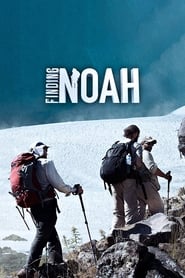
Finding Noah
دانلود زیرنویس English
هماهنگ با نسخههای زیر
برچسبها
Download English Subtitle Files for Mobile (2)
پیشنمایش زیرنویس English
نخستین 200 خط.
- Within the realm of uncertainty,
lie myths, stories,
never entirely believed,
but never entirely doubted.
The explorer searches for their origins,
the answers to who we are.
For centuries,
legend maintained that the last of the Incan leaders
had escaped capture by the Spanish conquistadores,
and retreated to a hidden city, high above the clouds.
Only in modern times has the legend proved
to have a basis in fact,
with the discovery of Machu Pichu.
- Concealed in the jungle,
this once lost city is now a portal
to a vanished civilization.
The more we discover, the more we want to know.
Dateline: Egypt.
In the shadows of the giant pyramids
that stood as lonely sentinels over the vast desert sands,
a 1922 archaeological expedition,
headed by Englishman Howard Carter,
sought to uncover the tomb of an ancient Egyptian pharaoh,
King Tutankhamen.
- I carefully drew back the bolt,
and opened the door.
- Hidden for centuries,
the final resting place of the boy king
made its contribution to modern man's
clearer understanding of his ancestors.
The mountains of Ararat.
The head waters of the Tigress and Euphrates Rivers.
History calls this the cradle of civilization.
- The seeds of Judaism, Islam, and Christianity
all came from that region.
- Steeped in antiquity,
this area has yielded countless discoveries.
Like the 1799 unearthing of the Rosetta Stone.
- The stone bore three inscriptions,
ancient hieroglyphs at the top,
another unknown text,
and at the bottom, ancient Greek.
- So, by translating the Greek,
scholars were now able to decipher the hieroglyphs.
Another find.
The Dead Sea Scrolls have been called
the greatest manuscript discovery of modern times.
They show the evolutionary link
between Judaism and Christianity.
- It just completely changed
our understanding of the Bible.
We didn't have any idea that these even existed.
- But, it was archaeologists,
traveling through layers of time,
who, in the 1850s, unearthed cuneiform clay tablets
containing an ancient story about a great flood.
The Epic of Gilgamesh,
which has similarities to the story of Noah.
- The great gods decided to make a deluge.
Genesis 6.
"So, God said to Noah,
- "I'm going to put an end to all people,
"for the earth is filled with violence because of them."
- The story of Noah is told many times in the Quran.
In the story itself,
Noah is informed that there's gonna be a great flood.
After many years of preaching to his people,
very few followers actually believed in him and his message.
And so, he was informed by God to build this ark.
- "So, make yourself an ark of cypress wood.
"Make rooms in it, and coat it with pitch, inside and out.
"Take into the boat the seed of all living things.
" I'm going to bring flood waters on the earth
"to destroy all life under the heavens."
- What prompts the deity, Yahweh, the god of the Bible,
to send the flood?
It has nothing to do with,
that the humans are procreating,
and creating noises and disturbances.
But rather, their ethical behavior.
- "Every living thing,
that moved on land, perished."
The rains started falling.
And also the water started gushing up.
- "Everything on dry land,
"that had the breath of life in its nostrils,
"died."
"But, God remembered Noah.
"And he sent a wind over the earth,
"and the waters receded."
- When we study the flood, from a comparative perspective,
is that we see it in every culture.
The flood was a very common story told.
That something happened,
and there was an ark that saved human kind.
- "And on the 17th day of the seventh month,
the ark came to rest on the mountains of Ararat."
- Did you go clear to the top?
- Well, we got up on the ice cap.
We didn't get to the --
- Did you see the ark, itself?
I did.
- Early history notes
many such sightings of the ark.
- In the third century,
Berosus wrote that its location was such
that common people could visit.
- Egyptian historian Heironymus
mentions the ark --
- Josephus wrote of the vessel in 50A.D.
- Epiphanius, bishop of Salem,
has stated that he was shown wood from the vessel.
- Armenian historian, Hayton,
wrote that, in the snows of Mt. Ararat,
one can see a black spot.
That is the ark of Noah.
Even Marco Polo
wrote about the ark's presence on Ararat, in 1269 A.D.
In 1829,
Fredrich Perot reported being shown wood relics
from the ark, at the base of Ararat.
If we don't go, we won't know.
Somebody has to take up the challenge.
We're part of that group of men
who have tried to do it, in history.
- Karl Behrens, in 1835.
- Claudius Rich, in 1836.
Herman Von Abich
conquered the Ararat summit in 1845.
- Englishman, H. Danby Seymour
reached the peak in 1846.
- Colonel Khodzko of the Russian army
climbed in 1850.
- Englishman Major Robert Stuart
made it in 1856.
- And hopefully, one day, it will be done.
I always thought,
"Let's just go up and find the thing.
"Put this to rest, once and for all."
And people have been trying to do that for centuries.
- Even getting to Mount Ararat,
today's explorer deals with obstacles on the road
to what locals call Abridah,
"the Painful Mountain".
This will be our third try.
- We're having a little trouble getting up the hill,
so we all had to bail out of the vehicle.
I think the ark of Noah,
on greater Ararat, in Eastern Turkey,
would be the ultimate archaeological find.
- It's a big mountain.
I'm 50 years old, and I'm thinking,
can I really make it up that mountain?
You know what I thought?
"God will go before me.
"I'll make it up that mountain."
What it means to me, to search for Noah's ark,
is to come back with some
tangible evidence that the ark existed.
- The local Kurdish people
protect this mountain.
No one climbs without their support.
- I believe the ark on this mountain.
In ancient times,
this land was a buffer kingdom, between rival empires.
Throughout the centuries,
it has often known the thunder of hooves,
and the clash of steel.
As modern borders were redrawn,
Ararat was seized from its ancestral home in Armenia,
and given to Turkey.
Now, it rises majestically, across the border,
a constant reminder.
- This is why we have pain in our heart.
Because, our symbol was taken from us,
without considering the will of Armenian people.
It was in Armenia where Noah constructed temple,
It was in Armenia where he made his first sacrifice.
If you take out Ararat from Armenia mythology,
Armenia will cease to be Armenia.
- This is not a normal part of the world.
This is a hostile part of the world.
- It's a demilitarized zone.
It's highly classified.
We had the PKK.
We have the Turkish army.
Needless to say, they don't like one another.
- In the decades long conflict with Turkey,
the PKK controls the mountain.
- The PKK view themselves as freedom fighters.
They represent the people.
They once had land, they no longer have lands.
They believe they're fighting for a righteous cause.
- You walk into a context where there's a war zone.
You're on a mountain, dominated and controlled by the Kurds.
At the same time, you're in a country,
and the mountain exists in that country,
that is under the sovereignty of the Turkish authorities.
- With the dissolution of the Ottoman Empire,
after World War I,
More English subtitles for Finding Noah
- Finding Noah 2015 1080p WEBRip x264-RARBG · 14 downloads · 2020-08-17
- Finding Noah 2015 720p WEBRip x264 AAC-[YTS MX] · 14 downloads · 2020-08-17
نظرات
No comments yet. Be the first to leave one.