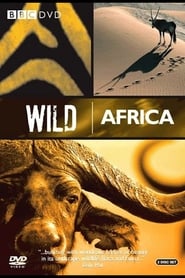
Wild Africa
دانلود زیرنویس English
هماهنگ با نسخههای زیر
برچسبها
پیشنمایش زیرنویس English
نخستین 200 خط.
It is the heart of Africa.
A hidden world.
It is a tangled jungle...
...haunt of flickering shadows.
It is a place of immense challenges... yet full of life.
The more we look, the more extraordinary variety we find.
This is one of the great laboratories of evolution...
a world we are only just beginning to understand.
Africa's heart is not dark, but green and vibrant...
it is the tropical rainforest.
Sunrise over the Equator and the African rainforest wakes.
From Uganda in the East, to Sierra Leone in the West,
it is a great belt of green.
It spans the continent for five and half thousand kilometres.
More light, more heat, more water than anywhere in Africa
perfect for plants and they've completely taken over.
An endless sea of leaves worshipping the sun on a new African morning.
On the forest floor, the sunlight barely filters through.
The underworld: A land of trunks and buttresses.
They hold up the forest roof and they are its plumbing...
pumping nutrients and water to the leaves above.
Here, it's wise to take care.
Plants stud their trunks with spikes.
They defend themselves with armies of vicious stinging ants.
And they lace their flesh with poisons...
...all this to stop them being eaten.
In such a hostile jungle, how can anything survive?
But there are opportunities here for creatures who know how to grasp them.
Giant fruit fall from the sky.
The sound echoes through the forest.
Elephants deep in the heart of the jungle.
Drawn towards the sound of falling fruit.
As big as melons and harder than coconuts
the fruit of the Omphalocarpum tree are ripe.
Two kilos of nutritious food for those who can break it open.
The smell is irresistible too like garlic.
It hangs in the jungle air.
But this fruit is so hard,
it seems not even an elephant can dent it.
Or can it?
The elephant uses its tusks as precision tools
to prise open the fruit.
This remarkable behaviour has only just come to light.
Fruit is the forest elephant's staple and this manna
from the heavens is full of energy.
But its also a rare gift and it takes more than
just one ripe Omphalocarpum tree to feed Africa's largest land mammal.
So elephants have learned to make the most of opportunities just like this.
There's not a fruiting tree an elephant doesn't know...
...each one, pinpointed on a mental map of the forest in their head.
And as they travel, they follow a network of paths they've carved out
across the forest to over a hundred species of fruiting tree...
To survive in this hard world elephants have become the masters of opportunity.
There are others who've learned to survive here.
For generations, people have found a living here,
like the elephants, constantly seeking out chances for food.
Monkeys, foraging low down in the trees...
...just within crossbow range.
In this tangled place, even the most skilled hunters can go hungry...
...escape is just a leap away into the forest canopy.
Forty metres up, sunny, breezy.
Another world.
And here is the engine of all forest life.
Leaves soak up the energy of the African sun
and turn it into plant food.
Monkeys, perfectly designed to leap
from tree to tree they travel the rainforest canopy.
This black and white colobus and this red, are specialist leaf eaters.
For them, food up here is all around.
...and they spend their days contentedly munching.
But these leaves are not as innocent as they look.
They protect themselves with a lethal cocktail of poisons
tannins, strychnine, cyanide.
So how can colobus eat them?
Over time they have evolved specialised stomachs filled
with bacteria that neutralise these poisons.
In one day they can eat enough to kill a man several times over.
The crowned eagle.
It can't eat leaves, but it can eat monkeys.
The cover of trees is no protection.
With powerful strokes of its 2 metre wings it airlifts the prey back to its eyrie.
Here it feeds its chick in a penthouse suite
with a view far and wide over the roof of the forest.
The canopy world is a place of extremes, of hot sun and drying winds,
fierce and drenching storms.
From dry times to wet times the seasons here are more marked.
The long hard rains are soon due and
a transformation comes over the forest canopy.
As far as the eye can see, the trees blush,
not with old leaves, but with new...
The growth of spring with the colours of autumn.
New, tender leaves don't yet have the protection of poisons.
So to ensure they survive trees produce a glut
far more than even the hungriest monkeys can eat!
Flowers too fall under the spell of the seasons.
And the animals of the canopy have a sweet, nectary treat.
The canopy is a place of treasure...
but only for those who can reach it.
Using just a knotted vine,
a Bayaka pygmy climbs from one forest world to another.
He's after the sweetest prize in the jungle.
Honey.
Mongonje is the best tree climber in the area
but it's still dangerous work.
One slip of his axe and he falls to the forest floor, thirty metres below.
At least this is a hive of stingless bees.
They're still distracting and that can be dangerous.
This work takes great nerve.
...and it's worth it.
For the Bayaka this is a precious seasonal treat.
The sunblessed goodness of the canopy delivered
to the forest floor in a basket...
For the most part it's hard work finding food in the forest
but there is a time, a time of plenty,
when all who live here get a helping hand courtesy of plants.
As the long wet season arrives, the forest gives its best.
Fruit, pure temptation.
Birds are always the first to arrive.
A great blue turaco.
Hornbills...
...the African grey parrot.
Chimps love fruit too.
Fussy about ripeness, they check each one.
A fruiting fig like this is a major event.
Over half a chimp's diet is fruit,
so youngsters learn from an early age where to find trees like this.
By the time they grow up the chimps know the trees
so well that they can even predict when they are going to be ripe.
When a fig tree fruits there's so much of it,
even the forest floor gets a rare treat...
...the scraps from the banquet above.
But figs are unusual.
Unlike other trees,
they can fruit in any season so they are especially useful
for seeing animals through leaner times.
Fruit is crucial for survival here.
But as animals eat they also serve plants.
As the chimps move off to find other fruits
they carry with them the seeds of trees.
Birds have an even bigger range
the seeds they eat are energy rich,
but lightweight,
perfectly designed by plants to be airlifted.
A quarter of all rainforest trees are dispersed by hornbills alone.
And it's no coincidence that elephants love Omphalocarpum fruits.
If a tree can tempt this animal into eating its fruit,
it gets the best disperser there is.
As they walk from tree to tree seeking fruit,
elephants can range over hundreds of kilometres,
sewing the seeds of new trees on their paths as they go...
...complete with a ready made pile of fertiliser.
Over the millennia, animals have been a vital force
in helping the African rainforest spread far and wide across the Equator.
Now we are beginning to discover a new side to the forest.
Africa's climate hasn't always been as it is today.
Through the ages it has swung through repeated cycles of wet and dry.
The forest has changed too,
expanding with the wet years and shrinking back in the dry.
Today's endless green sea is simply
a snapshot of an ever changing, dynamic place.
A pumping green heart at Africa's centre.
Now is a wet time in Africa's history
and the forest is near its maximum extent.
It rains practically every day...
in some place, an incredible 10 metres a year.
To live here is to put up with a phenomenal amount of rain.
But it's not necessarily bad news.
The rain that has shaped the forest
over millennia brings change on a small scale every day
and with each change comes a new way for animals
to survive in this land of plants.
An elephant's footprint has filled with water from the downpour.
Inside a minor miracle happens.
Microscopic eggs hatch into fish.
The transformation is complete.
Multicoloured Killifish here in an elephant's footprint.
In their temporary pool they are safe from the predators of bigger rivers.
But even here there are villains.
A Congo water scorpion has venom to dissolve the flesh of fish.
Not much future in a footprint anyway.
Now the killifish shows its true colours
superbly designed to flip from stream to stream...
in this temporary water world.
He turns his nose into the current like a tiny salmon
to take advantage of a newly running, rain-fed stream.
And this is what the colours are for.
A killifish female.
In the dark light of the forest floor the display is irresistible.
She is mesmerised by his kaleidoscopic advances...
and a new generation is spawned.
In these changing waters,
killifish have found their niche in the rainforest.
And when the rain subsides,
the water level here may drop again,
but her eggs will be safe,
dormant in the river bed, just ready to add water.
But for now the rainforest is overflowing.
What water the trees don't suck up, the forest pours out.
Streams flow into torrents...
...and torrents into giant foaming rivers.
Wild Africa subtitles in other languages
More English subtitles for Wild Africa
- NL PAL DVD9 · 44 downloads · 2020-12-07
- Part 6of6 Lakes and Rivers Xvid AC3 www mvgroup org ENG · 18 downloads · 2007-08-26
- Part 4of6 Coast Xvid AC3 www mvgroup org ENG · 21 downloads · 2007-08-26
- Part 3of6 Deserts Xvid AC3 www mvgroup org ENG · 15 downloads · 2007-08-26
- Part 2of6 Savannah Xvid AC3 www mvgroup org ENG · 18 downloads · 2007-08-26
- Part 1of6 Mountains Xvid AC3 www mvgroup org ENG · 13 downloads · 2007-08-26
- -=complete=- Xvid AC3 www mvgroup org ENG · 20 downloads · 2007-08-26
نظرات
No comments yet. Be the first to leave one.