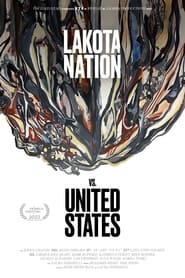
Lakota Nation vs. United States
دانلود زیرنویس English
هماهنگ با نسخههای زیر
برچسبها
پیشنمایش زیرنویس English
نخستین 200 خط.
The struggle for the Black Hills
has been a generational struggle.
I was raised up with that ideology.
We entered into treaties with the United States government
that were made at a time of war.
And, so, that made them peace treaties.
Nation to nation.
The great Lakota Nation was an equal
to the United States government.
The treaties themselves were violated
as soon as they were created.
When they illegally took the land from our people,
it wasn't just the land itself that was taken.
It was a part of a process to assume control over us.
It was part of a process to colonize our people.
It was a part of a process to strip our identities from us.
And, so, as soon as these treaties were made,
they were violated.
At the time that they were violated,
it meant that the peace part of it was over.
That's why we're still at war today.
About 25 or 30 Indians
demanding that the Black Hills of South Dakota
be returned to the Sioux Tribe have climbed Mount Rushmore.
American Indians began gathering today
at Pine Ridge, South Dakota, for a weeklong protest
against what they call anti-Indian racism
and brutality.
In Wounded Knee, South Dakota, today, there was an exchange
of gunfire between federal officers and militant Indians
who seized control of the historic settlement
on the Pine Ridge Sioux Reservation last night.
These demonstrations reflect a new sense of ethnic pride
and self-confidence in the American Indian community.
The Indians said, through a spokesman,
that they are willing to die, if necessary, to bring about
federal action on their grievances.
This is a fundamental issue that has to be understood.
They are within the United States of America.
There's only one sovereign.
For the moment, both sides remain stalemated.
You may like to know I do not consider this a, quote,
"creative piece."
I do not regard this as a poem of great imagination
or a work of fiction.
Also, historical events will not be dramatized for a, quote,
"interesting read."
Therefore, I feel most responsible
to the orderly sentence, conveyor of thought.
That said, I will begin.
Keep in mind, I am not a historian,
so I will recount facts as best as I can given limited resources
and understanding.
500 years ago,
there were people on both sides of the Atlantic Ocean,
but neither knew about the other.
On the eastern side, in Europe, the people were white-skinned.
They had learned how to build houses and large sailing ships,
but they still didn't know much about the rest of the world.
In fact, most of them believed the Earth was flat.
I want to tell you about the Sioux Uprising...
...but I don't know where to begin.
I may jump around and details
will not unfold in chronological order.
The United States' history, as it tells itself,
is that of Indian people being in the past,
that we are a phase, right?
We are a branch of the larger US or American history.
The United States has a history of making agreements
or treaties with the Indians, which dates back 137 years.
Fred Briggs has a report on how well they've been kept.
I begin the history, when I tell it, of Lakota people
with the arrival of the United States.
When an Indian prays, he gives thanks to the land.
Land is quite sacred to Indians,
literally Mother Earth in their religion.
At one time, of course, the entire country
belonged to Indians. Then the colonization began,
and with it, the retreat westward.
Treaties are the reason the United States exists today.
If not for the treaties that the United States
signed with tribal nations,
the world would not have legitimized
the sovereignty of the United States.
Because President George Washington knew
that one of the ways to tell France, Spain, England,
all these countries that, hey, the United States
is a legitimate country just like you are.
You're signing treaties with these tribal nations,
and so are we.
The first large-scale treaty reorganizing Indian land
wasn't really a treaty at all.
It was the Commerce Act of 1836,
which more or less gave the Indians
all the land west of the Mississippi.
But each treaty made after this, nearly 400 of them,
amounted to a whittling away of Indian real estate.
During the 1800s, when the US expanded territory,
they, quote, "purchased" land from the Dakota people
as well as the other tribes.
But another way to understand that sort of, quote, "purchase"
is Dakota leaders ceded land to the US government
in exchange for money or goods.
But most importantly, the safety of their people.
Some say that Dakota people did not understand
the terms they were entering or they never would have agreed.
Even others call the entire negotiation trickery.
But to make whatever it was official and binding,
the US government drew up an initial treaty.
In 1851, the Sioux Tribes were given
most of the western Dakotas and northwestern Nebraska.
This treaty was later replaced
by another more convenient treaty.
A treaty in 1868
said the land would belong to the Sioux forever,
but the treaty was broken nine years later
when gold was discovered.
And then another.
By 1889, the Indian lands were greatly reduced
through a series of schemes and illegal actions.
I've had difficulty
unraveling the terms of these treaties,
given the legal speak and congressional language.
As treaties were abrogated, broken, and new treaties
were drafted one after another,
the new treaties often referenced old defunct treaties
and it is a muddy switchback trail to follow.
This week, the Supreme Court ordered a sum of $122.5 million
be paid to the Sioux Indian Nation,
the largest settlement to Indians in American history.
But the Sioux don't want it. They want their sacred land.
Although I often feel lost on this trail,
I know I am not alone.
When you look at histories of peoples
from different parts of the world,
they all like to talk about something
called a cradle of civilization.
In Judeo-Christian history,
we look at the birth of Jesus Christ
as the place when time began.
Hesapa.
Hesapais kind of the Lakota word
for the Black Hills.
It is our cradle of civilization,
the heart of everything that is.
It's a love of this land born out of thousands
and thousands of years of living on and near the Black Hills.
In Lakota, we say, wi cho ni.
"Wi" is a sun.
"Cho" means beautiful.
"Ni" is to live.
So when you say, "Miye wi cho ni,"
that means, "I live in the beauty of this creation."
A lot of people just don't understand.
Because some people see the Black Hills as commodity,
a place to make a dollar bill.
US history is a branch of a larger tree of history
in the way that we understand it.
Not the other way around.
But it's that covetous branch that thinks it's the tree.
All right.
War...
is never any good.
But we go to war...
for peace.
Peace is through death.
Much of what we've learned about the battle for the plains
comes from what we've seen in Hollywood movies.
When we saw the Indian defending his land,
we cheered for the White man's soldiers.
The best way to kill people is to dehumanize them,
right, to make them into caricatures.
Whether it's Peter Pan,
whether it's John Ford's "The Searchers,"
which is considered not just the archetype of Western movies,
but one of the great American films.
And this is a classic Hollywood trope...
...that makes invasion look like self-defense.
You know, we weren't obsessed with the United States
the way that the United States was obsessed with us.
And, so, if we reimagine our history
from the perspective of Lakota people...
...we get a different set of questions
and a different set of answers.
- Good evening. - Our focus tonight is on a story
that has been with this country since its very beginnings.
It deals with a continuing struggle over land
between the White man and the Indian.
If it was ever easy to delineate the good guys
and the bad, it isn't anymore.
I mean, I think
resistance is always defined as being militant
or it's always looked at
as something that's very aggressive.
But for me, resistance, I'm just trying to exist in this world
as who I am as an indigenous person,
as someone who comes from this land
and who came out of this land.
For me, the sanctity and the sacredness of the Black Hills
isn't just that it's a sacred site,
Lakota Nation vs. United States subtitles in other languages
نظرات
No comments yet. Be the first to leave one.