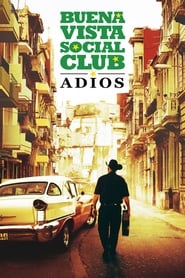
Buena Vista Social Club: Adios
دانلود زیرنویس English
هماهنگ با نسخههای زیر
برچسبها
پیشنمایش زیرنویس English
نخستین 200 خط.
It is with deep sorrow and sympathy
that I must inform our country that today,
the Commander in Chief of the Cuban Revolution,
Fidel Castro Ruz, has passed away.
To honor Fidel Castro's death,
Cuba declares nine days of national mourning.
- Compay Segundo came here? - Compay Segundo never came here.
- He never came? - Segundo was near 60th.
They told him, Buena Vista Social Club is that way.
- And he went that way? - Yes. That came out in a documentary.
He never came to Buena Vista Social Club.
He never set foot in it.
- And this is the place? - This is the place.
This is the real thing.
This is the real Buena Vista Social Club.
This is the place where it used to be. The society for black people.
People... For workers. Black workers.
And it's a famous place, but it used to be a very famous place in the past too.
Not only now, right now, after these sessions, and the album and everything.
It used to be, really, an important place.
- This was the cloakroom. - Right.
People would arrive...
They'd arrive here and check their coats and hats.
Then, they would start dancing.
All of this area was the Buena Vista Social Club.
It was a society for black people.
They used to perform here, and they used to dance here, as well.
And right now, it is a gym. And very modern, by the way.
Imagine, there was a stage here.
- It was a huge dance hall. - Imagine that this wall didn't exist.
This is the original floor. And on this floor, the people used to dance,
and they enjoyed life.
Like in a film or in a dream...
Now? You're going to be famous now?
Now your voice is messed up and you can barely walk?
When you have to walk with a cane and everything?
Now?
Well, what do these people know, really, about Cuba?
What do they know about the history of our country?
What do they know about the things we have been through?
Is this turned on? Can you hear me? Very well.
OK, well, many thanks for coming.
Welcome to this press conference for the first-ever live performances
of the Buena Vista Social Club.
The album has now sold nearly half a million records worldwide.
It's been awarded a Grammy,
and Wim Wenders is here filming for a documentary.
- How did it all take off, initially? - Sorry, I don't understand.
He's saying what was your path?
Oh, right. Together with Juan de Marcos
we'd already discussed doing a big band album,
with the style of the Fifties.
At the same time, we wanted to do an album
with musicians from the east of Cuba,
together with some African guitarists.
I asked Ry if he'd want to come along, and he said, yes.
But then, the Africans didn't show up, so we did what we did.
I wanted to present a project
based on the Cuban roots and based on our ancestors.
Nick and me, we were talking,
and he said, yes, I'd like to do this project with you.
Ry Cooder's a hero of mine.
It was in the days of faxes, so I sent a fax to Ry to explain what I was doing.
Immediately, a call came in, and the receptionist said,
there's a call for you on line two.
I said, OK. Who is it? And they said, it's Ry Cooder.
So I picked up the phone, yeah, very funny. Ry Cooder.
I picked up the phone and said hello, and the voice came down the phone...
Is that Nick Gold? And I was, ah...
The studio's wonderful. As soon as you walk in,
you feel very much at home here.
The drawbacks are quite funny, really.
The main drawback we're having at the moment is rain coming in the roof.
There's a history here. Music has been recorded here for 50 years.
I don't know. Maybe I'm romancing it, but I think you can feel it.
When I was at school, I was working at a jazz shop in London.
And I found a record by a guy called Arsenio Rodriguez.
It was unlike anything I'd ever heard, and I fell in love with Cuban music.
Hi.
This is where all the tapes are, for the last 40 years.
You've got recordings of everyone.
It's beautiful.
When Marcus started telling me of his dream project, and he said,
you know, this pianist is alive and playing, in Cuba.
And then he'd say, this trumpet player is alive and playing in Cuba.
I assumed that none of them would be playing or that they would be dead.
He said he'd found Arsenio's original pianist,
Rubén González.
I lived two doors down from Arsenio
and I'd hear him playing his tres every day.
He said, come over here. He was blind.
He ran his hand over my face, like so.
I asked him, what? And he said, you're a handsome guy.
So, I told him, no, man. I just really like music.
He nicknamed me Pretty Boy, and I joined his band the next week.
Come here, my dark-skinned woman, I'm going to die, my dark-skinned woman
Come here, my dark-skinned woman, I'm going to die, my dark-skinned woman
Up to the Forties, it was forbidden to play congas in Cuba.
It reminded people of the power,
the sound of the drums of the original Africans during the times of slavery.
The first one that introduced the congas in his band was Arsenio Rodriguez.
Arsenio is one of the greatest Cuban musicians in our history.
He created the foundation of everything. Of salsa, of mambo,
of everything that's happening in danceable Latin music worldwide.
I'd perform, and he'd say, do it like this, not that. It'll sound better.
And I became a master of Cuban music.
I had a piano, but over time, termites got into the wood.
The little creatures started eating away at the wood,
and eventually they destroyed the piano.
The door was unlocked, and he literally ran to the piano.
Well, ran as, as much as he could. He wasn't... You know, he was an old man.
I wanted to have the most important Cuban trumpet player
of the last 40 years...
Guajiro Mirabal.
I worked at The Tropicana for 30 years.
I have devoted myself to be an inspiration for Cuban music.
Not to toot my own horn, but I was the best in Cuba. Really, I was.
Eliades Ochoa.
What's up, cowboy? Good to see you.
Eliades Ochoa is like the flag of country music.
This is my neighborhood. I was born just down the road from here.
I was born here, in the humble mountains
of the province of Santiago de Cuba.
- I'm a guajiro - I was born just over there
In Santiago, there's something...
We are a fusion of Spanish with African and Cubans.
In every corner, there is someone playing a guitar or a conga.
Here, you drink rum without ice.
People party into the early hours.
My mum didn't have a job, nor did my dad, and there were six of us kids.
Life was hard. Very hard.
When I was a kid, I earned a living playing in the brothels and bars.
This was the red-light district.
All these streets here had rooms, side by side, full of prostitutes.
They helped me a lot.
I am Afro-Cuban
Pío Leyva was one of the greatest soneros.
Nobody taught me how to sing.
I sing because... I don't know. It comes from my heart.
The main bass player of the old generation
was definitely Cachaíto López.
The violin was my instrument of choice,
but my grandfather forced me to learn bass, because it's a family tradition.
My family has 30 bass players, approximately.
Barbarito Torres.
He is the greatest lute player of his generation.
My godfather was one of Cuba's greatest lute players.
Luciano Monet.
So, at the age of ten, I was given a lute.
I started to incorporate different styles into country music, funk, rock.
Then they started calling me the Jimi Hendrix of the lute.
Here, in my head, there's an ocean of music.
When I improvise it all mixes together, and what comes out is my creation.
Barbarito has gone crazy.
When I arrived at the recording studio,
Ry Cooder told me to listen to a tape and copy the musician's style exactly.
When he played the tape, there was a traditional Cuban song on it...
There was a lute solo in the song. When I heard it, I said, that's me.
The musician on Ry's tape was me.
I'm 90 years old and then some. So, what's my secret?
- Your secret is what interests me. - Don't overindulge.
- Don't overindulge in anything. - In anything.
Look, look. Listen up.
For example, if I'm having chicken, I only eat a small portion,
so that I don't get bored with what I'm eating.
That way, the next day, I'll still have the desire to go back to that chicken.
- The second secret. - The second secret deals with love.
- That's what I'm interested in. - When it comes to love,
I use the same strategy as when I eat chicken.
Compay is like being in front of a Bible, because he knew everything.
He was living for a century.
I'm one of the original son players from Santiago.
The music I play is son, and I'm not going to stop now.
Son music represents the essence of the Cuban people.
For us Cubans, music is like our food. When we have had really tough times,
we have created styles of music that helped our people to survive.
Son is the music of the late slaves, during the end of the 19th century.
People from different parts of Africa brought their kind of music,
which mixed with European music.
Well, in fact, son is the root of all danceable tropical music
in the whole of the Americas.
I was born here in 1907.
People would play son into the morning.
We have a saying, until the hot chocolate, meaning until sunrise.
I created the duo Los Compadres, the buddies.
The one who sang lead was Compay Primo, or Buddy Number One,
and since I sang second vocals,
I was Compay Segundo, or Buddy Number Two.
Somebody told me, you should be in Havana.
People love your guitar playing.
Mama, I want to know where those singers are from
So, what I did was travel as far as Bayamo.
And in Bayamo, I went straight to the cigar factory.
I had learned how to roll cigars by the time I was 14.
I'd work until I made enough money to pay my bus fare to Las Tunas.
Ay mami, where are they from? Are they from Havana?
Are they from Santiago? From the noble land?
They are from the mountains, Santiago
And sing on the plains, Havana
You'll see, you'll see
Buena Vista Social Club: Adios subtitles in other languages
نظرات
No comments yet. Be the first to leave one.