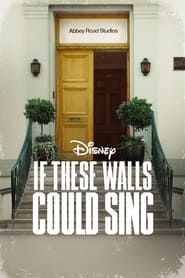
If These Walls Could Sing
دانلود زیرنویس English
هماهنگ با نسخههای زیر
برچسبها
پیشنمایش زیرنویس English
نخستین 187 خط.
My name is Mary.
Abbey Road Studios has been part of my life for as long as I can remember.
Every time I walk through these corridors, it feels magical.
I don't remember the first time I came here.
This is me in Studio Two. A photograph taken by my mom who was a photographer,
and was in a band with my dad.
I want to tell the story of some of the iconic recordings
made here over the last nine decades.
From classical to pop to film scores.
One of the reasons I wanted to do this documentary,
was I remember seeing a picture of Mom leading Jet across the zebra crossing.
- Oh, yeah! - Do you remember that?
Yeah! Absolutely, yeah.
What happened was we lived close by, as you know.
And we had this little pony called Jet.
And she just loved horses so much that
when we were coming over here to do something, she just brought Jet.
And so, there's a picture of her... him doing the level crossing.
And he came into the studio. I don't think he disgraced himself.
'Cause you came back here with Wings?
Do you remember making a decision thinking,
"I could go anywhere, but I'm actually gonna do this next phase
in my musical career in the same studio"?
Yeah.
I mean, in London we had used other studios besides Abbey Road.
But we always liked this the best.
So that when I was looking to record with Wings, I thought,
"Well, this is the best studio. I know it. I know a lot of the people here."
A lot of them were still here. A lot of them still are.
It's just a great studio.
You know, all the microphones work.
I mean, that sounds silly to say,
but you can go to some studios where they don't.
So, it was great. It was great to come back home.
When you drive through the little gates by the zebra crossing,
never gets old.
And every time I drive by, I look at the graffiti and think,
"It's magic going across that zebra crossing. Magic happened here."
It's history. You can feel it seeping from the walls.
Somewhere now, some kid, somewhere,
his dream will be to walk in here and just do a tune in here.
And you can't let that dream die. Ever. You can't.
It's a very spiritual thing.
Yeah, no, it's amazing. Um...
Hopefully, it'll be here for millions of years.
It's a national treasure, innit? You know what I mean?
The first time I'd been here,
I just felt a sense of accomplishment in reaching something
which I'd sort of fantasized in my bedroom about as a child.
I think about Abbey Road as being
a kind of mother of the music that's been performed there.
She has preserved it for us.
She has embraced it with her personal acoustic.
And so, it's a gift to us.
You know, we use it. We think we hire it.
It's something more spiritual than that.
The 12th of November, 1931,
Sir Edward Elgar is about to formally open a unique recording studio.
The esteemed composer is a supporter of the novel recording medium.
And prepares to cut his composition directly to disc...
- You all ready? - ...with the London Symphony Orchestra.
Right.
Three years ago, the Gramophone Company
purchased number 3 Abbey Road of St. John's Wood, London, at auction.
A detached residence of nine bedrooms, five reception rooms,
servant's quarters, and a large garden at the rear
have been converted into the largest and best-equipped studios in the world.
A disc of wax.
The mother disc from which thousands of copies will be produced
to be enjoyed across the globe.
When I arrived,
the company was losing half a million a year.
You know, there's no money in the classical record business.
And I started searching for who we've got in the business
that knew anything about pop music.
I was singing from the days I was at school.
So I would've been 14, 15.
And I made my first record at Abbey Road when I was 17.
And we were given an audition by Norrie Paramor,
who was a producer with EMI.
And that's when we first played him the song called "Move It."
That's when we got really excited that we were actually going to be in a studio.
And it turned out to be Abbey Road.
And, in fact, Studio Two became our home for many, many years.
Abbey Road gave rock and roll its life, I think.
Because it was on the forefront of one of the biggest musical changes.
I believe, historically,
rock and roll was the biggest, fastest, and most long-term change.
In 1950,
British record sales totaled a mere three-and-a-half million pounds.
By 1960, this figure had risen to £15 million.
Easily the biggest company is Electric and Musical Industries, EMI,
which sells just under half of all the records.
EMI's labels include Parlophone, HMV, Capitol.
EMI is the world's largest record company.
Its chairman, Sir Joseph Lockwood, keeps a realistic eye on the competition.
Well, it's a free-for-all. The competition's absolutely terrific.
And anyone who thinks that, um, this is an easy business should come and have a try.
I started in the recording business in November 1950.
I'd studied at the Guildhall School of Music,
and I had an invitation to go to EMI Studios for an interview.
Um, surprisingly, for me,
they put me in the position of power at Parlophone,
and Joe Lockwood said to me,
"Well, now you're the youngest label head we've ever had. You better do well."
So I went, and I started looking for something.
I started looking for something like a Cliff Richard.
The Beatles had already been signed by Decca, made a record, and not released.
And Brian Epstein came to see 'em as a last resort.
I mean, really as a last resort. He'd been to see everyone else.
And my dad just liked Brian. Brian was a very likable man.
And said, "Maybe you can bring them down."
Yeah, so we came into here, and, um, George Martin arrived.
Came down, "Okay, chaps. What are we gonna do?" You know?
He didn't think they were that good.
But he liked spending time with them.
He also was looking at them, thinking,
"Okay, which one's Cliff, and who are the Shadows?"
And I listened to them performing.
And the songs they offered me weren't very good.
"Love Me Do" was the best I could find.
George was incredible.
We could never say anything else but, "George was incredible."
And we were buskers. I mean, no one can write or read music. We're just buskers.
We got a minor hit with "Love Me Do."
And then, later, we brought in "Please Please Me."
What are you doing?
Just... It's murder. I can't do it.
Can't keep it up. I just go... I'm truly...
I haven't got one.
And George Martin wasn't very impressed.
And he said, uh, "Could we do it faster?"
And we all go, "No."
Or we didn't.
No. We thought, "No," but we went, "Yeah."
Doing take seven.
And we weren't that impressed,
but he said, "That'll be your first number-one hit."
And he was right.
Once we had a success with "Please Please Me,"
they seemed to blossom as songwriters.
"From Me To You" followed, and "She Loves You," and so on.
And each one was a great song.
And I realized very early on that we needed an album pretty damn quick.
It was in February of '63 that we... we made the album.
And we did it in one day.
Should we do it on the second verse?
Yeah.
Hello?
So we came in nice and early. Set up. Got ready.
And then just played everything we knew.
The engineers and everybody were up the stairs, would just mix 'em.
They were actually mixing as they went along.
They knew how loud the drums had to be, how loud the bass drum should be,
so they kind of had it all balanced.
And, in fact, in those days, they were called "balance engineers."
The idea is to capture a band as a live performance.
This is them straight from the Cavern Club into Abbey Road.
I just worked them very hard.
And just recorded them almost like a... like a broadcast, you know?
Where all I had was two tracks.
That's the band just playing live in the room.
And on track two...
...we have John's ripped vocal.
And Paul and George are singing live with him.
And we did it just under 12 hours from start to finish.
You know what I mean? It wasn't like, "Oh, I'm so tired. I'm this"...
No, man. If we were playing...
That was the great thing about the Beatles was we all were in it for the music.
You know, we were playing. That was what was important.
And, uh, you know, it worked out pretty well for us.
Music being one of the most important things in my life,
we said we'd take a risk, a gamble, if you like,
and, uh, come here to England to see whether I could find a job.
September 19th, 1960,
I duly reported at the Abbey Road Studios.
So that's how I started.
- I say if you were there... - But I wouldn't be this bad.
If she were... Just what I was going to say!
- I think that's enough. Let's go and play. - It's fine by me.
- Yes. - Are you happy with the sound?
- Absolutely. Absolutely. - Good. Come. Come on.
Jacqueline du Pré was the perfect person to record with
because she never got impatient
however much time you took to get a satisfactory balance.
And with her bulges of sound, she was a very difficult person to record.
That's fine for balance.
If These Walls Could Sing subtitles in other languages
More English subtitles for If These Walls Could Sing
- If These Walls Could Sing 2022 WEB-DL DSNP · 21 downloads · 2022-12-26
- If These Walls Could Sing 2022 720p/1080p DSNP WEBRip DDP5 1 x264-SMURF · 19 downloads · 2022-12-16
نظرات
No comments yet. Be the first to leave one.