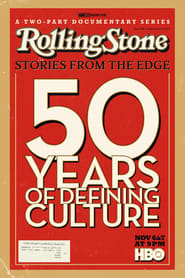
Rolling Stone: Stories From the Edge
دانلود زیرنویس English
هماهنگ با نسخههای زیر
برچسبها
پیشنمایش زیرنویس English
نخستین 145 خط.
- Right now I'd like to dedicate this song
to everybody here with hearts, any kind of hearts and ears.
Goes something like this here...
Yeah.
Yeah!
Volume one, number one.
A letter from the editor.
You're probably wondering what we're trying to do.
It's hard to say.
- We hope that we have something here,
sort of a magazine, sort of a newspaper.
- The name of it comes from an old saying.
Muddy Waters used the name for a song he wrote.
- The Stones took their name from Muddy's song.
- It was the title of Bob Dylan's
first rock and roll record.
- It's not just about the music,
but also the things and attitudes
that the music embraces.
- We've been working quite hard on it.
We hope you can dig it.
- To describe it any further would be difficult
without sounding like bullshit.
- Jann, in recent years, sophisticated publications
such as yours and FM radio,
rock and roll is reaching a different age group.
Now, what's the difference between rock and roll now
and the rock and roll of the Elvis Presley,
Everly Brothers era?
- Well, rock and roll is, you know,
is a--is a-- is a particular form
that's changed tremendously and keeps changing
and vastly changing, making a tremendous amount of changes,
and, uh, there was no publication around
that covered it the way it should be covered,
you know, that had treated it
the way it deserved to be treated,
that, you know, understood it, really.
Oh, yeah!
- Jann, is there such thing as a San Francisco sound?
Or is it just that this happened to be the place
where acid rock, or whatever it's called, started?
- The important thing about San Francisco
is that it's a scene.
It's a warm, supportive, friendly city
that's historically, you know, had the Bohemians,
the Beats, that supported the arts, poetry, jazz,
and similarly today it supports rock and roll.
- San Francisco is home to all kinds of artists,
and I loved the excitement of it.
I had tried to do music when I was in college,
but I was not good at it particularly.
I mean, I was not a great guitar player, you know.
I mean, I knew the music, and I loved it.
I could feel it, but that--
that life was not for me.
But what I had as a skill and a natural ability
was journalism.
- In the '60s, rock and roll was becoming more than ever
the medium of communication among young people.
- It was freeing yourself from this gray vision of life
in America that was parentally shaped
and socially shaped by the Eisenhower years.
- Music and the kind of cultural revolution
that was attached to it,
that was the big uncovered story.
At that time, I was living with the woman
I was gonna marry, Jane,
and she had that same enthusiasm
for the sheer joy of the music.
Together, we saw it as really important,
spiritually and culturally, you know?
- We really understood that music
was effecting a change in America.
You could see it and hear it.
In '67, Jann was going down to cover Monterey Pop.
This was before we started "Rolling Stone."
He was there one day, and then he called me, and he said,
"Jane, you've got to come down here.
You will not believe what's happening."
- We were so lucky to have that music
at that time.
I mean, Monterey was incredible.
Thank you.
I had been writing a column
for "The Daily Californian," the student newspaper,
and I wrote it under a pseudonym, Mr. Jones,
called "Something Is Happening by Mr. Jones,"
after the Dylan song.
And it was very much in the mold
of a column that Ralph Gleason was writing
for the "San Francisco Chronicle."
- This is "Jazz Casual," and I'm Ralph Gleason.
John Coltrane, like many of the modern jazz musicians,
feels that the music itself speaks far more fluently
than any human ever could.
I agree with that thoroughly,
and I also endorse the position
that Miles Davis' albums shouldn't have liner notes,
even when I write them.
He was a jazz critic,
but he also would write about popular music
and The Beatles or Dylan and Baez.
- His column was the place you could read
about all these things in your own life,
which were not in the local press.
- They used to say about Ralph
that he couldn't decide whether he was
four 12-year-olds or three 16-year-olds.
And he loved young people,
and he loved the excitement of it.
People trying to get a place in the rock and roll scene
would come over to him and seek advice.
So I introduced myself to him.
He said, "Oh, I know exactly who you are.
I read your column."
And that was just the beginning of it right there.
- He alone among the critical establishment
was receptive to rock and roll
and saw how good a music it was,
how good songwriters these were.
- We knew that Ralph was the best person
to be starting "Rolling Stone" with.
- Jann came over one day and said,
"How about a magazine?"
Like the "Melody Maker" or "New Musical Express"
but an American one that would be different and better,
that would cover not just, uh, not just the records
and the music but would cover the whole culture.
I find it regrettable and sad
that some of my friends do not share my enjoyment
for the contemporary musicians,
much less regard them
with the respect with which I regard them
or see them as important as I see them.
The only way to stay alive is to stay open.
The minute you shut yourself off
and shut yourself up, you start to rot.
You die of dry rot.
"Rolling Stone" started with the assumption
that music was of infinitely greater importance
to an upcoming generation of Americans
than anyone had ever thought it was before,
and we were right.
[Bob Dylan's "Like a Rolling Stone" plays]
More English subtitles for Rolling Stone: Stories From the Edge
- Rolling Stone Stories From The Edge 2017 Part 2 WEBRip x264-ION10-HI · 39 downloads · 2018-12-19
- Rolling Stone Stories From The Edge 2017 Part 2 WEBRip x264-ION10 · 34 downloads · 2018-12-19
- Rolling Stone Stories From The Edge 2017 Part 1 WEBRip x264-ION10 · 31 downloads · 2018-12-19
نظرات
No comments yet. Be the first to leave one.