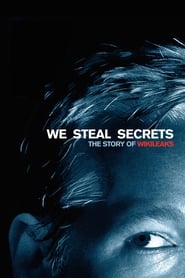
We Steal Secrets: The Story of WikiLeaks
Lataa English -tekstitys
Julkaisutiedot
Tunnisteet
English tekstityksen esikatselu
200 ensimmäistä riviä.
Anti-nuclear groups go to court to try to
block Thursday's scheduled lift-off
of the shuttle Atlantis with its payload of radioactive plutonium.
The shuttle and legal challenges.
NASA lawyers must go to court tomorrow
to help the shuttle Atlantis and its Galileo spacecraft
escape from a unique environmental challenge.
The mission could be stalled on the launch pad.
At the center of the controversy is Galileo,
a plutonium-powered space probe
scheduled to be launched from the shuttle's payload.
The argument's being made that in the event of an accident,
cancer-causing plutonium particles might be spread
over a wide area of Florida.
October 1989
JOHN McMAHON: It was a Monday morning, a few days before launching Galileo.
My management grabbed me as soon as I came in.
And they said that there was a worm that had been detected
somewhere out on the network.
A worm is a self-replicating program.
It actually breaks into a computer and jumps from system to system.
At the time, they still were very uncommon.
We didn't know what it would do.
We knew it was malicious.
If the worm got into a machine,
it would change the announcement message and spelled out,
in little lines and little characters,
W-A-N-K,
WANK, Worms Against Nuclear Killers.
And below that, "You talk of times of peace for all,
"and then prepare for war."
Oh, my God, what the hell is this?
Most people didn't know what the word "WANK" meant.
The worm made a panic.
You would be logged into your machine and you'd get a message,
"Someone is watching you... Vote anarchist!"
And suddenly they'd see,
"Deleted file-1, deleted file-2, deleted file-3, "
and just keep going and going and going.
And it would change the passwords, so you couldn't get in to stop it.
It scared the hell out of a lot of people.
They were afraid that WANK would cause a launch failure,
where this nuclear battery was suddenly
flying away from an exploding spacecraft.
All systems are go.
Eleven, ten, nine...
McMAHON: How in the name of hell are we going to stop it?
And how far has it gone already?
We have a go for main engine start.
Six, five, four,
three, two, one.
We have ignition and lift-off of Atlantis,
and the Galileo spacecraft bound for Jupiter!
The shuttle launched without incident.
But the WANK worm continued to spread,
affecting over 300, 000 computer terminals around the world.
Its purpose, as a warning, weapon, or political prank, was never discovered.
Investigators traced the origins of the WANK worm to Australia.
National police suspected a small group of hackers
in the city of Melbourne, and then the trail went cold.
But a key clue turned out to be in the message itself.
There was a lyric from the Australian band, Midnight Oil,
a favorite of the man
who would become the country's most infamous hacker.
Yeah.
There's never been anything quite like it.
A mountain of secrets dumped into the public domain by a website...
Julian Assange. Is he a hero to freedom
or is he a terrorist who should be prosecuted?
He's an active enemy combatant
who's engaged in information warfare against the United States...
Was it not once considered patriotic
to stand up to our government when it's wrong?
[BLOSSOM AND BLOOD CONTINUES PLAYING]
Should the United States do something to stop Mr. Assange?
I think Assange should be assassinated, actually...
No, he's a hero...
What he did was extremely devastating...
This guy's going to strike again.
Free Julian Assange! Free Julian Assange!
What drives you?
Well, I like being creative.
I mean, I've been an inventor,
designing systems and processes for a long time.
I also like defending victims.
And I'm a combative person, so I like crushing bastards.
And so this sort of profession combines all those three things.
So it is personally deeply satisfying to me.
But is crushing bastards, in its own right, a just cause?
Depends on the bastard.
I see the story entirely as one man against the world.
One man against the world.
Julian is this very radical visionary.
Julian was onto something really extraordinary.
He's an extremely clever, brave, dedicated, hard-working guy
with a brilliant idea that he managed to execute.
Julian Assange was obsessed with secrets,
keeping his own and unlocking those of governments and corporations.
The Internet is not a good place for secrets.
Cyberspace is like a galaxy of passageways,
constantly moving streams of data.
With a simple computer, anyone can enter and explore.
That's what Julian Assange liked to do, explore.
He liked to use trap doors to enter where he wasn't supposed to go,
to find secrets and expose them.
He built a machine for leaking secrets and called it "WikiLeaks."
The website boasted an electronic drop box
that could receive secrets sent by people
who didn't want to reveal who they were.
Once WikiLeaks had the secrets,
it would publish them across servers, domain names, and networks
so numerous that the information could never be taken down.
So this is what you'll see if you go to the front page of the website-
This is WikiLeaks, we help you get the truth out.
We want to enable information to go out to the public
that has the greatest chance of achieving
positive political reform in the world.
To get things to the public you need to protect sources
who want to disclose,
and you also need to protect your ability to publish in the face of attack.
His thinking is, how can we destroy corruption?
It's the whistle-blower.
Julian Assange is neither a right-wing libertarian nor a standard leftist.
I think he's a humanitarian anarchist.
A kind of John Lennon-like revolutionary,
dreaming of a better world.
If we are to produce a more civilized society, a more just society,
it has to be based upon the truth...
When I heard Julian speak,
I was struck by his vaulting idealism
and forthrightness about what he believed in.
Totally uncompromising about freedom of speech.
I agreed almost entirely with everything he said,
and I'd never experienced that before.
So I thought he was amazing.
Every week we achieve major victories
in bringing the unjust to account and helping the just.
Before WikiLeaks was front page news,
there were some smaller successes.
The website published evidence of a tax-evading Swiss bank,
government corruption and murder in Kenya,
and a secret company report on illegal toxic waste dumping.
One early leak was from the National Security Agency.
Frantic text messages from desperate workers
trying to save lives on 9/11.
9/11 turned out to be a watershed moment for the world of secrets,
both for the leakers and the secret keepers.
After 9/11 we were accused of not being willing to share information
rapidly and facilely enough,
and we've pushed that very far forward.
Michael Hayden is an expert on secrets.
He's been the director of the National Security Agency and the CIA.
In terms of our focus,
the default option, in a practical sense, has been to sharing
rather than caging information and making it more difficult to flow.
In the years after 9/11, facing enemies it didn't understand,
the U.S. government started sharing more information
between different agencies.
At the same time, the U.S. also started to keep more secrets from its citizens.
In data centers that sprang up all over the country,
NSA/CSS Cryptologic Center
the U.S. launched a massive expansion
of its operations to gather secrets.
The amount of classified documents per year increased from eight million
Office of the Director of National Intelligence
to 76 million.
The number of people with access to classified information
NSA National Business Park
soared to more than four million.
And the government began to intercept phone calls and emails
at a rate of 60, 000 per second.
Nobody knows how much money is involved,
it's a secret.
Not even Congress knows the entire budget.
The classification system can be a very effective national security tool
when it's used as intended, when it's used with precision.
During the Bush Administration,
Bill Leonard was the classification czar,
the man charged with overseeing what information should be secret.
The whole information environment has radically changed.
Just like we produce more information
than we ever produced in the history of mankind,
we produce more secrets than we've ever produced in the history of mankind,
and yet we never fundamentally reassessed
our ability to control secrets.
In this environment of expanding secrecy,
Assange went fishing for secrets to publish.
To bait whistle-blowers, he published a list of the most wanted leaks.
Those of us who have been in the business a long time
knew that this day would come,
knew that because we'd removed all the watertight doors on the ship,
once it started taking on water, it would really be in trouble.
In Iceland, winter is never easy,
but this year much of the pain is manmade.
Last October, all three of Iceland's banks failed.
Normally stoic and proper Icelanders have started protesting.
In July 2009, WikiLeaks fueled a growing popular rage
when it published a confidential internal memo from Kaupthing,
the largest failed bank in the country.
WikiLeaks had got hold of the Kaupthing loan book,
We Steal Secrets: The Story of WikiLeaks subtitles in other languages
More English subtitles for We Steal Secrets: The Story of WikiLeaks
- We Steal Secrets The Story of WikiLeaks 2013 DOKU MULTi COMPLETE BLURAY iNTERNAL-LiEFERDiENST · 68 downloads · 2022-06-19
- s4a-we steal secrets the story of wikileaks 2013 hdrip xvid · 116 downloads · 2014-01-14
- WeSteal Secrets The Story of WikiLeaks 2013 BRRip X264-PLAYNOW · 69 downloads · 2013-11-08
- WeSteal Secrets The Story of WikiLeaks 2013 BRRip X264-PLAYNOW · 70 downloads · 2013-11-08
- We Steal Secrets The Story WikiLeaks 2013 720p WEBRIP Xvid AC3-FooKaS · 101 downloads · 2013-06-19
- s4a-we steal secrets the story of wikileaks 2013 hdrip xvid · 74 downloads · 2013-06-18
- We Steal Secrets The Story of WikiLeaks · 94 downloads · 2013-06-16
- We Steal Secrets The Story of WikiLeaks [2013]1080p WEB DL H264 · 72 downloads · 2013-06-16
Kommentit
No comments yet. Be the first to leave one.