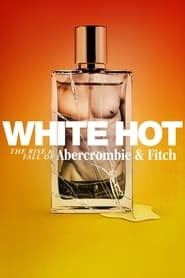
White Hot: The Rise & Fall of Abercrombie & Fitch
Lataa English -tekstitys
Julkaisutiedot
Tunnisteet
English tekstityksen esikatselu
189 ensimmäistä riviä.
101. Take four.
Thank you.
Recruiting is everything.
My name is Jose Sanchez.
Sorry, I'm stopping you because I work for Abercrombie & Fitch.
I'm a recruiter. I'm looking for people to work part-time in a store.
Nothing crazy. Five, ten, 15 hours a week.
We hire good-looking people.
When I was in high school,
Abercrombie & Fitch was the hottest retailer.
It was one of those stores
that when you're walking around, you do a walk-through.
It was such a pop culture phenomenon.
There was just this huge explosion.
If you weren't wearing Abercrombie, you weren't cool.
I just remember the pressure to fit in,
being like, "I wish I had that Abercrombie thing."
I don't feel this way now,
but then it was very cool to look like everyone else.
There was a guy, blond hair, blue-eyed,
just shredded like he was carved out of granite.
And he wore Abercrombie & Fitch.
-What it was selling was aspirational. -Aspirational.
Aspirational.
Aspirational.
This, like, perfect image of an all-American youth.
I would walk past Abercrombie like,
"What is so special about this store?"
It is so thin and white.
Fraternity,
boarding school,
WASP,
upper crust,
preppy with money.
When I wore the Abercrombie clothes,
I felt different, and I thought things might be different.
There's a reason why people liked that brand.
It's because exclusion is part of our society.
I think the first time I saw Abercrombie & Fitch,
a girl was carrying a bag with a half-naked, pretty hot white guy
in black and white.
And I thought, "What is that?"
Abercrombie sold a dream.
It almost was like your fantasy, like a young person's fantasy.
They literally made so much money marketing clothes
but advertising them with no clothes on, so…
You got used to that. The more you shoot with Abercrombie,
the more you're, like, comfortable with being half naked
and the clothes you're modeling not actually being on you.
When you look back on it as an adult, it can feel shocking.
But as a teenager, you just thought it was cool.
I saved enough money to buy one top,
and I wore it as often as I could without looking weird.
It said "Abercrombie & Fitch" on the arm. So it would be like…
"Look, I'm cool."
At least at my high school,
there was girls who would cut out the guys from the bags
and hang up those pictures in their locker.
I liked the posters or the photographs, and all my books were covered in them.
The Abercrombie would go on the spine,
and then the picture would go on each side.
The clothes were nothing special,
but it was the label on the clothes and Abercrombie across your chest
that was almost like a badge of distinction.
I associated the brand with, like, frat boys, rugby players.
Like, the white guys that played unconventional sports like lacrosse.
It's not like other companies where they have a celebrity,
like, "I'm gonna be just like Brad Pitt one day."
Like, no, you're not.
But you can be like the Abercrombie guy one day.
Very innocent, small town-type people.
The people that bought the clothes are the people in the campaign.
- Where you from? -PA, baby. Amish County, PA.
-New York, New York. -719.
-Pittsburgh. -Dallas, Texas.
Connecticut.
I went to Stanford, and my freshman year roommate,
he had the catalogs with all of the, like, shirtless,
rugby-playing, rowing Abercrombie dudes,
and on his dorm closet, he, like, made a whole collage of these men.
So I would say there was, like,
50 little cutouts of Abercrombie shirtless guys
just posted on his-- on his dorm closet.
So obviously it was then that I noticed that it was, like, a super white thing.
I grew up in Washington, DC, and in seventh grade,
I went to Sidwell Friends High School,
the high school where Malia and Sasha Obama went,
Chelsea Clinton went,
so this very elite private school in Upper Northwest Washington, DC.
I was all into hip-hop and R&B,
so my designers at that time were kind of FUBU, Mecca,
and these urban wear designers
that had really emerged in the late '80s and early '90s.
And I got to Sidwell,
and I heard of this thing called Abercrombie & Fitch.
I didn't know what was so special about this brand,
but at Sidwell, it was the thing to have.
I remember seeing kids who definitely had more money than I did wearing the clothes
and just wanting to be a part of that look.
The super low-rise jeans,
showing the midriff, belly button area was definitely in.
You know, even, I think, celebrities were wearing it.
Abercrombie & Fitch used people
before they were anything more than models.
Jennifer Lawrence.
Channing Tatum.
Heidi Klum.
January Jones.
I mean, we were looking at full-on advertisements
as telling us what was cool.
Magazines were definitely a big thing because social media just wasn't there.
MTV, the Video Music Awards, and the House of Style television show
gave flyover country access to the things that they wouldn't see ordinarily.
Please welcome 98 Degrees to TRL.
Trends that might have begun on the east or west coast now are being shown on MTV
and through their channels,
and it made styles move across the country much more quickly.
The same happened in malls.
That mall culture was everything.
You went to shop with your family.
You went to hang out with friends.
We hung out at the mall, like, every weekend.
My friends and I, behind our parents' back,
would sneak over to the mall and hang out.
We would have our schoolbags, dressed in our Catholic school uniform.
The mall was the place everyone went to pass time.
So when I turned 16, I knew that's where I wanted to work.
Imagine, like, a search engine that you could walk through.
Or, you know, an online catalog that's an actual place.
You had to, like, go to the mall to know what to wear.
Aw, very cool.
As more malls opened and people gravitated toward malls,
not only were they social outlets,
but they catered to all the different interests all in one place.
Specialty stores enabled you
to be very specific about what you went shopping for.
You can go to Hot Topic if you were kind of punkish.
You could go to Pac Sun if you wanted more of that surfer look.
You could go to Abercrombie & Fitch if you wanted that preppy look.
There were lots of brands doing preppy, but in terms of designers,
it was undoubtedly Ralph Lauren, Tommy Hilfiger, Nautica.
One of the earliest brands
to really merge youth culture and sex appeal
was really Calvin Klein.
What the hell is that?
-A dress. - Says who?
Calvin Klein.
It looks like underwear.
What Abercrombie did was create this middle ground
between sex, that Calvin Klein was selling,
and all-American preppiness that Ralph Lauren was selling.
You want what you perceive to be the cool guy wearing.
So it became that,
"If only I had Tommy Hilfiger, I'll be cool."
Or the GUESS jeans.
Oh my goodness.
Some of that stuff was just… You couldn't get it.
Abercrombie & Fitch was a little bit more affordable.
Just aspirational enough,
but not so expensive that it was out of reach.
The fundamental idea is that fashion is selling us belonging,
confidence, cool, sex appeal.
You know, in many ways,
the very last thing that it's selling is actually garments.
Do you remember the first time you went to an Abercrombie store?
Oh yeah!
Um, I remember, like, walking in
and just being hit with the sense, like,
"Oh my God, they've bottled this."
"They have absolutely crystallized everything that I hate about high school
and put it in a store."
First you get there, and you have two hot guys flanking the outside.
So if you make it past those hot guys, right,
without a little distraction or a little bit of intimidation.
When I started there, it was around the holidays, so they'd also have a Santa hat.
So, Santa hat, topless and jeans.
One of the things that Abercrombie did quite brilliantly
was put up brown shutters over the windows
and a big image in the front doorway at the entry.
So you couldn't see what was in the store unless you went into the store.
No other mall retailer did that.
I mean, they forced you to come over the threshold.
It had a whole vibe to it.
And you would know you were getting close because you would hear music.
Music full blast, and parents hated it.
Pulsating nightclub beats.
Massive images of, like, bare-chested guys.
The whole store was to be an experience,
where people went in there and hung out.
White Hot: The Rise & Fall of Abercrombie & Fitch subtitles in other languages
More English subtitles for White Hot: The Rise & Fall of Abercrombie & Fitch
- White Hot The Rise & Fall of Abercrombie & Fitch 2022 WEBRip Netflix · 61 downloads · 2022-05-02
Kommentit
No comments yet. Be the first to leave one.