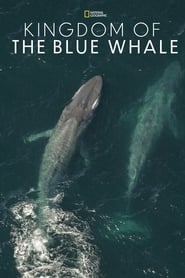
Kingdom of the Blue Whale
I-download ang English Subtitle
Impormasyon ng release
Mga Tag
Preview ng subtitle na English
Ang unang 200 linya.
Our oceans once churned with giants...
...diving deep through liquid space.
Today...
...they're few...
...and fragile.
Blue whales are the largest creatures to ever breathe on our planet.
We know little about them.
Their calls travel hundreds of miles.
But we can barely hear them.
They eat thousands of pounds of food every day...
...and we don't know how they find it.
Although they may live as long as we do
we only guess at how they meet or when they mate.
If we're to protect them
we must answer one of the biggest questions of all:
Where are blue whales born?
Now a handful of experts launches into the unknown.
Hundreds of miles offshore
in remote and dangerous waters
they hope to find what they've never seen:
A brand-new baby blue.
I hear them.
Over here. Thirty--
Hundred-- Hundred yards. Hundred yards.
You comfortable up there?
- Erin, you okay? Yeah.
It's September in California
and a rare chance to get close to blue whales.
Whaling decimated their numbers
and now the remaining few struggle for survival
in vastly changed seas.
Our oceans are busier
and blue whales feed inside dangerous shipping lanes.
The waters are noisier, so calls between whales may get lost.
And despite international laws
blue whale meat may still appear in foreign markets.
Protecting the blue giants is a challenge even for an expert team.
Every year, three whale scientists spend several weeks
in the Santa Barbara Channel, where the giants feed.
They must identify which parts of the sea are important for these blues
including the mysterious places where they're born.
Keep an eye out. Remember they tend to come up a second time.
John Calambokidis
is a founder of Cascadia Research in Olympia, Washington.
Well, this blue whale population here in the eastern North Pacific
represents the largest remaining blue whale population on Earth.
So it's critical we figure out what areas are critical to them
in terms of feeding areas on the California coast
but also breeding areas they may be using.
John works closely with Dr. Erin Oleson.
Seemed like it was gonna come up again.
Yeah.
Erin is from Scripps Institute of Oceanography in San Diego, California.
Okay, got it out here, 30 meters.
Dr. Bruce Mate is the director of the Marine Mammal Institute
at Oregon State University.
Right down here.
This year, the scientists hope to solve one of the greatest mysteries of the sea:
Where these blue whales are born.
Most of the time, blues swim far offshore, only briefly surfacing.
There it comes up.
But in late summer, when many gather to feed--
Oh, I guess we'll pick it up.
--The researchers get a chance to tag them.
Here come the flukes.
Come on, lift baby, lift.
We have a chance here better than anywhere else in the world
of putting tags on, tracking their migration
and reuniting with the animals to find out where they go to breed and calf.
This year's work is phase one of an ambitious expedition.
Phase two will follow the whales during their winter migration.
There's a blow out at 9 o'clock.
It just came up.
Among all the whale species, this animal is one of the most magnificent
and has a place unmatched in the ecosystem.
I mean, animals that live in half an ocean basin.
They're awesome.
I'll always love them.
Bruce's goal is to attach satellite tags to the whales.
So we want the one on the right, correct?
That's correct.
The idea is to follow the animals when they head south for the winter.
They believe that these blues mate and give birth somewhere in the tropics.
Okay, he's going down, you might back off just a little bit.
Blue whales are only at the surface for a few seconds at a time.
He's turning right.
We're not gonna make that. Hold on, hold on.
And he's out of here.
They're committed to coming to the surface.
We'll position ourselves back around the tail
where we can see them through the water.
And then as we see the commitment of the animal rising
we'll move just forward to the dorsal fin, place the tag in a good place
where it can be heard by the satellite every time the animal surfaces.
Safety off.
Get up a little. Get up. Get up. Get up.
Nice job, everyone. Nice job.
When the whale surfaces to breathe
its tag sends the animal's coordinates via satellite to Bruce's computer.
The data will help him track each whale's migratory path.
We're at the flukes right now.
Safety off. Safety off.
They use a crossbow to retrieve small skin and blubber samples.
Nice job, everybody. Nice job.
Excellent.
That animal's not spooked.
DNA analysis will reveal the sex of each animal.
Each whale's genetic identity is stored in an international database.
There are nine distinct blue whale populations in the world.
The whales that John, Bruce and Erin study in California
are the eastern North Pacific blues
and they migrate from north to south and back again, every year.
The best way to protect them is to discover where they go
and to learn what they'll encounter along the way.
The scientists hope to meet these blues near Costa Rica
and prove what's never been confirmed there
blue whales feeding during winter, mating and giving birth.
Another pair coming right at us here.
John records the life histories of whales.
And here goes the high arch that--
It's the best--
Get the best view of the markings.
It's possible to identify a blue whale using a concept similar to fingerprinting.
Blue whales aren't simply blue.
They're born with distinct marks on their back
and these dorsal patterns never change.
John identifies individual whales
and then matches them to known animals in his photographic database.
The natural markings on these blue whales let us recognize individuals.
And since 1986
we've been collecting them consistently on blue whales.
And we've been able to use that to estimate the population size
show that there's a little over 2000 animals in this population
and also track their movements.
Though they're twice the size of better-known whales
even top experts know little about blues.
An adult female blue whale can weigh almost 200 tons
heavier than 25 fully-grown elephants.
Her heart alone is as large as a small car and weighs close to a thousand pounds.
She's as long as two city buses bumper to bumper.
Blue whales also make some of the loudest calls of any animal
but we require special technology to hear them.
And which B-Probe is that?
Nineteen.
Erin Oleson decodes which whales make certain sounds
and what they might mean
by comparing the acoustic signals to the behavior they observe.
Erin and John deploy a different kind of tag
called a B-Probe, which attaches with suction.
Okay, we just had a whale surface.
It might be close enough for us to get to to tag, so we're gonna approach
see if we can get there in time while it's still at the surface.
Getting close enough to attach the probe is a delicate dance.
The tag records how deep the whale dives, its pitch and roll.
We're looking at how it approaches the prey.
And also, the tag's recording the sound.
So in the case of ships coming through the shipping lanes
we'll get the sound of the ship, how loud that is to the whale.
And also, be able to start getting data to evaluate is that noise affecting whales.
Oh, don't do that.
John needs to match the whale's speed of around five knots
and then anticipate when it will rise.
He's had years of practice.
Blue whales are like icebergs
with only small portions of their bodies visible at one time.
The B-Probe can stay on as long as two days.
Then they must retrieve it in order to create a dive profile.
Erin and John's research may reveal if the blues' voracious appetite
places them in peril.
This is one of the areas where we have extremely heavy shipping traffic
coming through an area of blue whale feeding.
And we wanna see is that having any affect on blue whales.
So we're also trying to get tags deployed on whales that are in the shipping lanes.
He uses the data to identify danger zones.
We got one up at 3 o'clock.
Two whales over at 3 o'clock.
In California, blue whales are often seen in pairs.
I still like the one ahead of us, on the left.
Both Bruce and John try to attach their tags to lead animals
because they suspect they're females.
That's who we want, I think.
Yeah, all light-colored, that's the lead.
Okay, approach on right.
That was pretty solid contact.
Bruce's tags on California females
should lead them to places where the whales will give birth.
Wow, such an explosive blow.
It's wonderful.
Pregnant females in California are about seven months along.
The fetus has tripled over the past few months
and now stretches nearly 12 feet.
Over the next few months
the baby whale grows over 1 inch per day.
Their two weeks of work off California are productive.
John identifies many individual whales
and Erin records calls the animals make while feeding.
Bruce places 15 tags on blue whales.
The scientists plan to rendezvous with the tagged whales in a few months
far to the south
if the whales make it there safely.
Kingdom of the Blue Whale subtitles in other languages
More English subtitles for Kingdom of the Blue Whale
- Kingdom of the Blue Whale 2009 1080i Blu-ray Remux VC-1 DD 5 1-KRaLiMaRKo · 77 downloads · 2023-05-05
- Kingdom of the Blue Whale 2009 1080i Blu-ray Remux VC-1 DD 5 1-KRaLiMaRKo · 80 downloads · 2023-05-05
- Kingdom of the Blue Whale 2009 1080p BluRay H264 AAC-RARBG · 102 downloads · 2019-10-25
Mga Komento
No comments yet. Be the first to leave one.