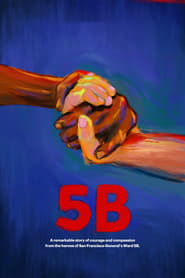
5B
I-download ang English Subtitle
Preview ng subtitle na English
Ang unang 179 linya.
Over the past year,
homosexuals have been coming out into public.
Uh, refusing to hide in the closet, simply said.
Very, very new scene.
Certainly new to me, and quite, quite fascinating.
It's not 1954 anymore, it's 1973, and...
And boys go to bed with boys, and girls go to bed with girls,
and, uh, some people go to bed with both.
The '70s were about that attempt that we made
to carve out a place for ourselves in society
that had never been done before.
Just the simple thing
of being able to walk hand in hand
down the street.
People kind of go like, "Yeah, big deal."
It is a big deal
because I've had beer bottles thrown at me
because of doing that.
The biggest thing that's been accomplished
is for a substantial number of people
to identify themselves as full-fledged and...
worthwhile human beings.
This is our day.
This is our day.
We are growing in power with every day that passes.
And we will not be stopped!
It was wide open.
I mean, there were a lot of people my age here.
The party scene was wild.
1981 was when things really began to change.
Scientists at the National Centers
for Disease Control in Atlanta, today,
released the results of a study,
which shows that the lifestyle of some male homosexuals
has triggered an epidemic of a rare form of cancer.
I fit the profile
kind of a typical Kaposi's patient in my age...
and that I'm gay, and...
But I don't know how I got it.
I was at San Francisco General.
I was a clinical nurse specialist.
And I saw some of the first young men
who died of cancer.
No one had ever quite dealt with something like this.
At the time I was working
in an intensive care unit,
and we had patients that came through with this illness.
And then, my landlord started getting sick.
Um, and within a month or two,
um, boom, he was gone.
Everybody was whispering that he had this gay cancer.
My boyfriend said,
"I don't want to get this gay cancer."
And then I started to see my friends getting sick.
Weeks later, they were down to skin and bones.
We were just shriveling up and dying.
Our immune systems were going,
we were catching diseases nobody had ever heard of.
I remember that one camping trip
because there was this very handsome blonde boy
that I was attracted to...
walking across these rocks...
looking like a leopard.
Within a few months, he was dead.
I started working per diem at the General.
I saw these young, gay men
placed in the isolation rooms at the ends of the hallways.
- -
No one knew how you were going to get it.
Could this be a disease spread through the air?
Doctors could only treat the symptoms,
never the underlying cause.
At the beginning, it was only gay men.
Only later did drug addicts, uh, have it.
And even in nursing, I mean, it was dirty nursing.
and people didn't want to get involved with it.
And we all knew at that time it was a 100% fatal.
We were expected to wear,
what we called "spacesuits."
Yesterday, I had an X-ray done,
and the girl spent 20 minutes
gowning up, gloving up, masking up.
We were afraid of them.
Everybody was.
Breakfast trays would pile up
because even the auxiliary staff
didn't want to go in.
I saw patients alone
begging for someone to come assist them.
And if they soiled their bed,
people were gonna wait until the last minute they could
to change it, and...
out and out refuse to take care of people.
I would not want to operate on that patient, no.
Have you had occasion
to turn down such an operation?
Yes, I have.
The person said outright, "I'm not touching him."
How could you not provide the care
that you know how to do?
In hospitals right now,
persons with AIDS feel particularly alienated
and particularly isolated.
It made me angry.
And the director of nursing
at San Francisco General came and sat down.
And she was like, "We have to do something."
And I said,
"Okay, I'll do it."
At San Francisco General Hospital,
the staff is gearing up
for the opening of a special wing
to treat AIDS victims.
People were like,
"Well, you're probably going to get AIDS
and you're probably going to die."
Yeah, I might have some anxiety about this,
but I'm more pissed off and angry than I am scared.
I see signs up
about this new unit.
I was instantly really interested.
There's an enemy.
And it's, it's a disease.
I'd heard about this dedicated AIDS unit.
I came from New York,
and I had this hope that I could get a job on this unit.
I had seen the patients being marginalized.
And I just
found it infuriating.
And then I got called for an interview.
One of the staff said,
"What is your zodiac sign?"
And I just said, "Uh, Cancer."
And she said, "Well, good,
because there's too many Leos on nights."
It was built by the nurses there.
And they physically built that ward.
We were making it.
We were creating it.
The nurses all volunteered for this duty.
If I had said no to any of them,
they might have done physical harm to me.
Cliff had a vision.
We were gay, we were straight, we were young, we were old.
And they were all kind of kick-ass,
even the straight ones.
And he said...
"Go home and talk to your significant others,
because we don't know.
We can't tell you
you're not going to get this disease."
I was ready, but I was scared.
My wife and I really couldn't talk about it.
Couldn't talk about our fear.
It was just so much there...
but I distinctly, uh, remember
having recurrent nightmares...
that I had given it to my kids.
This ward will be empty tonight,
the last time for a long while.
Tomorrow, AIDS patients will be moving in
and a unique experiment in medical care begins.
And then, they started coming.
One after the other...
in pain or struggling for breath...
with an array of immune deficiency that was...
mind-boggling.
Some people could be treated,
at least for a while,
and they were discharged.
Then, they came back unrecognizable,
either in appearance, or demeanor, or both.
From one week to the next, you could see the difference.
And the amount of time between diagnosis and...
terminal velocity, or whatever you want to say,
was usually less than four months.
I mean, medically...
This is a horror story.
And no one seems to realize it yet.
Mga Komento
No comments yet. Be the first to leave one.