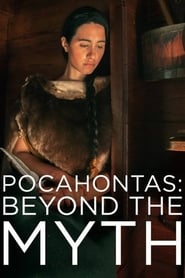
Pocahontas: Beyond the Myth
I-download ang English Subtitle
Impormasyon ng release
Mga Tag
Preview ng subtitle na English
Ang unang 200 linya.
Narrator: Pocahontas has been a legend for so long,
it's almost hard to believe she was an actual person.
Woman: Pocahontas was a real girl
who walked around the same way we walk around today.
Narrator: She grew up
to become the most famous American Indian woman
in history.
Woman: And that puts her in the class
of, you know, Cleopatra and Joan of Arc.
Narrator: But how much of the story we know is true?
Woman: Did they really understand
what they were seeing?
Man: Was Pocahontas a traitor to her own people?
Man: Maybe she was a double agent.
Narrator: And what keeps her memory alive
over four centuries?
Actress: Pocahontas asks him to give her this man's life.
Woman: Once a whole generation is told a story that they love,
it tends to last,
and this one lasted.
Man: We can tell you exactly where in the Church she stood.
That gives me the goosebumps.
Narrator: Hers is a story we tell ourselves about America,
a founding mother who still defines us today.
For 400 years, Pocahontas has been a household name.
We may think of her story as ancient history,
but her people are still very much alive.
Terry Mcauliffe: This is a historic year for us.
The Pamunkey Tribe has received
from The Bureau Of Indian Affairs,
they have been just recognized as a Federal Tribe,
So congratulations...
David Penney: The Indians that we project romantically
into our kind of past,
for many Americans to learn that, well, wait a minute,
the descendants of those same so-called mythical Indians
that are supposed to have faded away
are still with us today.
Narrator: The most famous and mythic
American Indian story of all
is Pocahontas.
Paul Chaat Smith: She was seen as a really consequential person
in American history from the very beginning.
Narrator: She's been celebrated as an American princess.
Smith: She was seen as royalty.
She was famous on two continents while still a teenager.
Narrator: She's even a Disney princess.
The story that's been passed down through the centuries
is a romance,
a love that unites two cultures
and creates lasting peace...
forging two worlds into one.
But even written history
can have a curious habit of getting it all wrong.
Penney: The kind of Romeo and Juliet story,
The John Smith and Pocahontas story,
very likely never happened.
Narrator: The true story is less of a fairy tale.
Kidnapping...
Conflict...
Starvation...
Cannibalism...
An ocean journey...
and the future of an entire civilization
make up the real story of Pocahontas.
The story starts years before the Pilgrims
arrive at Plymouth Rock
when three British ships make landfall
in what is today the State of Virginia.
They are there to found the first English colony
in the New World.
James Horn: I'd say it's a pretty widespread belief
that the Puritans--
more accurately the Pilgrims--
who arrived At Plymouth in 1620,
was the first permanent English colony,
uh, but it was actually preceded by Jamestown
13 years earlier, in 1607.
Narrator: 104 settlers, financed by London investors
and with the permission of King James I,
have come to search for gold
and a water passage to the Pacific ocean.
They are explorers, mercenaries and tradespeople
looking to make their fortunes.
Of course, it's only the New World to them.
The Indian Algonquin people
have lived here for thousands of years.
Ashley Atkins: When the English arrived,
they were stepping into a really intricate landscape
that involved an extremely large and powerful chiefdom.
Narrator: The Chief, Wahunsenacawh,
or Chief Powhatan,
was Pocahontas' father.
As his daughter, she has gone down in history as a princess.
Smith: We know that the princess isn't very accurate
because she had tons of sisters and brothers,
and none of them were called princes or princesses.
But she was a daughter of a powerful leader.
I think America wants royalty, right?
There's an envy of royalty.
So it's kind of cool that, you know, our royal
will be like an Indian.
Narrator: Popular culture imagines her as a grown woman.
But in 1607, Pocahontas was a girl of 9 or 10.
Camilla Townsend: Pocahontas was a real girl
who walked around the same way we walk around.
What made her laugh may have been different
from what makes us laugh,
but that spark of joy when she was giggling
was the aame as the spark of joy in any young girl today.
Narrator: Her real name was Matoaka.
Pocahontas was just a nickname.
Depending on who you ask,
it either meant "Spoiled Child" or "Playful One."
Either way, it suggests a carefree childhood
for the Chief's daughter.
But the arrival of the colonists
would put that reality to the test.
Horn: I Think The English Get Mixed Messages.
There were some Indian peoples along the James River
who welcomed them.
Um, trade.
And there are Indian peoples that are more hostile.
Narrator: Just a month after making landfall,
the settlers are attacked by 200 Indians.
Two colonists are killed,
and 11 are wounded.
The attack was just the first sign
that life in Jamestown might not live up to expectations.
It was swampy, mosquito-infested,
and the water was impure.
Before long, the colonists were battling disease and hunger.
Horn: Finding food and finding provisions
to keep that colony alive
was one of the toughest jobs.
Um, not just for Jamestown, actually.
Most European colonies failed within 12 months.
Narrator: They soon realize they are woefully unprepared.
Townsend: The English have been laughed at,
in a sense, by historians
for arriving without any clear sense
of how they were going to support themselves.
Narrator: Despite abundant fishing and hunting,
the English simply lack the requisite know-how
to make their food supply meet demand.
Atkins: Here they're surrounded by food.
Like, I go to Jamestown Island,
and I'm like you could have eaten that,
you could have eaten that.
I mean, maybe it wasn't there, you know, 400 years ago,
but I'm pretty sure it was.
Narrator: As winter sets in, the problem intensifies.
To the Powhatan, they hardly seem like a threat.
Smith: For a long time, Indians in Virginia
actually thought the English came to look for food,
because their experience of seeing the English
was they were desperately hungry all the time,
they were clueless about fishing,
they were clueless about farming.
So maybe they came here
because where they're from, it's even worse.
Narrator: Jamestown was led by a short, brash soldier-for-hire
named John Smith.
Smith actually arrived in the New World a prisoner
after a conflict at sea landed him in the brig.
But the colony quickly realizes they need him to survive.
It is his search for food
That brings the English into contact with Pocahontas.
Townsend: It was John Smith, in fact, who met her.
He had gone up the Chickahominy River,
hoping to be able to trade for some corn
because the colonists were so hungry.
Narrator: With Jamestown on the verge of starvation,
a desperate Smith travels through unexplored territory
and is set upon by a group of Powhatan warriors.
Horn: John Smith was someone
who never lacked for, um, self-confidence.
Um, he believed he knew best, uh, almost in any situation.
He's trying to hold them off with his pistol.
Narrator: Despite the weapon,he's far outnumbered.
They capture Smith, and over the next several weeks,
march him from village to village,
displaying him like a curiosity.
Townsend: He was paraded around at various villages
before being taken to Werowocomoco,
which means King's house or Chief's house.
That's where Powhatan, Pocahontas' father, lived
and where she lived, too.
Narrator: At Powhatan's Werowocomoco longhouse,
he is brought before the great Chief.
It's a historic meeting of cultures.
Horn: He is the first settler
to really, um, involve himself with, with the Chiefs.
No one had done it before him, no.
Narrator: As a European,
he likely would have underestimated Powhatan.
Townsend: We have every reason to believe
that a man like, like Powhatan
was extremely intelligent,
extremely sharp,
Mga Komento
No comments yet. Be the first to leave one.