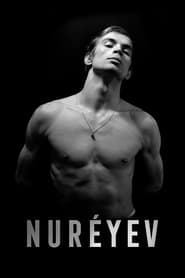
Nureyev
I-download ang English Subtitle
Preview ng subtitle na English
Ang unang 200 linya.
There is something in the background of any Russian,
whether he be Jewish or a Tartar or a combination,
which dramatizes a situation...
which is more potent,
more intense.
It probably comes from the fact
that they have such an otherwise difficult life,
and has always been for hundreds of years,
between snow and mud
and almost attached like a harness
to the earth and to the problems of life.
It enables them when they are liberated on the stage
to live life as they would have liked to have lived it,
with all the abandon and the capacity for focusing,
for dramatizing, for intensifying the emotion and the thought.
It's as if the sun were shining through a lens
and you focused it on something and it started burning
so that the whole life, the whole universe,
focuses itself through the greatest Russians,
and they start burning and burning up the audience, burning up themselves.
I was born on a train on the Trans-Siberian railroad.
My father was on service, military service, in Manchuria.
And so he called my mother,
and three of the children, to come over to join him.
The trip was very long. It's about 12 days.
So I was shaken out of the womb by the Lake Baikal.
I suppose with Nureyev, I felt the same kind of the sense of intensity,
the same kind of abandon,
which a great artist has at the height of his powers.
Nureyev was a human panther.
He had that incredible animal greatness and power.
At the same time, he was a human being.
It is something that lends an intensity of presence
which is overwhelming.
But the great, vast audience
is always fascinated by a superhuman man.
He was a phenomenon
and he knew it, of course, and sometimes he knew it too well
but thus he was a phenomenon,
and sadly destined, I imagine,
to consume himself and to live to the hilt.
I know you don't like talking about your background
because you have a very unromantic view of it,
but it is an extraordinary background that you came from.
I mean, it was a very, very poor background, wasn't it?
Well, it's true.
There wasn't, it seemed to me, much chance.
People wouldn't have put a lot of money on you becoming what you are now
from where you were born.
Well, I guess that... there wasn't much money around.
Well, it wouldn't buy anything anyway.
During the war, we had to evacuate from Moscow and...
- Then, of course, it was very tough. But how tough?
Once the war began and the family were evacuated,
they were in the southern Urals Mountains, in Bashkiria, in Ufa.
Because they are refugees, they are living in very bad conditions.
Certainly, food was very short.
My mother told me that all the trees were stripped of bark
as high as a man could reach
because people were cooking and eating it.
"We'd sold everything we possessed
and everything we could possibly sell for food.
I remember very vividly that first day at kindergarten.
Mother dressed me in my sister Lara's coat.
And there is nothing more calculated to make a small boy of six feel foolish
than having to wear his sister's clothes.
Mother had to carry me to school on her back.
The moment they saw me,
all the children started to sing aloud in Tartar,
"We've got a bump in our class, we've got a bump in our class."
"Bump' meant a beggar.”
Can you remember the first moment you wanted to be a dancer?
- What was it? - Well, erm, that was a long time ago.
How long? It might not be as long as people think.
It was like 29 years ago.
His father was in the army so he didn't see his father till after the war ended.
He was brought up in a very interesting, kind of maternal, environment.
You might think of the war as being a toughening experience,
a kind of bad experience because he's exposed to all these horrors,
but in fact, he may have been in a softer, maternal environment
than he would've been if the war hadn't happened.
Certainly, his mother encouraged him to dance,
which might not have happened had his father been there.
When my father came from the war,
my mother conveyed to him my wish to be a dancer
and he was adamant against any kind of dancing.
How did you solve that?
I ran away each time at night and went to...
to take some lesson in folklore groups and dance with them.
"When I was 11,
I met for the first time a woman,
a very old woman, Udelsova...
who was almost a real ballet teacher.
She had never really been a teacher,
but she was extremely musical, highly cultivated,
and had danced years and years ago
in the corps de ballet of Diaghilev's Ballets Russes.
I became extremely close to that remarkable old woman of 70,
who, every summer, took a trip to Leningrad
to see what was new in the world of ballet.
Once back in Ufa, she described everything to us...
opening up our provincial eyes to a far wider scene."
When Rudolf grew up a little, he joined the Pioneers' Club
and started taking dance lessons there.
Each time I ran to the class, my father beat me up,
because he didn't want to have a sissy in his home.
He had had to fight every inch of the way to become a dancer.
I wanted to go to Leningrad school.
My sister said, "Oh, there is only one train.
That train you should take."
The trip was very long.
To arrive to Moscow, it's about three days by train.
Then 16 hours to go to Leningrad.
From Ufa, the last place God made,
to Leningrad and the Holy of Holies,
the Vaganova school and the great teacher, Pushkin.
Hurrah, bravo for him!
It was triumph of will, like with Napoleon, you know.
It's extraordinary, and it showed.
He goes very rapidly into the main Kirov company as a soloist.
WOMAN WHISPERS IN RUSSIAN)
(MAN AND WOMAN WHISPER IN RUSSIAN)
My godmother was a well-known dressmaker.
She brought me up.
Everybody knew when they came to us, they had to ring the bell three times;
one, two, three, and no other way.
If the doorbell rang differently, we knew who it was...
Her assistants and I would quickly grab the cloth
and run to the back stairs to hide
so the cloth wouldn't be taken away from her.
That was the hardest,
the most difficult,
the most disgusting period in our life and in our country I believe,
when such a surveillance was in place.
Now, Nureyev, I met him in Leningrad.
Of course, he was a great legend, and his name was very well known,
and he was very popular, everybody loved him.
He was very great, and he was very, very famous.
Already, everybody knew that he was a wild one.
I remember once, my first year, I went into the theatre
to see Swan Lake or something.
When I came back to where we lodged, the door was locked.
They made me bang the door for very long time,
then they let me in and they said,
"We punished you that you went to the theatre.”
And they took my mattress away.
And next morning,
erm... they didn't give me my breakfast and lunch.
So I went to my friend's and had the breakfast there.
His family were not well educated and he was really astonished,
seeing my sister, me and friends of mine
who loved poetry, painting, music,
and because of it, he enjoyed to be with us.
We both graduated from the Polytechnical Institute.
I graduated from Radio-Technical Faculty
and my brother from Electro-Mechanical.
So we worked in the science.
It was forbidden for us to go abroad.
We couldn't see the new refrigerators, new cars, and so on,
but it absolutely wasn't important for us.
The social life and socialism wasn't very active
outside of the apartment.
Friends go together in the apartment
or, most of the time, the kitchen.
We called it Kitchen Culture.
I was studying Russian language and literature at university.
Rudolf would come to classes with me.
The dean gave his permission and said,
"Of course! Let the youngsters advance.
It is so encouraging to see a ballet dancer so keen to learn.”
In this period of 1950s, 1960s,
it's now the time of the Cold War.
There are the big two.
There's Russia and there's the United States.
You have a political competition, you have a military competition,
and you have this cultural competition.
It's an asymmetrical competition in that the West has...
United States, in particular, has a lot of consumer goods.
It produces material things like refrigerators
and washing machines, and cars and so on.
But the Russians can argue that they have a superior culture.
When you compare the West and the East, the Russians can say,
"We haven't got refrigerators,
but we have the best ballet companies in the world."
( "ALL HAVE TO DO IS DREAM" BY THE EVERLY BROTHERS)
Rock and roll is considered by our authorities
bourgeois music, very bad.
And it was highly criticised.
We could get this Röntgen film from the physicians.
And we designed some special devices
to record the sounds.
When you saw these records,
you could see some ribs
or some part of human bones.
Then the weekends, we used these records,
and we were dancing.
And then we'd compete with each other.
And we decided that the winner will be the guy
who could throw a girl so high
that the traces of her heels
Nureyev subtitles in other languages
More English subtitles for Nureyev
- Nureyev 2018 1080p WEB-DL DD5 1 H264-RK · 9 downloads · 2020-04-11
Mga Komento
No comments yet. Be the first to leave one.