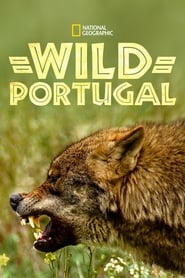
Wild Portugal
I-download ang English Subtitle
Impormasyon ng release
Mga Tag
Preview ng subtitle na English
Ang unang 182 linya.
On the wild edge of the European continent
lies a meeting point for the warm Mediterranean climate
and the cool Atlantic current.
This paradise boasts more than 500 miles of coastline.
And past its rugged shores
is a land full of spectacular wildlife and wilderness,
home to both the mysterious
and the familiar.
Together, they reveal the strange and diverse world
of Wild Portugal.
The broken, boulder-filled coastline of Portugal
forms the westernmost border of Europe.
Beyond it, the Atlantic Ocean.
Here, storm surges battle
with what's left of the continent's coastal defense.
High above the turmoil below,
a male white stork has found a secure place to make a home,
balanced atop a razor's edge.
This is the only place known in the world
where storks build their nests on cliffs.
And while this nest may shelter him from terrestrial predators,
the turbulence surrounding him leaves little room for error.
Out here, nesting sites are in short supply
and difficult to reach.
But they are burned into the memories
of these migrating storks.
Battling the relentless wind,
a female completes her journey
from Africa to a familiar place
and with a familiar companion.
As they've done in years past,
this pair now readies itself for a new generation.
Portugal is home to around 11,000 pairs of storks,
so as rugged as their living conditions might be
atop these jagged rocks,
they provide the birds exactly what they need...
...if they can carve out a place to build a nest.
The airspace becomes crowded,
and conflicts inevitable.
Established birds fiercely defend their homes
against aggressive newcomers.
His takeover bid a failure,
the newcomer has no choice except to take his chances
with an unproven, more exposed location.
The powerful Atlantic winds carry moisture from the ocean
inland toward the high mountains of northern Portugal.
Beneath these clouds hides one of Europe's great survivors.
The Garrano horse.
These horses and their ancestors
have roamed these hills for years.
Even our ancestors painted them on cave walls.
In this mountainous landscape,
almost 11 1/2 feet of precipitation falls annually
across more than 150 rainy days.
When the constant wetness becomes too much to bear,
the horses retreat to a sheltered forest...
protecting their foals from the relentless cold water.
But the ever-alert mares know
that they are not the only ones in this forest.
The Garranos share this habitat with Iberian wolves
and have for millennia.
And the wolves learned long ago
that these woodlands are a far better hunting ground
than an open mountain meadow.
They approach the herd downwind,
nearly undetected.
But the stallion refuses to be intimidated.
The wolves' cover is blown.
And the showdown ends with the wolves' retreat.
After such a close call,
the stallion leads his mares high up into the mountains.
For thousands of years
our history has been linked to these small, wiry horses.
In the past they helped carry our loads and work our fields.
Now they rely on the help of humans.
Less than 2,000 of Portugal's Garrano horses remain.
The stallion will do everything he can
to ensure the success of his breed,
but he is almost powerless against illegal hunting,
forest fires, and hungry wolves.
With the arrival of mating season,
tensions among the wolves begin to escalate.
The pack's strict hierarchy needs to be re-established.
A pack usually consists of a parental pair
and their offspring from the previous two years.
Once they reach age two, most young wolves will leave
in search of their own territory
and their own partners.
But until then, they will live in their parents' pack,
under their parents' rules.
And the first rule is that only the parents
have the right to reproduce.
For nearly a week the female will be fertile,
and the male her constant companion.
As with other canines,
these two will remain coupled for some time.
Until the 1960s
wolves once stalked every corner of Portugal.
Today they're confined to this small northern enclave.
If they're going to survive this last holdout,
it will be because these packs remain strong and united.
At a safe distance above the tree line,
Iberian ibexes inhabit a barren kingdom.
Females guide their young
across a landscape of slippery rocks.
The terrain may look exposed,
but this high up in the mountains,
they are safe from wolves.
The trade-off for their safety is the scarcity of food.
These ibexes owe their sure-footedness
to their climbing shoes: specially adapted hooves
with a soft, grippy inner surface
and a hard, stable outer edge.
On a neighboring slope, the bucks have gathered.
Their hierarchy is well established.
By the time they reach the females,
there will be no doubt who will be able to mate
and who will not.
The dominant male wears the largest horns like a crown.
In the rugged, mountainous world of northern Portugal,
the wolves patrol massive hunting grounds
as large as 116 square miles.
And now, more than ever, the pack needs food.
Two new pups have arrived.
And at 10 weeks old, they're already demanding meat.
And the entire pack works together
to make sure they are fed.
That is the special purpose of the pack.
They need each other to care for the next generation.
Each of these wolves is a part of the same dynasty,
helping secure the legacy of this family
long before venturing off
to establish a bloodline of their own.
These pups aren't worried about blood right now.
They want to know who is going to feed them.
And they've come to the right place.
A regurgitated meat meal from an older sibling
is exactly what they're looking for.
With fewer than 400 wolves remaining in Portugal,
scenes like these are increasingly rare.
For the pack's youngest members,
the best protection against stressors
like hunting and habitat loss
may be to remain here
within the safe confines of the national park.
Further southeast, along the Spanish border,
the Douro River has carved a deep gorge
through the Portuguese highlands.
Compared with the conditions the wolves face
to the far north, this landscape is dry and warm.
Instead of trapping moisture,
these slopes create powerful updrafts;
ideal for a griffon vulture.
With his keen eyes,
he calmly searches the valley for carcasses.
On the ground, a fox goes hunting for mice,
but wouldn't be above scavenging
like a vulture either.
Full-grown red deer don't need to worry
about vultures or foxes.
But why take any chances?
These green meadows are bursting
with some of the deer's favorite foods.
But even in this Eden,
animals fall prey to disease and old age.
This same meadow now provides a feast for the vultures as well.
A vulture seldom dines alone.
Word quickly gets around when a carcass has been spotted.
These vultures will share this banquet
whether they like it or not.
But even in their numbers,
they're not the rulers of this domain.
That would be the cinereous vulture.
Bigger...
Stronger...
Nastier!
When they want food, they get it.
Their only real competition is each other.
Alongside these moody giants,
a little Egyptian vulture hardly stands a chance.
He'll be the last bird served at this banquet.
As for the fox, it's not looking like
Wild Portugal subtitles in other languages
More English subtitles for Wild Portugal
- Wild Portugal 2020 WEB-DL DSNP · 7 downloads · 2022-04-03
Mga Komento
No comments yet. Be the first to leave one.