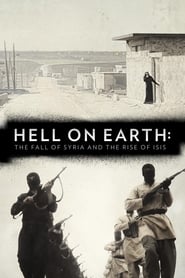
Hell on Earth: The Fall of Syria and the Rise of ISIS
I-download ang English Subtitle
Impormasyon ng release
Mga Tag
Preview ng subtitle na English
Ang unang 200 linya.
Sebastian junger: When a society collapses into anarchy
And violence, civilians inevitably take matters
Into their own hands.
They form armed militias.
They put up checkpoints and roadblocks.
They kill or expel anyone in the area who might threaten
Their grip on power.
Sebastian junger: In that kind of environment,
Radical ideologies are almost guaranteed to take hold.
Radicalism depends on desperation.
It depends on grievance.
And it then provides its own harsh answers to the
Corruption and the violence that afflict much
Of the world.
Sebastian junger: People will always turn to radicalism once
They have exhausted every other option.
Militant: Allahu akbar, allahu akbar.
Sebastian junger: They have to.
Their very survival is at stake.
Robin yassin kassab: At first it wasn't a revolutionary movement.
They weren't calling for the fall of the regime or
The execution of the president.
Robin ysssin kassab: It was very simple.
"we want our children to be released."
They were calling for dignity,
Which is important in a country where people
Were used to being humiliated and pushed around.
Sarah chayes: It's really remarkable the degree to which
Corruption has played an important role in driving a
Variety of security crises that had been breaking out in
The last five to ten years.
Every single one of the arab spring revolutions was
Explicitly an anti-corruption revolution.
These were countries run by extremely sophisticated
And successful criminal organizations.
The people who are paid to uphold the law are the very
Ones violating it.
It's humiliating.
Tunisia catches fire.
Libya catches fire.
Egypt catches fire.
Bashar al-assad looks at that and says,
"I'll be damned."
So he was willing to respond to peaceful
Demonstrations with maximal use of force.
Sarah chayes: The bet that he made was
"there's, at this point, no compromising
With this movement so if I wanna stay in power,
I have to absolutely take it to the limit."
Robin yassin kassab: Very quickly we got into this
Cycle of protests that were met by gunfire which led
To funerals the next day.
The funerals became bigger protests.
The demands, then, began to get bigger.
Social justice and freedom, an end to corruption.
The regime responded again with more and more violence.
Zaidoun al-zoabi: I participated in demonstrations
And I was detained twice afterwards.
In that jail, I witnessed at least the death
Of 80 people who died just because of the conditions.
There was no oxygen, there was no medicine.
There was no space for you.
You can't sleep, there's no sleep.
Wardens did not have to beat us.
We used to do it to each other.
You know, just like a couple of rats put in a small, small,
Small space, and we were, we were just biting each other.
It is a factory of terrorism.
You would go inside as an ordinary person and
Leave as a terrorist.
Linda ibrahim: I was almost 16, 17
When the revolution started.
I wanted to do something.
I mean, I wanted to participate in demonstrations.
I wanted these things to stop.
Emely issa: That night, I tried to prevent them.
I told them you are young and we don't know yet how will
The regime behave against you.
I was afraid they will shoot.
They will shoot.
I tried, but they insisted so I told them
"okay, I will be in front of you.
I will be the first, but you have to follow my instructions."
Emely issa: If god gave me 1,000 years to live,
I will never forget that sound.
Linda ibrahim: When you see such sufferings,
There is no childhood.
So many of my friends were killed.
And this is the hardest thing, you know.
Before, we wanted many things, we wanted to change,
But now we just want peace, you know, for,
Stop killing children, I mean.
Stop killing innocent people.
Bbc news: Mr. President, human rights watch, for example,
30th of January this year, has said that forces loyal to
Bashar al-assad "have deliberately and viciously
Attacked civilians in opposition-held areas using
Bashar al-assad: No, there's no indiscriminate weapons.
When you, when you shoot, you aim, and when you shoot,
When you aim you aim at terrorists in order
To protect civilians.
Again, if you're talking about casualty, that's war.
You cannot have war without casualty.
Man: Alahu akbar...
Alahu abkar.
Robin yassin kassab: The regime wanted a war.
This sounds strange.
Why on earth would any regime, or government,
Or state provoke a war against itself?
Robin yassin kassab: The regime knew very well that it
Couldn't survive a genuine reform process.
If there was a real reform process,
One thing would lead to another.
There would, there would be more and more transparency,
More and more crimes would be exposed, and in the end,
At best, the president and his top officers would have
Ended up in prison stripped of their stolen wealth.
They thought that in a military conflict, in a war,
They could win because they had done it before.
Under hafez al-assad, the father of bashar in 1982,
They used artillery, they used aerial bombardment,
They probably used chemical weapons,
And they killed somewhere between 10,000 and
40,000 people, and the memory of that terror kept the syrian
People silent until 2011.
Reporter: Pictures have emerged today apparently
Showing members of the syrian army defecting to join
Protesters in the city of homs.
Robin yassin kassab: You have a growing number of local
Volunteers and a growing number of military defectors
Who were joining together to form into hundreds of
Self-defense militias which eventually all came together
Under the umbrella titled, "the free syrian army."
Ahmed: These groups the fsa had in aleppo at that
Time were really helpful.
Once in salaheddin, I was demonstrating in there.
People start just falling on the ground that,
From shooting from the regime.
They closed the road on us.
Ahmed: And then, like out of nothing, like angels,
Somebody shoot the thugs and they fell
And they were able to escape.
Soldier: Takbir!
Fsa soldiers: Allahu akbar!
Soldier: Takbir!
Fsa soldiers: Allahu akbar!
Soldier: Takbir!
Christoph reuter: The propaganda of the regime was
"we are not confronted with a local revolution
Of people who demand rights.
No, we are confronted with a foreign-funded jihadi movement."
Peter bouckaert: Actually, a lot of the
Jihadists were released by the syrian regime
In the very early stage of the conflict.
There was an amnesty which allowed a lot of people with
Very nasty records to be freed from custody in syria.
It was a strategy of survival.
Robin yassin kassab: The regime thought enough people
In the outside world would be scared away from the
Revolution by the size of these bearded working classmen
With kalashnikovs and they were right.
And america, in 2011, 2012, they were saying,
"we can't allow weapons to go into syria.
We can't send the democrats, the nationalists of the free
Army weapons, because some of those weapons might get into
The hands of islamist extremists."
Will mccants: In the absence of a major international effort
To build a army to oppose the assad regime,
A lot of private individuals in the gulf began
To fund armed groups on the ground inside of syria.
Ghaith abdul-ahad: Fsa was a fantastic media labeled term,
But there was no central authority,
No one could command anyone, no one could have a one unity
On a frontline.
I would go to a village, it has five, six militias.
I would come few months later, they have multiplied into 50,
60 because forming a militia became a way of getting money.
The amount of money, the amount of ammunition,
The amount of weapons pumped into that conflict totally
Destroyed the revolution and turned it into the
Dynamics of civil war.
Peter bouckaert: Early in the war, isis wasn't present.
There was a very diverse landscape.
So a lot of the bosnians, and the tunisians,
And the libyans, the more extreme kind of elements of
Those groups came on there "el muhadrim."
El muhadrim means the immigrants,
The foreign fighters.
These groups fought alongside each other around aleppo.
Ahmed: Fighters came 3:00 in the morning,
Sneaked inside aleppo.
Nobody knew they were coming.
There were just, like, in every corner,
You could see one fighter.
And then in the morning,
Two tanks started shooting this neighborhood.
The fsa started shooting it.
They had only this rpg and it was not enough for that tank.
The second day, three tanks came.
They destroyed the first one and then they
Hell on Earth: The Fall of Syria and the Rise of ISIS subtitles in other languages
More English subtitles for Hell on Earth: The Fall of Syria and the Rise of ISIS
- Hell on Earth The Fall of Syria and the Rise of ISIS 2017 WEB-DL x264-RARBG · 103 downloads · 2020-04-13
- Hell on Earth www tfpdl com-hoe1772wd · 55 downloads · 2017-06-30
Mga Komento
No comments yet. Be the first to leave one.