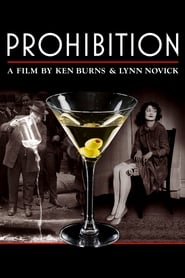
Prohibition
Télécharger le sous-titre en English
Informations sur la version
Tags
Download English Subtitle Files for Mobile (3)
Aperçu des sous-titres English
Les 200 premières lignes.
One snowy evening in January of 1826,
the Reverend Lyman Beecher,
pastor of the First Congregational Church
of Litchfield, Connecticut, rode out to visit
a parishioner in need.
The young man had been among his very first converts to Christ,
Beecher remembered, "always most affectionate
and kind."
but something was wrong.
His wife was weeping.
"What is the matter?" Beecher asked her.
She said that her husband's fondness for drink had
overcome his love for her... and for God.
Beecher had heard the same sad story from parishioners again
and again: Jobs lost, life savings swallowed up, wives
and children beaten and abused, all because of alcohol.
Now he resolved to do something about it.
Like slavery, the traffic in ardent spirits must come to
be regarded as sinful...
let the temperate part of the nation awake and reform.
The impassioned sermons Lyman Beecher wrote
and delivered on successive Sundays echoed sentiments
that had been heard for at least half a century in America.
But Beecher was so eloquent, and the scourge of alcohol had
become so pervasive, that when those sermons were published,
it set in motion events even he could not have imagined.
For the next 100 years, Americans would argue fiercely
over what to do about the age-old problem of drunkenness.
The battle would eventually result in an amendment
to the Constitution of the United States... prohibition.
It was meant to eradicate an evil.
Instead, it would turn millions of law-abiding Americans
into law-breakers.
It's this question of how much can we tell other people
about how to live their lives.
How much can we regulate society?
Can we really fix all the problems
that we see around us?
It's the great example of what happens when different groups
have different ideas about what kind of behavior
is acceptable.
Prohibition would pit
the countryside against the cities,
natives against newcomers,
Protestants against Catholics.
It would raise questions about the proper role of government,
about individual rights and responsibilities,
about means and ends and unintended consequences,
and who is... and who is not... a real American.
How the hell did that happen?
How does a freedom-loving people, a nation that's built
on individual rights and liberties, decide in one kind
of crazed moment, it almost seems, that we can tell people
how to live their lives?
Virtually every part of the Constitution is
about expanding human freedom except prohibition, in which
human freedom was being limited.
When people cross the line between our essential
character as Americans and some other superseding vision
of what we should be, then we get in trouble.
They say that the British cannot fix anything properly
without a dinner.
But I am sure the Americans can fix nothing
without a drink.
If you meet, you drink; If you make acquaintance, you drink;
If you close a bargain, you drink.
They drink because it is hot; They drink because it is cold.
If successful in elections, they drink and rejoice;
If not, they drink and swear.
They begin to drink early in the morning;
They leave off late at night;
They commence it early in life, and they
continue it, until they soon drop into the grave.
Captain Frederick Marryat.
For most of the nation's history, alcohol
was at least as American as apple pie.
The hold of the "Mayflower," the ship that carried
the first Puritans to Massachusetts, was filled
with barrels of beer.
At Valley Forge, George Washington did his best
to make sure his men had half a cup of rum every day...
and half a cup of whiskey when the rum ran out.
John Adams began each day with a tankard of hard cider.
Thomas Jefferson collected fine French wines and dreamed
of a day when American vineyards could match them.
After Andrew Jackson's inauguration, so many drunken
admirers crowded into the White House, the celebration
had to be moved out onto the lawn to save the furniture.
Young Abraham Lincoln sold whiskey by the barrel
from his grocery store in New Salem, Illinois.
"Intoxicating liquor," he later remembered,
was "used by everybody, repudiated by nobody."
A young Maryland slave named Frederick Douglass said
whiskey made him feel "like a president,"
self-assured "and independent."
Physicians recommended whiskey... and cider and brandy and rum
and beer... as far better for their patients than water
hauled from muddy rivers and stagnant pools.
Clergymen drank.
So did craftsmen and canal-diggers,
and the crowds of men
who turned out for barn-raisings and baptisms,
funerals and elections and public hangings.
It's part of ritual celebrations.
It's part of being social.
It's part of the gathering.
And it's always been there.
It just tells you something. Maybe we'll never really have
an answer for why we need it.
But if you look at the history, it's clear we do.
Americans routinely drank at every meal...
including breakfast.
In many towns a bell rang twice a day to signal what was
called "grog-time" so that men could stop whatever they were
doing in factories and offices, mills and farm fields
to raise a jug.
In farm families, in New England particularly,
there was a barrel of cider by the door, and you came
in and you would have your ladle of cider.
Now this wasn't as powerful as whiskey, but, you know,
it wasn't the kind of cider that we have
with doughnuts today.
For thousands of years, human beings had been
fermenting fruits and grains to create
mildly intoxicating beverages.
But by the 1800s, rum, whiskey, and other distilled spirits...
with significantly higher alcohol content... had become
increasingly available.
All of a sudden, you have all of these people
growing grain... growing corn, growing oats, growing wheat...
that can be distilled into whiskey.
And so all of these rituals that had been part
of the human experience where farmers would get up and you
would have beer with breakfast and beer with lunch
and beer with your afternoon break and beer with dinner.
But you're talking about 2% beer.
But now all of a sudden, people are drinking
whiskey instead.
And it took a while for the culture to recognize that,
"Wait a minute. There's something really wrong here."
By 1830, the average American over 15 years of age
drank the equivalent of 88 bottles of whiskey every year,
3 times as much as their 21st-century descendants drink.
Americans spent more money on alcohol each year
than the total expenditures of the Federal Government.
Inebriates filled the nation's poorhouses
and workhouses and prisons.
More and more, people began to worry that the country was
becoming a nation of drunkards.
And as the wages of many husbands and fathers and sons
went to the grog shop, women and children became
victims... mistreated, abandoned,
deprived of food and shelter.
Alcohol consumption
at that point was
a sign of masculinity that took away masculinity.
So that you drank to show that you were a man, but you get
drunk, and all of a sudden you can't provide for your family,
you can't do your job.
You become violent.
There are so many references to the degradation
of Saturday night.
Implicit that a man would go out, first of all,
he would leave the home.
He would go to a saloon. He would get drunk,
and he would come home and do whatever he wanted.
This is a time when there is no divorce; When the concept
of police protection for domestic violence doesn't exist;
The concept of marital rape can't be discussed.
But you can discuss it through alcoholism and what alcohol
does to men.
On April 5, 1840, 6 hard-drinking friends met
in a tavern in Baltimore and pledged to one another
that they would never take another drink.
They established what they proudly called
a "society of reformed drunkards"
and named it after the first president of the Republic.
Word spread.
Soon Washingtonian societies sprang up in every state.
At meetings across the country,
thousands of alcoholics, many in tears, came forward to confess
their own weaknesses to each other
and sign the Washingtonian pledge.
Eventually more than half a million men would add
their names to the rolls.
There was a way that the Washingtonians,
by telling their own stories to each other
and to people that they wished to recruit,
there was a great deal of power to that.
It was very personal. It wasn't some
authoritative or authoritarian figure from
on high telling you what to do.
It was one-to-one.
But clergymen denounced the Washingtonians
as ungodly because they dared claim drunkards could be
reformed by their fellow sufferers
without joining any church.
The young country was in the midst of a new era of reform,
fueled by a Protestant great awakening, that called upon
every believer to help cleanse the country
Prohibition subtitles in other languages
More English subtitles for Prohibition
- Prohibition S01 Complete 720p BluRay x265-budgetbits · 73 downloads · 2021-03-10
- biq-prbition 720p bluray x264 · 86 downloads · 2016-02-12
Commentaires
No comments yet. Be the first to leave one.