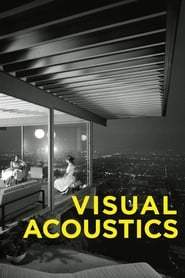
Visual Acoustics
Télécharger le sous-titre en English
Informations sur la version
Tags
Aperçu des sous-titres English
Les 200 premières lignes.
Architecture affects everybody,
from the hospital where you're born, to the schools,
and the grocery stores, markets, libraries, theaters.
Every part of a person's life
is based upon an architect's presence.
Architects live and die
by the images that are taken of their work,
as these images alone are what most people see.
For every person who visits a private house,
there may be 10,000 who only view it as a photo.
I'm looking at the base of the steps.
They die into the railing just where the wheel is.
It's perfect.
Photographer Julius Shulman has defined
the way we look at modernism.
First focusing his lens upon architecture in the 1930s,
Julius continues to document the evolution
of built environments and architectural forms today.
Print it.
Print. Print it.
You are now in Southern California,
two miles from Hollywood Boulevard.
Listen.
Hear that sound, just the birds.
What more can a man want out of his life?
This is Heaven.
Nothing here was planned.
It's a mish-mash, every conceivable kind of plant.
And people don't like this kind of garden.
Matter of fact, many people come here, they say,
boy I'd like to come some morning while you're still asleep
with a machete and chop, chop, chop, chop.
They want to cut back my density.
I'd chop your head off if you did that, I said.
By God, this is unbelievable.
This tree hasn't blossomed for years.
It's growing in the wrong place.
You don't plan the orange tree in the midst,
when all the other trees are shading it.
And yet, we'll probably have oranges this year.
That is fragrant. Oh.
I don't have to have a physical church.
What can be more beautiful than the church
in which you're surrounded entirely by nature?
This is my God.
I think it's significant that Julius,
after being born in Brooklyn,
before coming to the sort of city of Los Angeles,
lived on a farm in Connecticut.
And he's talked about this
as being a formative period in his life.
So great was his identity with nature and the woods.
Seven years that we lived on the farm,
until we came to California.
My father had an acquaintance who lived in Los Angeles,
telling my father that the streets are paved with gold.
We got on the Santa Fe Railroad,
and took a train across country, five days, five children.
When they moved to Los Angeles,
my father had his own room.
He said that his mother saw something in him.
History is strange.
Here, it becomes mystical.
I was ordained to become a photographer. I was destined.
He had a very inquisitive eye, navigating the environment,
whether it was people, or social events, or sporting events.
I took a photograph.
And my teacher observed that their heads
are all below the line of the second hurdle.
He said, Julius, that's a very professional photograph.
Here is a Eastman Kodak camera.
It's a great gift to give to somebody
who was 23 years old at the time.
And I have this vision of him wandering around,
whether it's in the hills, or wandering around town,
seeing the world through his camera.
You know if you're able to gather into one big picture,
all the small pictures that he took of Los Angeles
prior to his involvement in architectural photography,
you really get a sense of a pulse of the city.
I think that it's just
a beautiful way of thinking of my dad
and Los Angeles as siblings.
They really did grow up together.
He didn't know precisely what he wanted to do,
but he also knew what he didn't want,
which was just to sort of follow some conventional path.
And it seems as if his early life was about
muddling along until he found that niche for himself.
And part of that muddling along involved
going to seven years of college,
from which he didn't even get a degree.
At the end of the seven years,
I woke up early in the morning at three o'clock,
and I said, wait a minute, what am I doing here?
I've been going to university for seven years.
I think I've had enough.
And he drifted back to Los Angeles, unclear,
but not like a hopeless case,
a person with an incredible creative spirit
that just needed a channel for it.
Our guest is an environmentalist,
photographer, who has made his reputation,
I guess we could say in architecture.
Julius Schumann.
Julius, this photograph of Richard Neutra,
where you in architecture then?
Yes, I began my architectural photography,
coincidentally, by doing a photograph of one of
Mr. Neutra's houses in 1936 with a vest pocket Kodak.
And this was a rather curious experience because I had
not even seen a modern house before.
But this was one I visited with a young draftsman.
I made some eight by 10s
I gave to the young man, who showed them to Neutra.
I got a phone call, and within a week I was a photographer.
Opus one, my first architectural. March, 1936.
When they met Neutra was, I believe, 44 years old.
Schulman would have been almost two decades younger.
Neutra quickly recognized that perhaps he could
find someone who might be far cheaper,
perhaps more malleable.
He would have seen
the ability that was nascent there in Julius,
and seeing it as something that could be helpful to himself,
and to the other architects that needed to be documented.
Modernism began in Chicago,
when Louis Sullivan stated form follows function.
In the age of steel,
big windows and taller buildings were possible.
In Vienna, Otto Wagner proclaimed
that the machine age should have a style of its own,
and launch the Vienna Succession.
While Adolph Loos, a Sullivan devotee,
denounced ornament is crime.
The greatest disciple ins Sullivan's Chicago office
was Frank Lloyd Wright, who balanced
machine age functionality with the harmony of nature.
In 1911, Frank Lloyd Wright's vast portfolio
took Europe by storm, which greatly influenced
young Rudolph Schindler, and Richard Neutra,
both students of Loos.
Loos told Schindler and Neutra to seek out
Wright in Chicago, so Schindler set forth in 1914.
After serving in the first World War,
Neutra went in Berlin to work for architect Eric Mendelsohn,
just as Germany founded the Bauhaus School of Design,
and Le Corbusier was pioneering his theories
resulting in towards a new architecture.
Richard Neutra left Berlin to work with Frank Lloyd Wright
at the Taliesin studio in Wisconsin.
In 1920, Frank Lloyd Wright built the Hollyhock House
under the supervision of Schindler.
Richard and Dion Neutra
joined Schindler in Los Angeles in 1925.
Together, Schindler and Neutra founded
Southern California modernism.
Schindler comes out here, and becomes
the project architect on the house that we're sitting in,
The Frank Lloyd Wright Freeman House.
Not only did he oversee the construction of this house,
but he designed myriad number of pieces
of furniture for this house.
He melded, I think, influences,
Frank Lloyd Wright, European modernism, with then his own,
I think, idiosyncratic approach to architecture.
So in 1922, he built his own house,
which was a communal house,
very, very daring and adventurous.
Two couples each with their own studios,
personal studios, and communal space.
That's where he lived.
And then when Neutra came here from Europe, he an his Dion
lived upstairs in one of those screened porches.
Notice these walls, prepoured concrete slabs.
They're sloping inward.
And Schindler design the spaces to admit sunlight
between the slabs of concrete.
When I walked into the room, there is Mr. Schindler,
sitting at his desk in that corner.
He waved at me. He knew I was coming.
I was asked to photograph one of his houses.
When I came back and showed Schindler the prints,
he said, Shulman, the light you used was
so basically the same on both walls.
That's not natural.
Look around this room.
The light is different, there than it is on this wall.
But when you photograph the Dougherty House in Santa Monica,
you used floodlights, and you got the same value of light
on this wall as you have on that wall.
He gave me that wonderful correction,
which I adapted, the next house I did.
And I think that for me,
one of the really profound things about Schindler,
is that he takes three dimensional space and he
incorporates time, which is where light comes in.
And it kind of, it's the passage of time
that makes you understand space.
That's very good. That's very accurate too.
More English subtitles for Visual Acoustics
- Visual Acoustics 2008 WEBRip [YTS NoHI] · 19 downloads · 2021-10-04
Commentaires
No comments yet. Be the first to leave one.