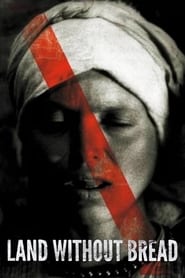
Land Without Bread (Las Hurdes) (Las Hurdes)
Télécharger le sous-titre en English
Informations sur la version
Tags
Aperçu des sous-titres English
Les 157 premières lignes.
LAND WITHOUT BREAD
This film was shot in 1932,
soon after the founding of the Spanish Republic.
The region we are going to visit is called Las Hurdes.
It's barren and inhospitable and man is forced to fight for subsistence.
The first road to Las Hurdes was built only in 1922.
Before that, it was unknown to the rest of the world and even in Spain.
On the way to Las Hurdes, we pass La Alberca.
It's rather prosperous,
of feudal character, with a large influence on the life of Las Hurdes,
where almost all the inhabitants are in debt to this town.
The church at La Alberca.
Two skulls in their niches symbolize the town's destiny.
Most homes have three stories. This is rare in Spain.
It gives the streets a medieval aspect.
Many homes have a religious text over the door:
"Ave Maria, conceived without sin".
The day we arrived, we saw village woman combing their hair.
They were dressed in their finery.
We asked them why they were dressed so beautifully.
They said they were going to the church square,
for an annual ceremony that's strange and barbaric.
Before the assembled population, the most newly wedded men
at the time of our voyage in 1932 that you see here
must each one take up the head of a rooster.
A rope extends across the street.
On it hangs a rooster tied by the legs.
The men gallop by and try to catch a head.
After parading in triumph with the heads,
the grooms offer everyone wine.
Along with the wine,
there is pleasure for everyone.
In the crowd, a baby
adorned with silver medals.
Although they are Christian medals,
we can't help but think of the amulets
of the wild people of Africa or Oceania.
We leave Alberca, where by 7 p.m. almost everyone is drunk,
and we head for the hills.
3 km from the village, we discover the whole panorama of Las Hurdes.
We look down on the 52 villages of Las Hurdes.
They have a total population of ten thousand.
To reach them, we must descend steep slopes to the valley of Las Batuecas,
inhabited by a solitary monk and his maid.
For centuries this valley has been home to monks of the Carmelite order.
They preached Christianity in the villages of Las Hurdes.
According to some people we met, the convent is uninhabited,
and only ruins remain, in a landscape of grandiose, savage beauty.
Las Batuecas conserves the vestiges of a rich prehistory.
Skilful cave paintings
representing men, goats and bees.
Toads, snakes and lizards
are now the only inhabitants of these ruins.
Rich vegetation
with more than 200 species of trees.
Yet 5 kilometers from this fertile valley,
the soil suddenly changes,
and except for a few fruit trees,
there is only rockrose and heather.
The convent is surrounded by an 8 kilometer wall.
It protects from attacks by wolves and wild boar.
Inside the enclosure formed by the wall
are the scattered ruins of 18 hermitages.
Each is marked by a cypress or two.
When the monastery was inhabited,
the anchorites of the hermitage had to ring their bell at midnight.
From the monastery, the prior answered them with the large bell.
Beyond these summits which are still part of Las Batuecas,
Las Hurdes begins.
We are entering the barren lands of Las Hurdes.
The village of Aceitunilla is in one of the poorest valleys.
The white building is the school, built recently.
On its sloping streets, we encounter daily life.
A curious detail,
in the villages of Las Hurdes, we never heard a song.
Sometimes, a miserable rivulet runs through the village
that descends from the hills.
In summer, water in scarce.
The villagers are obliged to use this filthy water.
Strange things go on here.
The rivulet serves many purposes.
Three children eat a slice of bread dipped in water.
Until recently, bread was almost unheard of here.
It was given to them by their teacher,
who makes the children eat in his presence,
fearing their parents will take it from them if they take it home.
The children are summoned to school.
These ragged, barefoot urchins receive the same education
as children the world over.
Clothing is brought back by Hurdanos who leave
each summer for Castilla and Andalusia.
They go there mainly to beg.
When they return, they exchange clothing for potatoes.
In general, the Hurdanos' clothing is so patched-up
that there is hardly a piece of the original material left.
These hungry children learn, like everywhere else,
that the sum of the angles of a triangle is equal to two right angles.
In some villages of Las Hurdes, and particularly here in Aceitunilla,
most of the children are orphans.
They are abandoned children whom the women of Las Hurdes
bring back from Public Assistance in Cuidad Rodrigo,
a two-day walk away across the hills.
The women raise the children in exchange for 15 pesetas a month.
This miserable sum is enough for an entire family
until the not-so-distant day when the practice is outlawed.
An unexpected and shocking picture we saw in the school.
Who could have made this absurd drawing?
We opened at random a book of maxims we found on a table.
One of the best students writes on a slate
one of the book's maxims.
The moral this child learns is the same everywhere in the civilized world:
"Respect other people's property".
In this relatively fertile valley
there are some walnut, cherry and olive trees.
This is the village of Martilandran.
The shapes between the trees, resembling the shell
of some mythical animal, are just the roof tiles of the village.
Entering the village, we are greeted by a chorus of coughing.
Most of the villagers are ill.
It's a scene of devastating misery.
Goiter is the principal disease of the highlands of Las Hurdes,
which is the main subject of this documentary.
Look at this woman with her goiter:
She's only 32 years old.
We visit the village in the company of the mayor.
On an empty street we see a girl.
We ask the mayor what's wrong with her.
He tells us the girl's been there 3 days without moving.
She must be sick, because she complains.
One of us goes up to her
to find out what's wrong with her throat.
He asks her to open her mouth.
Her gums and throat are inflamed.
Sadly there's nothing we can do for her.
Two days later,
we asked after the girl and were told she had died.
What do the people of this sterile land eat?
Almost the only food here
is potatoes and beans, and then not always.
Especially in June and July,
there's not enough food.
The only meat is pork.
But only the wealthier families have a pig.
Olive trees grow in more fertile spots.
But the olives are often eaten by insects.
The best animal for such infertile land is the goat.
Its milk is reserved for the gravely ill, who mop it up with bread
brought from afar by the beggars, and given only to the sick.
Goat meat is only eaten when a goat dies.
This happens from time to time on the steep slopes.
The main industry in Las Hurdes is apiculture.
But most of the hives don't belong to the Hurdanos.
And the honey the bees get from heather is very bitter.
The owners of the hives are from La Alberca.
They only let the Hurdanos have the hives in winter.
It's milder here than in the neighboring province of Salamanca.
In spring they take the hives to Castilla.
Land Without Bread (Las Hurdes) subtitles in other languages
More English subtitles for Land Without Bread (Las Hurdes)
- Land Without Bread (Las Hurdes) · 88 downloads · 2014-07-18
Commentaires
No comments yet. Be the first to leave one.