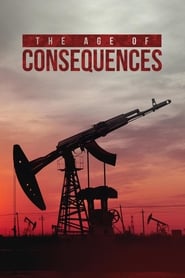
The Age of Consequences
Télécharger le sous-titre en English
Informations sur la version
Tags
Aperçu des sous-titres English
Les 200 premières lignes.
Nuclear war could quite possibly
finish off civilization altogether.
Climate change left to run its own course
could also finish us off.
The existential issue
is whether we can foresee what needs to be done
and get it done in time to matter.
We are always in a race
between what our intelligence can do for us
and what our intelligence does to us.
Drought and food shortage...
A just-released report from the Pentagon...
climate change and the challenges it's creating for the military.
The latest report says global warming
is driving weather to new levels of extremes.
A growing threat to national security.
The predicted consequences of a warming world
are already with us.
Climate change and natural disasters
can cause humanitarian crises, population migrations.
Scarcity of water, food, and space
could lead to failed states, instability,
and potentially radicalization.
Senator, there's no question that environmental security
can have a dramatic affect on overall security
both in individual states and regionally.
Never before have so many people fled war and persecution.
This is climate change far beyond the melting ice caps.
Global climate change, while not new to history,
is new to the modern world.
It can significantly add to the challenges
of global instability:
Hunger, poverty, and conflict.
The effects of climate change
are far-reaching and unpredictable,
demanding our attention and strategic thinking.
The U.S. department of defense
is preparing to adapt to these 21st century challenges.
The intersection of climate change
and the security of nations
will become a defining reality in the years ahead.
We cannot ignore the costs of inaction
and we cannot leave these massive security concerns
to the next generation.
We are now in the age of consequences.
Think about it from a military perspective.
When I was leading paratroopers in Afghanistan,
if 98, 99% of my intelligence
told me that I was driving my platoon down a road
and that two miles down that road
there's an ambush waiting for me.
I don't get to say, "yeah, but there's that 1%"
that says that there's no ambush,
so to hell with the other 99%.
"We're gonna keep going down the road."
I mean, that's negligence on an unfathomable scale.
That's the debate we're having right now
with regard to climate.
The overwhelming consensus
is we are facing a massive risk.
Climate change is happening.
We've got to decide whether we're going to act on it or not.
And that choice has consequences.
Climate change impacts the basic resources
that are necessary for humans to survive
and for nations to continue.
As we see our resources stressed significantly,
we're gonna see some unprecedented changes
that we have to prepare for.
The risks of climate change
impact on every facet of life.
They impact on every facet of national security
and of international security.
That makes instability.
That makes conflict much more likely.
The first time I thought about climate change and violence
was in Afghanistan while researching opium Poppy
from which heroin is made.
Every time I interviewed farmers,
they said, "part of why we grow this crop"
is because it's drought-resistant."
Turns out Afghanistan
is going through the worst drought in living memory,
and Poppy uses one fifth the amount of water
that wheat uses.
The Karzai government were eradicating Poppy.
The Taliban, on the other hand,
said to the farmers,
"we will defend your right to grow this crop."
Even in that conflict which has this elaborate history,
there is a climate aspect.
It's always a question of how climate change
interacts with other pre-existing problems.
If you have an area that is already unstable
and then has the additional challenge of sea level rise,
extreme weather events,
water shortages or food shortages
or a disaster that makes people move,
then you can start seeing conflict situations.
It's all the underlying conditions.
Climate change is the stimulus or the catalyst
that can cause all of that to agitate and become conflict.
From my perspective as a former member
of the United States military
and 30 plus years of service in uniform,
climate change is what we call an accelerant to instability.
It is what's causing a lot of the conflict
or helping assist the conflict
that's going on around the world.
And you can see that on the front pages
of the paper virtually every day.
If you look around the world today,
we can already see conflict and climate in play
right under the headlines that we're reading.
The international red cross
is now designating Syria's deadly conflict
to be a full-blown civil war.
Think about relationships we don't often look at.
The civil war in Syria,
now going on for years,
hundreds of thousands dead,
the entire region is in chaos as a result.
A new study finds climate change exacerbated
the worst drought ever in modern Syria
as a consequence of human interference.
Professor Richard Seager
says that a three-year drought
played a huge role in pushing the Syrian people
into an all-out civil war.
This is the first study that quantitatively
draws a connection between climate change
and the onset of a conflict.
Syria began to experience
a serious multi-year drought
in the winter of 2006, 2007.
And that drought lasted for three consecutive years.
Farming families just cannot survive on the land
when a drought lasts that long.
As people try to feed their families and can't,
they've got to go somewhere.
The drought caused a large number
of young Syrian men in particular
to leave farmland and go to the cities.
Damascus, Aleppo,
one and a half plus million people had to move.
That has a major destabilizing impact
when people have to pick up and leave
whether it's because of conflict or resource scarcity.
As anyone can tell you,
a bunch of unemployed young men in a major city
is not a recipe for social stability.
Now Syria had already absorbed
about a million and a half refugees
from Iraq who were fleeing the civil war there.
Those numbers combined such
that the population of Syrian cities
grew by about 30% or more.
That rate of migration is absolutely catastrophic.
It drove food prices up,
it drove apartment prices up,
strained the health system,
all leading to the kinds of conditions of discontent
to the all-out civil war
that is still going on now.
When we analyzed all the precipitation data we could get,
we found that we just couldn't attribute
such a long and serious drought
to natural climate variability alone.
That particular drought was two to three times more likely
because of climate change.
We of course did not say
drought was the sole cause of the Syrian civil war.
It's the confluence of multiple causes coming in,
with climate being one of them.
Climate change is all about the water.
So we have climate change leading to rainfall variability.
We don't necessarily know when the water is gonna come.
We can't predict that we're gonna get
the same amount of water as we used to get,
and that is going to have a huge impact
on whether or not we can grow food.
So in the case of Syria,
we're talking about how climate change
impacts water resources,
how that impacts food resources,
and what that means for what people do for a living,
whether it's farm, herd animals,
or join a terrorist organization.
This is a city draped in black
and a city raging with anger.
This is Isis,
the Islamic state of Iraq and Syria.
As people moved into those cities in Syria,
they were unemployed, didn't have a source of food.
They needed to feed their families.
ISIL promised them both those things
despite the philosophy behind their organizations,
people want to survive first.
Isis was pre-existing in the region
and would have existed even there had not been a drought in Syria,
More English subtitles for The Age of Consequences
- The Age of Consequences 2016 720p AMZN WEB-DL DD+5 1 H 264-SiGMA · 11 downloads · 2019-11-09
- The Age of Consequences 2016 1080p AMZN WEB-DL DD+5 1 H 264-SiGMA · 10 downloads · 2018-05-22
Commentaires
No comments yet. Be the first to leave one.