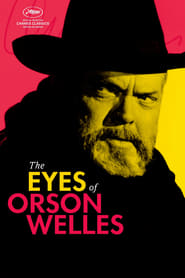
The Eyes of Orson Welles
English उपशीर्षक डाउनलोड करें
रिलीज़ जानकारी
टैग
English उपशीर्षक पूर्वावलोकन
पहली 200 पंक्तियाँ।
Dear Orson Welles.
Look where we are.
One of the wonders of the world.
With an eye like yours,
you'll have noticed something missing in this skyline.
The Twin Towers are no more.
All things come to an end, don't they?
People, buildings, cities.
That was one of the big themes in your movies.
You died more than 30 years ago.
Since then, some things haven't changed.
But quite a lot has changed since you died.
Life has become far more visual.
Something called the internet has come along.
Right.
It's hard to explain, but see those two guys at the bottom of this shot?
or order pizza, or book a flight, or watch Citizen Kane.
Phones are televisions and travel agents now.
The internet is like black magic.
The addict in you, the adrenaline junkie, would love it.
What you would have done with the internet?
There've been other big changes since you died.
We've had an African-American President in the Oval Office.
Oh, and a guy who thinks he's Charles Foster Kane.
The world has become more Wellesian, Orson.
The despots that you were fascinated by are gaining ground.
Things seem exaggerated.
But what is Wellesian?
Who were you?
When I told a waitress recently that I was making a film about you,
she said, "Oh, that big creepy actor? He gave me the willies".
You did act creeps, didn't you? And bullies.
In 'The Third Man',
the camera whooshed into Harry Lime, your most famous character.
A monster. A smirker.
In the limelight.
So, the waitress was partly right.
Can we look at you anew, Orson?
Can we tell your story anew?
Can we?
I went to this secure storage unit in New York.
METALLIC CLANK
And found this box.
What's in the box?
An aspect of you, Orson.
You left no autobiography, but you left something else.
I took the box in a taxi.
That's me, 40 years after I saw your film, 'Touch of Evil', on TV as a boy.
I didn't understand it, but I swooned.
I felt the whoosh of love.
You threw a rope to me when I watched it, Orson.
When I'm nervous now, anywhere in the world,
I hum the tune that plays on Touch of Evil's pianola.
It's a sultry lullaby of sorts.
PIANOLA PLAYS
I took the box on a plane and now it's in my flat.
What's in the box, Orson?
Not words or films, but drawings.
Many have never been seen before.
What's in the box, Orson?
Visual thinking.
What's in the box, Orson?
A sketch book of your life.
Look how freely your quill moves across the page
in this BBC tv documentary.
Scratch and scribble, lines faster than you could think,
for the back of the head and the lapel.
PEN SCRATCHES
Then more careful for the nose.
You were obsessed by noses.
Old-school technique, dipping into an inkwell.
Where would you start the story of your drawing life, Orson?
You said that at nine,
"I'd started to paint. That's what I loved the most, always."
And then, later,
"I've never been excited by movies as movies,
as the way I've been excited by magic or bullfighting or painting."
Your guardian, Dadda Bernstein, encouraged you to study art
in the Windy City.
What a transit lounge!
Was it a visual treat?
AMBIENT CITY SOUNDS
Did it affect your looking life?
You could look at Chicago square on, like this.
But, surely, the city of the first great skyscrapers
made you look upwards.
And you became the greatest ever filmmaker of looking upwards.
Whether it's by craning,
shooting below people's feet.
- Mr Arkadin is waiting for you. - Thanks.
20,000 tonnes of marble...
To suggest power.
So, you wouldn't have to request...
To miniaturise a character.
Not so loud! You want to bring the officials down on us?
Suppose they ask who you are?
You lived here and had a drawing studio here on Rush Street.
It was just big enough for your bed and a large drawing board.
Your teacher said that you did thousands of sketches here,
but threw most of them away.
But you studied drawing here, didn't you?
The Art Institute of Chicago.
In your early teens.
Do you remember, as a boy, sitting on the tail of its famous lions?
And, inside, what did you see?
Europe?
Myths?
Bodies?
Selfhood?
Pointers to your future?
Translucent ceilings lit from above? A technique you'd use in The Trial.
- Who are you? - My name is Bloch.
Are you employed here?
And Citizen Kane.
You talk about the people as though you own them.
Years later, if you knew someone who was going to the Art Institute,
you told them to go and see these miniature rooms.
Did their look, their wideness,
influence any of the visuals in your films?
You're supposed to train her voice, Signor Matiste. Nothing more.
If you could be here now, your eyes would be darting, Orson.
Chicago's got new ways of seeing.
So, your drawing and painting life had begun.
It continued for 60 years.
You drew everywhere you went.
So, there were at least a thousand of your artworks.
Where are they now?
Many are in Michigan, in Ann Arbor, which was named after its trees.
Here, in the University of Michigan's archive they have your relics.
Your beloved nose putty.
A coat you wore as Rochester in Jane Eyre.
Letters from you. And to you.
This one is from Vivien Leigh.
And then there are your drawings themselves.
Another place where I found your artworks was here.
Can you guess where I am?
And who lives here?
Brace yourself, Orson.
It's Beatrice, your third daughter.
She's in her 60s now, but is still a rocker chick.
And sometimes drives with no hands.
What am I doing first?
All those should be his paintings, if I remember right.
- That is gorgeous, that, isn't it? - Isn't that fabulous!
That was a Christmas card.
It was a Christmas card.
That's sort of what I saw this morning when I got up.
- That's... I call it Broadway Blues. - Hm-mm.
And that's about a producer saying,
"So sorry, Mr Welles, we haven't got around to reading it yet."
You know, this is just like the usual.
- And he's saying, "How about my play?" - Yes, exactly, that's him.
And see, "Where did the money go to?" See, it's just... It's like my father .
Some... Sign he put here, some Broadway blues.
This was in Munich, when he was travelling with his father around the world.
- This is before he got to Ireland? - Oh, yes.
This is probably when he was about, I think, 12.
And that's in Munich. And then here, he's... I don't know. Our dearest family.
He'd been to Shanghai at this point, hadn't he?
- Yes. - Hence this one.
And then, these look like German caricatures.
He's on his way to Germany, obviously.
A drawing of you painting, Orson,
and look how many kisses you put on this letter.
And I just went, 'Wow, look at this picture', and then I remembered
that this was the painting he drew when they threw him out of "Touch of Evil",
when they said, "You can't come back, and you can't touch your movie".
- Which is this one? - Yeah. And you can see the anger in it.
I mean, you can just...
Can't you?
Wow!
You took a line for a walk.
Portraits, sketches in letters, costume designs, stage layouts,
backdrop plans, Christmas cards, pictures of your loves and travels.
You drew compulsively, a lifetime of lines.
Were you in the zone when you drew, Orson, like sports people?
Do your sketches show us your unconscious?
PEN SCRATCHES
Can we glimpse in them the story of your life, its politics, love and power?
GUITAR PLAYS
Ordinary people, Orson, the 20th century was theirs.
Many got to vote for the first time, old elites lost power.
Was the extraordinary Welles ever ordinary?
Did you know many working-class people?
My own allegiance is stronger to the idea of citizenship,
and my own loyalty is greater to the idea of myself as a member of the human family
than it is to a... as a member of any profession.
I don't take art as seriously as politics.
The Hotel Meurice, in Paris, 1960.
A TV interview.
How solid you are in the frame.
And then your laugh, and that trademark cigar.
But where did your belief in citizenship start?
With your mother, Beatrice.
She co-founded the Women's Alliance to help Chicago's poor.
Her activism was inspired by this Unitarian church,
which was open to all races and classes.
The Women's Alliance hosted speeches on the persecution of Jews in Russia.
Your mother was the first woman in your hometown of Kenosha
ever to be elected to public office.
The Eyes of Orson Welles subtitles in other languages
More English subtitles for The Eyes of Orson Welles
- BBC The Eyes of Orson Welles 720p HDTV x264 AAC MVGroup org · 44 downloads · 2019-01-17
टिप्पणियाँ
No comments yet. Be the first to leave one.