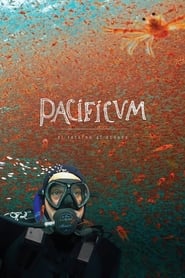
Pacíficum
Unduh Subtitle English
Informasi rilis
Tag
Pratinjau subtitle English
200 baris pertama.
In the beginning there was darkness,
only the sea.
In the beginning
there was no sun,
no moon, no people.
In the beginning
there were no animals
or plants,
only the sea.
The sea was the mother that was nothing.
Absolutely nothing.
She was the spirit of what was to come,
and she was all memory and possibility.
The sea
is the force that shaped the planet.
It is the mother of all life.
From the earliest bacteria
to the most complex life-forms,
we have all come from that great marine placenta,
and we are all descended from the same ancestral creatures,
submerged in Earth's first waters.
We all share a common genetic code.
Water is the lifeblood of the planet.
Without water, there can be no life.
OCUCAJE DESERT
This lunar-like landscape,
dominated by sun and wind,
is the Ocucaje Desert
on Peru's southern coast.
Even though one can't tell at first sight,
it was once filled with life,
and the memory of that past
remains embedded on the desert floor.
VERTEBRATE PALEONTOLOGIST
For me, this desert
offers the chance to fulfill my dream of understanding the past.
In Ocucaje, the mounds one comes across are not always rock.
As you draw closer, you start to see vertebrae,
ribs, jawbones, skulls.
This is the skeleton of a whale that lived some 10 million years ago.
The total length of this animal must have been around eight meters.
It was an ancestor of today's whales.
The enormous vertebrae are visible,
along with the ribs on both sides of the backbone.
It has a long skull with flattened bones...
and an arch-like jawbone set into the lower part of the cranium.
It would have fed by filtering microorganisms
from the seas of the Ica coast.
The bars you can see here,
between the upper and lower jaw,
were in fact the whale's baleen.
Whales don't have teeth.
They use baleen filters made from a protein called keratin.
Nonetheless, 10 or 12 million years later,
this baleen has been preserved.
It is this fossilization process
that makes the Ocucaje remains unique.
The Ocucaje Desert is the best place in the world
to study the evolution of whales and dolphins
over the past 40 million years.
Every transformation, every stage, has been recorded here.
How did a whale that lived in the ocean
end up in the middle of the desert?
The journey to this place
began far away,
in the lands between India and Africa
50 million years ago.
There, a group of ancient land dwellers
returned to the sea.
In this reintegration with the sea,
their organs evolved in a transformation
that enabled them to adapt to this new environment.
Their bodies became longer,
their legs were transformed into fins
while their tails
developed to become very powerful, enough to propel them through the water.
These creatures migrated across the world's oceans,
finally reaching the coastline
where the deserts of Peru now lie.
The mountains of the Andes were produced
by the collision of tectonic plates
as the seabed was lifted throughout the length
of the continent's Pacific coast.
These submerged areas rose to form part of the desert coast,
along with the remains of their fantastical inhabitants.
When I study the fossils scattered across this desert,
I think about the origins of life,
because all life originated in the sea.
Millions of years ago, our own ancestors inhabited
the world's seas.
The continent's earliest hunter and gatherer inhabitants
walked this coastline.
Perhaps they sensed, long ago,
as they listened to the soft breaking of the waves,
a renewed bond with the immensity of the ocean.
The wonders of that blue world were breathtaking.
Nothing we see today can compare with the abundance of life-forms
in what was still a pristine environment.
Those early human groups saw how the sea was connected to rivers,
highlands and mountains,
and how all waters returned to the sea,
creating a cycle, an endless flowing life force.
The sea was more than a source of food.
It was the spirit that engendered all life,
and it had to be thanked.
And so it was that humans built temples along the coast
in order to connect with the sea's essence.
TEMPLE OF SALITRE INCA CULTURE (1450 - 1532 A.D.)
Temples formed a link between the earthly world
and the celestial realm of the gods,
as well as the ocean
and the subterranean world hidden in its depths.
In this case, one can sense the association with something higher
in the form of an offering to the sea.
URBANIST ARCHITECT
SPECIALIST IN PRE-COLUMBIAN URBANISM
TEMPLE OF PARAÍSO PARAÍSO ARCHAEOLOGICAL COMPLEX
PRECERAMIC PERIOD (2500 B.C.)
SAINT PETER'S SENTINEL
LURÍN CHINCHA ARCHAEOLOGICAL COMPLEX
CHINCHA CULTURE (1000 - 1450 A.D.)
As an architect and urban planner, my task is to understand structures
and their relationship with their surroundings.
PYRAMID WITH RAMP N. 2
PACHACAMAC ARCHAEOLOGICAL COMPLEX, LIMA
ICHMA CULTURE (1000 - 1450 A.D.)
Bandurria is a perfect example of the relationship with location.
Here, the temple is set on an east-west axis...
TEMPLE OF BANDURRIA
...in alignment with the movement of the stars,
as they appear to be submerged by the sea.
TEMPLE OF BANDURRIA BANDURRIA ARCHAEOLOGICAL COMPLEX
PRECERAMIC PERIOD (2500 B.C.)
In other valleys, there are more temples intimately associated with the sea.
HUARCO ARCHAEOLOGICAL COMPLEX HUARCO CULTURE (1000 - 1450 A.D.)
According to the chronicler Cieza de León,
Cerro Azul was one of the finest Inca structures
found anywhere on the coast.
The temple possessed ramps
along which its high priests walked down to the seashore.
Today, we don't study history as a way of returning to the past.
We study history as a way of understanding the present
and creating the tools that will enable us
to produce a better template for the future.
Understanding their relationship with the ocean,
ancient peoples built temples to venerate the sea...
ICA RIVER LOWER VALLEY
...while also seeking ways to use a natural world
they considered sacred and alive.
Across these lands,
they planted cotton to make their woven fishing nets.
In order to hold them on the sea's surface,
they genetically modified gourds and calabashes
and used them as natural floats.
They salted and dried the fish that wasn't eaten immediately
on terraces built on the slopes of hills.
The salt was extracted locally.
DRYING FIELDS HUARCO ARCHAEOLOGICAL COMPLEX
These structures resemble agricultural terraces,
but they were created for drying fish.
Part of the catch was transported to the Andes
where it was traded for other products.
Such was the abundance of the sea's harvest.
To sail the sea,
ancient fishermen built the first rafts from totora reeds.
Similar rafts can be seen to this day.
Since the first humans occupied this coast,
there have been many changes.
BIOLOGIST SPECIALIST IN SUBMARINE BIODIVERSITY
As a land-based species
we experience severe limitations when it comes to exploring
the ocean's depths.
For us, the sea is immense,
and it is easy to think that it is inexhaustible
and nothing we do can affect it.
I have been conducting research in Peru's seas
for more than 20 years,
but I'm still surprised by what I find below the surface.
Peru's seas are among the most plankton-rich waters
on the planet, which is why they appear so murky.
This microscopic organism
drifts across the world's oceans
and forms the basis of the sea's food chain.
It is fed upon by many marine creatures,
which in their turn are fed on by others.
A few meters below the surface,
a red cloak begins to form.
I watch how these tiny crustaceans advance,
suspended in the cold water in a kind of dance.
What we are seeing is the squat lobster,
one of the many species that feed on plankton.
Anchovies also feed on it.
This spectacle of living color
gives an impression of great abundance,
but it is an indicator that the anchovy,
a species which shares the same food source,
is disappearing.
Fel!
There's plenty of fish, brother!
Open that hole. The hole.
Pacíficum subtitles in other languages
Komentar
No comments yet. Be the first to leave one.