Informasi rilis
Tag
Pratinjau subtitle English
200 baris pertama.
THE BFI SHOWS
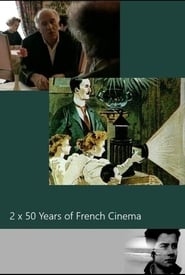
TWICE FIFTY YEARS
OF FRENCH CINEMA
BY ANNE-MARIE MIEVILLE
AND JEAN-LUC GODARD
WITH THE PRESIDENT OF
THE FIRST CENTURY OF CINEMA ASSOCIATION
MR. MICHEL PICCOLI
and employees of the Hotel du Lac in X.
My child, my sister
Imagine the sweetness of being there together
loving at our leisure
loving unto death
in the land that resembles you.
Are you coming?
Is anyone there?
Tea, please.
And for you?
The same.
When Mr. Piccoli arrives, tell him that I am here.
Yes, sir.
This way, Mr. Piccoli, someone is waiting for you.
- Michel! - Jean-Luc!
Mr. Piccoli, will you be drinking something?
A weak coffee, please.
A glass of water.
Your room key, Mr. Piccoli.
That's three Piccolis in three seconds...
...this is like the Piccoli Teatro.
Are you OK? Where have you come from?
Fine. From Lyon.
Oh yes, the inauguration.
Yes, the inauguration of the celebrations...
...of the first century of cinema, in Lyon.
Yes, you are the President, aren't you?
I am President...
...but nobody has called me Mr. President yet.
And you are inaugurating what exactly?
Let's say announcing: Bertrand Tavernier, Chardère and the Mayor
announced the various projects: the building of a new cinema...
...the preservation of the brothers' workshop.
"The Exit from the Lumière Factory."
His hangar. Do you know why they were called Lumière (Light)?
No.
It was the grandfather, I believe. Didn't Bernard tell you?
I think it was Auguste and Louis' grandfather.
He was the candle lighter in a church in the Haute-Saône.
We have a project in that valley. It is the valley of the image, Lyon.
Invention of cinema, Niepce, Châlon, Beaune.
I can't remember who invented cinema in Beaune. I don't know.
The valley of the image. That's one of our ideas.
Would I "reelly" make love with memories?
Reel.
And this presidential work, does it take up much of your time?
A lot of time, yes.
Simply being called President doesn't interest me all that much.
What is a presidential day actually like?
Do you have an office and secretaries?
We have an office, a secretary, an administrator...
...two representatives whom you know.
Crombecque and Toubiana...
...and we try to imagine how one could celebrate cinema.
Yes, but let me explain. That's why I asked you to come here...
...to do me a favour.
Why celebrate cinema? Isn't it famous enough already?
Or not any more?
It has been diverted, so to speak.
What exactly are you celebrating?
We are celebrating the first century of cinema.
We took 1895 as the starting date.
The first public screening with an audience that paid to watch a film.
So you are celebrating the first commercial exhibition...
...not production.
The Lumières' first commercial exhibition of their invention, cinema.
You don't celebrate the fabrication of a camera.
No, not the fabrication of a camera.
But we do intend to involve the industry, the technology...
...what about cameras in the future, digital imagery, synthetic imagery?
I'm trying to understand more precisely.
Recently we celebrated the liberation of Paris.
What does that mean, to celebrate?
To celebrate means to show, to explain...
...what the invention of cinema actually was.
...one of the greatest inventions of the late 19th century.
To restore films, showing films the public never saw.
Like Méliès films, everybody knows.
Sorry, but one could, for instance, not have any festivities...
...but use fifty television stations, or the ten French ones at least...
...to show Méliès films if you want to show them to a wide public.
If you only show them to 3000 people once every hundred years.
I don't want to be rude, we are all very nice people...
...but to celebrate something...
...perhaps that is in some way to exaggerate...
...the value of something one rather neglected of forgot...
...a way of redeeming oneself, of making amends.
For instance, with Méliès' films, he still had offices in New York.
He wound up in a shack by Montparnasse Station.
But he had offices in New York...
before the Americans pinched his business.
Now, if you wanted to show that. Restoring films is all very well.
It takes time and passion, and indeed...
...only the French are doing that, the French State.
But afterwards, why not show the films on television?
But anyway, why not show them all year long on television?
Like for the Warsaw ghetto. That you can celebrate every day.
The liberation of Paris too. Every single day.
As Lewis Carroll said: "Happy unbirthday!"
Where we differ is that you say happy birthday...
...and I want to say "Happy Unbirthday" every day of the year.
Exactly that is why, on television, we will be showing not Méliès...
...because we are at war with his inheritors...
...but all Lumière's films, not just "The Exit From the Factory..."
...everyone has seen that...
...but the 1400 Lumière films, one minute per day.
For how long?
For 355 days. There is no problem since there are 1400 films.
There will be one minute of Lumière films on television every day.
One minute in 24 hours of programmes.
That is less than the ads.
Of course, everything is less than the ads.
No, they should be shown all day long. That's what I call celebration.
Don't misunderstand me, feasts are honourable things...
...but if cinema had become what it should have become...
...there would be no need to do that.
But what should it have become then?
You too celebrate cinema because you make film histories.
No, I don't celebrate.
I do make film histories because I occupied a little bit of it...
...and no one ever told me what I was doing there.
And I still do not know what I am doing here on Earth.
The British Film Institute asked us to do something.
Tavernier was asked to do something for the hundred years...
...but he couldn't...
...so we told them, rather than showing some clips...
...that we wanted an argument...
...like you have an argument with Méliès people...
...because they want money for this and for that.
Roughly, our idea is that we do not remember.
Ask anyone. Just now I asked the head waiter about "Remorques."
A blank. Grémillon? Nothing.
So I said: "Gabin." He had a vague inkling. Michelle Morgan too.
But if you say: "Dalio," nothing. So it was impossible and...
I thought it would be a good idea...
...to invite the President into this little story, since this is a piece of fiction...
...but do ask them, since you will be spending the night here.
I am curious. I bet that 3/4 of the names...
...even those from your generation, will have been forgotten.
This is France, and France is a very interesting country.
I would like to say, but there is no time...
...that French cinema is the only one that had critics.
Even in the early days there were critics.
Delluc, Germaine Dulac, Jean- Georges Auriol.
There was this critical dimension.
In other cinemas, it was business right away.
In America, Edison, was commercial exploitation from the start.
In France too, but there was this other dimension.
There is so much to say about that. For instance...
...when you show Feuillade today, people call it an old film.
They don't talk of an old book. An old book is a book in poor condition.
You do not say that "Don Quixote" is an old book. Not even an old novel.
But when you take Griffith or Gance's "Napoléon,"
...that is called an old film.
Cinema was mortal and it is normal that it should stop.
But when you restore these old films and you show them...
...they are no longer old, they become marvels of cinema.
Sure, but that is like a festival, like the Van Gogh exhibition...
That doesn't get shown in every village...
...so you can see it only once, if you live in Paris...
...and you queue in the rain for three months or you can't see it.
So from time to time, every 50 years, like for the concentration camps...
...this gets shown, but Resnais' film isn't shown every night on TV.
Take the Pathé exhibition that is on now. I have this funny document...
...don't think I'm being rude, from the brochure you published...
...the one with the two brothers.
Let's show it to the camera, like they do on television.
Can it be seen like this?
More or less. Fine. Please look at it and tell me what is missing.
What are the brothers holding?
A camera.
No.
A phonograph and a projector, no doubt a Pathé Baby.
Isn't it amazing.
I make films so I see that something is missing, the camera.
And that's the difference with Edison, who didn't want a projector.
It is Louis' and Auguste's father who told his sons: ...
... You must get the image to come out of the box.
And they said: no way, but then they copied him immediately.
It would be interesting to show Alice Guy's films on the first channel.
But what I wanted to say was that...
...with the Pathé brothers, people don't tell the truth.
They were the very image of French colonialism.
Their company was bigger than Gaumont.
They were known in China, they had the whole world.
Max Linder was an incredible megastar.
By the way, did you know that Max Linder died around here?
To paint your delicate elegance...
Your slender waist...
I will appeal to the soul of Watteau...
Oh my Columbine
So you read Shakespeare...
2 x 50 Years of French Cinema subtitles in other languages
Komentar
No comments yet. Be the first to leave one.