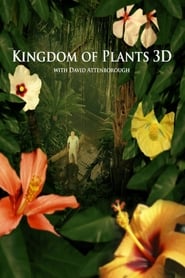
Kingdom of Plants
Unduh Subtitle English
Informasi rilis
Tag
Download English Subtitle Files for Mobile (3)
Pratinjau subtitle English
200 baris pertama.
I'm exploring the fascinating world of plants,
from the most bizarre to the most beautiful.
I will be using today's latest technology
to reveal a whole new dimension in the lives of plants.
I'll trace them from their beginnings on land
to their vital place in nature today...
..and discover a hidden world
that, only too often, we overlook.
We'll move from our time scale to theirs.
We will explore the extraordinary ways
by which some plants survive in the harshest conditions.
And we will do all this in one unique place,
a microcosm of the whole plant world,
the Royal Botanic Gardens of Kew.
Kingdom of Plants with David Attenborough
I've seen plants growing in their natural habitats
all over the world.
But here in Kew,
it's possible to examine them in a way
that is impossible in the wild.
Here, some 90% of all known plant species
are represented in one form or another.
So, in this one place,
you can survey the entire plant kingdom,
and what is more,
using 3D cameras,
reveal some of its most intimate secrets.
Life in the Wet Zone
Plants flourish most dramatically
in places where there is a lot of warmth and a lot of water -
the wet zone.
So here we can discover how plants first established themselves on land
to become the very foundation of all terrestrial life.
Rainforests occupy only about
2% of the world's land surface,
but they contain
over 50% of the world's species.
And many of these wet zone plants
have extraordinary survival strategies.
And to study them, Kew has built a rainforest
here on the banks of Thames.
This is a rainforest like no other.
The Palm House was constructed in 1844
from over 200 tons of iron
and 16,000 panes of glass.
No one had ever built a glass house on this scale before
and to do so, the architects borrowed techniques
from the ship building industry,
which may explain why the Palm House
looks like the upturned hull of a ship.
Its purpose was to provide a home for the tropical plants
that Victorian explorers brought back
from their adventures in the tropics.
It was an engineering wonder of the age.
And it is still a botanical wonder.
Most of the plants at this end of the house
are kept in pots
as they would have been in Victorian times.
And this is almost certainly
the oldest pot plant in the world.
This is Encephalartos altensteinii.
and it came here in 1775.
Altensteinii has since been joined
by a multitude of other wet zone plants.
Together they constitute a unique global rainforest,
a living laboratory
where we can watch and observe the fascinating ways
in which rainforest plants interact and behave.
Conditions in this glass house are near perfect
for wet zone plants.
It's warm,
it's humid,
there's plenty of light,
and as a consequence, plants grow very rapidly
and all through the year.
If you speed up time,
plants begin to reveal their true nature.
They are not passive organisms as you might think,
but competitive creatures,
every bit is aggressive as animals,
they are locked in a desperate battle for light and space.
They stretch and pulse
as they strive to barge their way into pole position.
Creepers and vines reach around
for the branch or the stem of another plant
on which to hitch a ride.
Bamboos, a family of giant grasses,
are capable of extraordinary speeds
as they race towards the mightiest light of the top of the canopy.
They are the fastest growing of all plants.
Some species can grow a whole meter
in a single day.
And at 30 meters tall,
as high as a nine-storey office building,
they can compete with the tallest rainforest trees.
The one resource wet zone plants don't need to fight for
is water.
In fact,
there can be so much rain in the rainforest
that some species have to have special ways
of getting rid of it.
This is the taro plant
and it has the most extraordinary leaves.
What would happen when I pour water on them?
The water rolls,
leaving the leaf behind almost dry.
And that's because the leaf
is covered with very, very tiny microscopic structures
which hold aloft the droplets of water.
And as a consequence, only about 2% of water
touches the actual leaf surface itself.
And as the droplets roll away,
they carry with them the dirt and bacteria,
so, in effect, these leaves are self-cleaning.
But there are some plants that use water
in a different way
and they leave high up in the canopy.
A tank bromeliad,
a plant that is dispensed with the need of growing
in the soil on the ground,
and instead attaches itself
to branches up here in the canopy
where there is plenty of light.
And since it's so far from the ground,
it has had to develop a technique of collecting its nutriment
in a quite different way.
They collect some of the rain
in everyday drenches in South American rainforest where they live.
Their leaves, which are very broad,
channel the rain water into a central reservoir.
At their base,
the leaves are so tightly pressed together
that the tank they create is watertight.
Some species can hold up to 50 liters of liquid.
The water not only hydrates the plant,
but it also provides a home
for a lot of creatures that wouldn't otherwise be able to live up here.
These little wrigglers
are the larvae of mosquitoes.
In the wild, there are lots of different creatures
that can be found in these little pools.
This is Ranitomeya imitator,
a poison dart frog from Peru.
It's the size of a thumb nail
and the only monogamous amphibian in the world.
Some individuals spend their whole lives,
from tadpole to adult, in and around bromeliad pools.
And high in the canopy,
such a pool provides an excellent home.
It's relatively safe
and there is a ready supply of food.
The plant benefits from the arrangement
because the droppings produced by its lodger
are a nutritious fertilizer.
Bromeliads and the frogs that live in them
are only one example of the complex relationships
that are bound in the rainforests.
In tropical forests,
the lives of every living thing,
both animal and plant,
are intimately entwined.
It's a tangled web
that has evolved over many millions of years.
Throughout the history,
rainforests have provided plants with a refuge
against harsher conditions elsewhere in the planet.
So in rainforests,
you'll find some very ancient plant families.
This cycad, for example, belongs to a family
that certainly provided food for the dinosaurs.
But the rainforest is such a rich environment
that plants of all state in their history
can still be found here.
The first was slimy thread-like algae
that emerged from rivers and swamps
to grow on the wet muddy margins.
40 million years or so later,
some developed watertight coverings
that enabled them to move on to try those still moist land.
They were the liverworts
and the mosses.
Later still, some of the descendents of those plants
stiffen their stems
so that they were able to stand upright
as they reached up towards the light.
They were the ferns and horsetails.
This greening of the earth
changed the course of life
allowing animals to follow plants
out of permanent water.
As they spread across the land,
the plants pumped out oxygen from their leaves.
So from the very beginning,
land animals were dependent upon plants
not only for food,
but for the very air they breathe.
A major difficulty for plants in their new environment
was reproduction.
If they were to produce fertile seeds,
pollen from one had to reach
Kingdom of Plants subtitles in other languages
More English subtitles for Kingdom of Plants
- 植物王国 Kingdom of Plants 3D (2012) · 59 downloads · 2013-08-31
- BSkyB Kingdom of Plants · 81 downloads · 2012-09-13