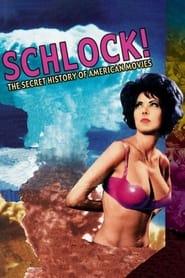
Schlock! The Secret History of American Movies
Unduh Subtitle English
Informasi rilis
Tag
Pratinjau subtitle English
194 baris pertama.
- Hollywood, California,
a small theater company readies for the performance
of an ambitious new work based on a classic text.
Is it Shakespeare or Sophocles?
Line backstage, please.
None of the above.
It's reefer madness!
Reefer madness!
- It's "Reefer Madness."
No!
We're all gonna die.
- In it's original incarnation
as a theatrical film,
"Reefer Madness" was an early prototype
for a sensationalistic brand of filmmaking
that flourished in America for decades.
"Reefer Madness: The Musical"
was just one example of how the controversial
and misfit movies of yesterday
can become the mainstream entertainments of today.
What follows is the story of that strange
alchemical process of a secret cinema
and the men and women who brought it to life.
(audience applauding and cheering)
Question, what is an exploitation movie?
- There has never been a good answer
to what is an exploitation movie.
Some people would say it's something
that exploits the subject matter,
other people would say it's something
that exploits the audience.
I would say it's probably somewhere in between
or a combination of both.
- Anything was permissible for an exploitation picture,
as long as it was in bad taste.
It was just unheard of.
Society was alarmed and delighted.
We did make them in six days.
I remember once, later on,
when we got seven or eight days to make a movie, we said,
"What are we gonna do with the extra time?"
- The ideal world for a teenager is a parentless existence.
- Now that you bought me, what do you want me to do?
'Cause we were making money
while they were dropping dead at the box office.
- You say to me that I made exploitation films
and I say to you that every film is an exploitation film;
because as soon as you advertise something,
you're exploiting it.
Do you agree?
Gee whiz.
- The second world war was the great
and transforming event of 20th century American life.
(audience cheering and applauding)
Thanks to wartime mobilization,
the society a generation went overseas to defend
had vanished in its absence.
Returning GIs were ready to invent
a new world for themselves,
and they may even have believed
it would resemble the one that preceded it,
but it couldn't.
They had witnessed too much not to have been changed
by what they saw.
The pent-up sexual energies
of four long bloody years of combat and separation
found immediate expression
in a post-war reproductive frenzy
that came to be called the Baby Boom.
- The period in the '50s and '60s
was a period of unparalleled abundance.
On the whole,
the generation that came back from World War II
came back to a fat country,
and the GI Bill and all these things
allowed a lot of people to become homeowners quick.
So you had this sense of
a kind of paradisiacal sense of entitlement.
- Beneath the general euphoria
of prosperity and plenty,
darker currents circulated as well.
- That wasn't a good one. (laughs)
- It sounded pretty good to me.
- (laughing) That was the wrong one.
In 1954,
Los Angeles audiences attuned to the strange new medium
of live television
discovered and even stranger entity
invading their living rooms.
The show was a local sensation,
and its hostess was a necrophiliac's delight
who went by the stage name Vampira.
From its opening shot,
"The Vampira Show" promised audiences
something different.
And Maila Nurmi, the girl behind the ghoul,
made sure it delivered.
- Well, initially the viewer sees a long corridor
with many candelabra and dry ice,
and far away a doorway which opens. (screams)
They can hear it where down at the end of the corridor.
And then far away they see this infanta silhouette
slowly approaching through the mist,
slowly approaching through the mist.
And as it gets close enough,
the viewer sees that it's a creature
apparently in a trance drifting closer, closer,
closer to the camera.
And when she reaches, almost reaches the viewer,
she suddenly screams a blood-curdling scream, (screams)
and then says, "Screaming relaxes me so,"
as if she's having just had an orgasm.
I mean, that was my thought,
and that was what I was trying to imply
in a lady like manner. (laughs)
- Here, on this small local show
created to showcase bargain basement horror films
in a late night comedy format, sex and death,
two American obsessions often suppressed
from the wider culture of the day,
arrived in one outrageous and alluring package.
- According to a report not yet confirmed,
a beast of seemingly gigantic proportions
has been cited lurking in the hills due northeast of town.
- Television itself was one of several factors
terrorizing the Hollywood movie-making community
in the mid-1950s.
The majors put up a brave front at first,
but as millions of viewers began choosing Uncle Miltie
and "I Love Lucy" over a night at the movies,
a kind of controlled panic began to set in.
- indicating that the monster has some strange power
of rapid growth.
- Though available only locally,
"The Vampira Show" was written up in Newsweek,
pictorialized in Life Magazine,
spawned fan clubs all over the world.
Nurmi's act was imitated on stations
in every city in America.
- Every major city seemed to have one,
and they'd come on first and tell jokes about the movies
and then launch into the picture.
Maybe it was to make it a little more palatable
for those PTA groups and the people who said,
"No, we shouldn't have these kinds of things,
not even in the movies, let alone on television
in everybody's living rooms."
I know with me, it was just...
I was rebelling.
Intense, it was a violent rebellion.
And I was not alone, obviously.
This whole thing was seething.
People wanted to be unloose,
they wanted some freedom,
freedom of expression, freedom of everything, you know?
Less hairspray. (laughs)
The question was:
Freedom for whom?
And revolution against what?
Television wasn't Hollywood's only headache by 1954.
Throughout the early '50s,
a late '40s court decision was in the process
of breaking up the studio system's virtual monopoly
on premium American theater space.
For the first time in modern screen history,
finding an audience for large scale,
independent film distribution became a viable possibility.
- There were all of these problems
in the motion picture world,
from the divorcement decrees and all these other things,
that were creating havoc.
And we knew that there was an opportunity.
- American International Pictures
was one of the first production outfits
to recognize the advantages of the situation.
Created as American Releasing in 1954
by a lawyer turned producer,
Samuel Z. Arkoff and his partner,
former exhibitor, Jim Nicholson,
AIP quickly realized that it's cheaply made movies
couldn't compete directly with A-list studio titles.
The answer was simple but transforming.
Service a skew of the market
that was uninterested in the serious minded,
adult themed star vehicles the studios specialized in
and address concerns and subject matters
no supposedly reputable producer would touch.
- We made "I Was a Teenage Werewolf,"
"I Was a Teenage Caveman,"
"I was a Teenage Frankenstein."
The word teenage, to the best of my knowledge,
had never appeared on any picture
throughout the world prior to that time,
because the teenagers had never been recognized
Komentar
No comments yet. Be the first to leave one.