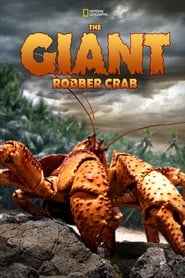
The Giant Robber Crab
Scarica il sottotitolo English
Informazioni sulla release
Tag
Anteprima dei sottotitoli in English
Le prime 165 righe.
Somewhere in the far reaches of the Indian Ocean,
a remote island withstands the elements:
Christmas Island.
For those who travel across the ocean, it provides a safe resting place.
For others, it has become a life-giving home.
Christmas Island is famous for its red land crabs,
which migrate in their millions to spawn.
But its true king is of a different kind.
The robber crab.
A giant, living up to a hundred years old,
with a leg-span reaching over three feet long.
Their path to power is an epic journey.
Christmas Island is the peak of a volcanic seamount
which rose three miles high from the ocean floor.
The island was named by the British captain William Mynors,
who discovered it on Christmas Day in 1643.
It belongs to Australia,
although that continent lays more than 600 miles further southeast.
The island's 45-mile coastline is an almost continuous sea cliff.
The shallow waters bordering Christmas Island
attract large numbers of marine inhabitants.
Coral reefs provide shelter for many species.
This is where robber crabs begin their lives,
as planktonic larvae.
Only a few will make it through the first weeks.
There are many mouths on this reef.
Including the corals themselves.
Of the young that survive the coral,
many are lost to strong sea currents and storms that batter the rugged coastline.
After two months at sea,
the few remaining larvae crawl ashore,
ready to begin their life on land.
This young robber is about three years old,
far from being grown up.
He's hungry and can detect food from long distances.
This coconut's irresistible fragrance
hasn't only caught the attention of this young robber.
But of a giant...
...whose claws could crush him in an instant.
At up to eight pounds,
male robbers are the largest land invertebrates on Earth.
But he should be safe in here.
A grown robber can open a coconut with ease.
It's only the fibrous husk that slows them down.
This obsession with coconuts has earned them the nickname coconut crabs.
Hidden away, the little robber still isn't safe.
This neighborhood's just too rough!
Leaving the coast behind, the forest becomes his new home.
Strange creatures share this foreign land filled with dense undergrowth.
He'll have to get used to the sight of one species.
Red crabs.
They're everywhere!
Fifty million of them roam the island.
Red crabs are generally considered harmless vegetarians.
However, they do like to complement their menu with small animals.
The young robber would be ideal.
He should stay away from those claws, at least while he's small.
Hunger drives the young robber forward.
Finally, about 66 feet above, a breadfruit.
For him, out of reach.
A pack of flying foxes have already discovered the delicacy.
These messy eaters turn out to be a stroke of luck.
But beware, not only food falls from the sky.
The flying foxes are the last remaining mammals on Christmas Island.
The other bats, native rodents and shrews that once existed here
couldn't survive with the arrival of humans
and the creatures they brought with them.
For the longest time, the island remained uninhabited.
It was only when phosphate was discovered in the soil that a mine opened.
Today the island has about 1,800 residents.
With just a few crops that survive here, so most of the food comes by boat.
And unloading it can sometimes get a little shaky...
...without the security of a safe harbor.
Before people came to the island,
only creatures with the ability to cross oceans could settle here.
Most notably, birds.
Abbott's boobies nest in the highest rain forest trees.
Red-footed boobies are attentive parents, and chicks grow quickly on a diet of fish.
But it can be a hazardous home.
The Pisonia tree requires more of its feathered friends
than only the nutrient-rich bird droppings.
Once a year, the Pisonia tree produces sticky, barbed seeds
that cover the forest floor in a dense carpet.
Harmless to crabs,
a death trap for others.
Their minute hooks stick to feathers,
and seabirds become unwitting couriers, spreading the seeds far and wide.
But the Pisonia's strategy doesn't always pay off.
This young booby is so smothered in seeds, it's impossible to take flight.
A second young bird lands on the forest floor.
She finds herself in a mine field of sticky seeds.
Every step could lead to disaster.
She needs to get off the ground as fast as possible.
An elevated launch pad is her only chance of escape.
She's in luck!
But the fate of the other booby is sealed.
A robber crab is after delicacies of a different kind.
His keen sense of smell has picked up the scent of arenga palm fruit.
The palm relies on birds like imperial pigeons
to spread its seeds around the island.
But robber crabs are thieves by name and nature.
Skilled at taking what doesn't belong to them.
At around 30 years of age,
this male is still far from fully grown.
He's late to the feast.
Competitors are already devouring the delicious berries.
Their pincers, capable of bending metal pipes,
carefully pick up the scattered fruits.
The crabs can barely see what they're grasping,
but the tips of their claws are extremely sensitive.
It's not long before the palm thieves have completely stripped the forest floor.
Latecomers are ruthlessly pushed away by the biggest crabs.
It's all a matter of size.
Those that don't want to risk an amputated limb
should keep their distance.
But a daring maneuver could push the newcomer
to the front of the line.
The palm has a near-vertical trunk.
But he's still small enough and light enough to try climbing.
His goal hangs about 50 feet up.
The smooth trunk makes it a challenge.
And to make matters worse, the palm sways in the wind.
The robber would not survive a fall from this height.
But with great risk comes great reward.
The crafty male has the pick of the crop.
His only problem now is how to get down again.
Cumulus clouds announce the beginning of the rainy season.
On average, more than six feet of rain falls on Christmas Island each year.
A welcome relief for frigate birds.
But a serious problem for animals whose nest is made of paper.
The wasps do their best to prevent water damage.
The eggs and larvae could drown inside their chambers.
Turning their bodies into miniature pumps,
the wasps dry their nest, one drop at a time.
Eventually the rain stops.
And the parched forests are revived.
Mushrooms sprout from rotting wood on the forest floor.
Their fluorescent glow attracts insects that spread their spores.
The penetrable soil stores very little rainwater.
Only in a few places do ponds and streams develop.
These are ideal conditions for the iconic red crabs.
It's the start of the wet season
and the rain-soaked forest floor lures the red crabs out of their dens.
One of the largest animal migrations on Earth is about to begin.
The red crabs' destination is the coast, where they will mate and spawn.
On their way, they eat everything they can find.
The hungry hordes clean up as they go.
Moist, shady valleys become migration passageways,
protecting the crabs from the sun.
But here, there are bandits waiting in ambush.
More and more crabs gather in the valley.
Like bears in a river full of salmon,
the robber crabs wait for their prey to come to them.
But unlike bears,
they are hopeless hunters.
Slow...
and impatient.
It's an awkward hunt.
But when an attack succeeds, there's no escape.
Although individuals pay a deadly price,
the loss to the red crab population is minor.
The migration soon meets its next obstacle.
Roads!
In the past, millions of crabs were run over.
Today they enjoy a more privileged status.
The Giant Robber Crab subtitles in other languages
More English subtitles for The Giant Robber Crab
- The Giant Robber Crab 2019 WEB-DL DSNP · 13 downloads · 2021-04-28
Commenti
No comments yet. Be the first to leave one.