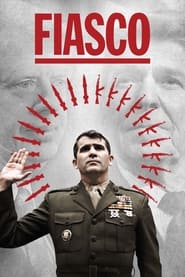
Fiasco
Scarica il sottotitolo English
Informazioni sulla release
Tag
Anteprima dei sottotitoli in English
Le prime 200 righe.
What comes to mind
when you hear the words Iran-Contra?
The hearing will please come to order.
You may remember a charismatic marine.
As you all know by now, my name is Oliver North,
lieutenant colonel, United States Marine Corps.
Or an outcry about missiles being sold to Iran.
Is it possible
that fired White House official Oliver North
could have diverted profits from Iran arms sales
to the Contras on his own?
Maybe you recall the funding of a covert war
in Central America.
It's a messy story
that spanned multiple continents,
and it all started in an office like this one.
It was this tapestry of intrigue.
Every day there was a surprise.
It was so outlandish.
The first I heard about it, I really couldn't believe it.
Perhaps because of its complexity,
Iran-Contra, unlike other presidential scandals,
barely left a mark on our collective memory.
Watergate was really easy-peasy
compared to this.
You didn't have to go to Iran.
You didn't have to go to Central America.
The Sultan of Brunei wasn't involved.
It was far more sophisticated, complex,
and frankly scarier... Far scarier than Watergate.
Why was it conducted with such secrecy,
and why were we all kept in the dark
for such a long period of time?
This was not low stakes.
This was high stakes on the world stage.
I think, if you break down
the whole scandal piece by piece,
a single clarifying theme comes into focus.
We did not... repeat... did not
trade weapons or anything else for hostages.
Iran-Contra is a story about hostages...
Those who take them, those who rescue them,
and those who become hostages themselves.
Any kind of hostage situation creates a huge dilemma.
It is a power game, and the hostage taker
largely controls the situation,
but it's also a challenge you can't walk away from.
You better make damn sure
that you have looked at every consequence,
looked at every possible nuance...
Because once you give in to a ransom,
there is no stop.
I'm Leon Neyfakh.
This is "Fiasco,"
the story of Iran-Contra.
While Iran-Contra is known as Ronald Reagan's scandal,
the stage was set years earlier
by a different president.
It's a long way from Plains, Georgia,
to Washington D.C.
The strength of a person can be measured
by the path he takes to travel there.
For Jimmy Carter, that road was one of hard work
and determination.
This was the 1976 presidential campaign.
I heard he was a peanut farmer.
Jimmy Carter entered the race
as a Washington outsider
seeking an end to the Nixonian era
in American politics.
Hey, I'll go to your church next Sunday, okay?
He was a man of faith.
He wanted to advance a human rights agenda
across the world.
He is a genuine moral beacon
capable of making people believe in something.
He was the real thing.
I just think he's a very neat man.
You got me, all right.
I picture him like one of us...
One of the working people, one of the common people.
Jimmy Carter comes in
promising to bring America back to its best self.
His number one campaign promise in 1976
was "I will not lie to you."
We want Jimmy!
We want Jimmy! We want Jimmy!
We want Jimmy!
There's a new mood in America.
We've been shaken by a tragic war abroad
and by scandals and broken promises at home.
Our people are searching for new voices
and new ideas and new leaders.
It was after our defeat in the Vietnam War.
It was after the Watergate scandal.
Jimmy Carter was elected as a man who was supposed
to be the antithesis of all those things.
It's now a time for healing.
We wanna have faith again.
We want to be proud again.
We just want the truth again.
It's time for the people to run the government
and not the other way around!
He set out to change things,
and he was a social engineer,
and one of the things that he wanted to do
was create peace.
Election night
from CBS News Election Headquarters
in New York.
Shortly before dawn, Jimmy Carter reached
the end of his improbable two-year, half-million-mile
political quest and won the presidency.
Remains to be seen whether his politics
of love and trust and sweeping promises
could capture a country which has had reason
to become mistrustful of politicians.
Not long into Carter's term, it became clear
that he couldn't just turn everything around
like his campaign ads had promised.
The country was being battered.
There is growing concern about the general health
of the American economy.
There were some really big problems,
and none of them had simple solutions.
It's a profound change that the American economy
is undergoing, a change with a name...
Deindustrialization.
1979 in particular,
average incomes begin to decline,
manufacturing jobs in the United States
begin to really start tailing off,
and people would say things like, you know,
"Well, my father certainly didn't have to put up
with this kind of crap."
And, you know, "My steel factory just closed,
and now here I am standing in line for gas."
The oil shortage of 1979
forced Americans to wake up before dawn
just to fill up their tanks.
I'm all out. Not a drop.
How about five dollars? That's it.
Anger and bewilderment are growing
as more and more Americans cope with gasoline lines
and empty pumps.
I have to be at work at00.
For millions of Americans,
this may be the worst weekend they've ever faced
for finding gasoline to give them
the automobile freedom they take as their due.
I'm in a line two hours here,
and I can't get gas.
This is baloney.
Carter doesn't get my vote next year.
In July of 1979, Carter did something
politicians hardly ever do.
He admitted to the voters that good times
were not around the corner, and that the order of the day
wasn't hope, but self-sacrifice.
It's clear that the true problems
of our nation are much deeper
than gasoline lines or energy shortages,
deeper even than inflation or recession.
It is a crisis of confidence.
We can see this crisis in the growing doubt
about the meaning of our own lives
and in the loss of a unity of purpose
for our nation.
The erosion of our confidence in the future
is threatening to destroy
the social and the political fabric
of America.
His advice to the American people
in his famous "Crisis of Confidence" speech
was that we have to make do with less.
We've lived too well, and now we're paying the bill.
This is not a message of happiness or reassurance,
but it is the truth,
and it is a warning.
I still think he's a peanut farmer,
and he don't know how to run this country.
Believe it.
Carter's hard truths did not sit well
with everyone.
Do you feel that President Carter
has been a good leader?
No, I don't.
I can't put my finger on it,
but there's just something he doesn't have.
God has something much better for everyone.
Some Americans wanted a different answer.
And if they switched on their TV set
on Sunday morning...
Ready.
Baptist Church in Lynchburg, Virginia.
...there was one waiting for them
in the form of a TV preacher named Jerry Falwell.
Let's lead the way, and under God,
let's turn our country around.
The sense among Americans
More English subtitles for Fiasco
- Fiasco S01E06 XviD-AFG · 25 downloads · 2021-10-26
- Fiasco S01E06 XviD-AFG · 14 downloads · 2021-10-26
- Fiasco S01E05 XviD-AFG · 24 downloads · 2021-10-20
- Fiasco S01E05 XviD-AFG · 17 downloads · 2021-10-20
- Fiasco S01E04 XviD-AFG · 19 downloads · 2021-10-10
- Fiasco S01E04 XviD-AFG · 21 downloads · 2021-10-10
- Fiasco S01E03 XviD-AFG · 16 downloads · 2021-10-10
- Fiasco S01E03 XviD-AFG · 17 downloads · 2021-10-10
Commenti
No comments yet. Be the first to leave one.