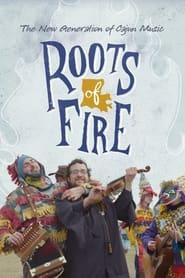
Roots of Fire
Scarica il sottotitolo English
Informazioni sulla release
Tag
Anteprima dei sottotitoli in English
Le prime 196 righe.
I'm going to get real damn serious
and I want y'all to pay attention to me.
I'm going to say this section in English, because
I want to make sure everyone understands me.
If there's something I hear a lot, and quite often,
that pisses me off, it breaks my heart, it does a million emotions at one time,
is that it's a shame this culture's dying.
It's a shame that the language is dying.
Let me be the one to say
languages don't die,
cultures don't die.
They're killed by choice.
Every single day, every one of you, every one of us, has a choice.
That you're going to get up, and you're going to preserve the way
that your daddy, and your grandma, and your great grandparents,
and everybody that made you,
that made you.
The fact that if you're not living your culture,
you are killing your culture.
And there is no in between.
There's no middle ground.
I always fight for preservation,
and fight for keeping things like they been and like they were.
That's kind of associated with a real closed mind, you know?
But to me it's the opposite.
Because it's not about preserving just mine.
It's like, to me, I don't care if you're of
Polish descent from South Dakota, or Honduran
descent from California, or whatever.
Preserve it.
Because it's not just the washing out of what we have going on,
it's the washing out of the whole world right now.
And that's just the most depressing thing on earth to me.
You know, like the idea that there would be one kind of food,
or one kind of music.
We're in my recording studio,
home of Valcour Records, my record label.
And we are on property that has been in my family for eight generations.
We had this vision of taking Louisiana music
into the 21st century.
And we wanted to see that our Louisiana artists were being represented
and documented well.
Cajun music is the product of the intersection of many different cultures
that found themselves in Southwest Louisiana.
The earliest recorded version of the Cajun accordion
would be from Amédé Ardoin, who was a young African American accordion player
who was apparently a virtuosic accordion player and singer.
He made a lot of recordings in the '20s and
the '30s with the fiddle player, Dennis McGee,
who actually used to be a tenant farmer on the property next door.
I grew up playing music in my household with my parents.
We formed the Savoy Family Cajun Band,
which is my younger brother, Wilson, and I with our parents.
But I also play with several different people in the area, including
a young guy from Cypress Island, Louisiana named Jourdan Thibodeaux.
And I play a lot with my ex-wife, Kelli Jones,
who's in a group called Feufollet.
I grew up in North Carolina
and my dad plays traditional music.
And so I was around old-time music and songwriting from a really young age.
I started learning guitar and fiddle.
Then, through that, just kind of got into Cajun music.
It's kind of set apart from some of the other styles of folk music in the US
because of the French language aspect of it.
- Cajun music is a little more dangerous in some ways.
Yeah, you're like, wait, but it's -.
- It's got a kick drum, and electric bass, and it's like -.
- Yeah, but it's still like traditonal music passed down.
- But it's got kind of rock and roll and stuff.
And it's in a whole nother language.
You go to a square dance, and then you go to a Cajun dance,
and everybody's like dancing together.
- It's like the same music my my parents listened to, but
cooler. - Yeah.
All right, so we're making a new record.
We got one coming down the pipes.
We've been working really hard with Joel Savoy.
Lots of new songs on that new record, and this is one of those.
It's called the "Squirrel Song."
As a Cajun musician,
because the music is so wrapped up in the culture
I feel like as a performer I'm not just really performing
my stuff, you know?
I feel like I'm in service of the music, or I'm in service of the people.
That's me and Roddie Romero.
Oh my goodness.
And look, it's Doug Kershaw.
- This is the first day she played the accordion.
But we didn't get a picture of her playing the accordion.
- No, but you got a picture of me in the fun jump.
Yeah, I did. See, she was still a kid.
This is kind of how she learned, too.
We'd take her to these different jam sessions
where all these old men would hang out.
Old accordion players.
She would just sit in with them and learn.
Yeah.
- And her first accordion contest she won $15.
You remember that?
I don't. You remember way more than I do.
Well, you were only eight years old.
- Oh, there was only two people though. Oh god.
You still won 15 bucks.
Fifteen dollars, that was -.
Yeah, I came in second because there was only two of us.
Yep.
Most little girls were taking ballet and wanting
to be cheerleaders and that kind of stuff,
and there was Kristie following a bunch of old men playing the accordion.
So it was kind of weird.
Some of these outfits are cracking me up.
Yeah, you had to dress the part.
Oh no.
- Well, I didn't have a ballerina to dress, so I had a Cajun musician to dress.
- You know, I grew up with music around all the time.
And the same way I learned English is the same way I learned music,
It's the exact same thing.
I heard English all my life, now I speak English.
I heard music growing up, now I speak music.
Perfect.
Thank you.
We're having a party.
Festivals Acadiens et Crêoles, which is - People look forward to that all year long.
More so than Christmas or even Mardi Gras, a lot of them.
It's like in Lafayette it's been going on for like maybe 30 years.
And so people who love Cajun music come down from Minnesota, Wisconsin, Kansas.
And Austria, there's a guy there from Austria.
You name it.
And so it's big time for me, because as a Cajun musician
we keep very busy.
I'm playing five times this weekend, which is a lot in one weekend for me.
With three different bands.
And so all of my three bands are playing.
And in one band I'm playing fiddle, one band I'm
playing piano, and one band I'm playing accordion.
- Cajun music today is really a dance music.
And you create an outlet for that.
It's a symbiotic relationship of us and the audience.
- If you hear a Cajun band and it just bores you and doesn't move you,
that's not Cajun music.
- Before Cajun music was Cajun music, and zydeco was zydeco,
everything was just French music.
- You have different people playing different instruments.
And Cajun music was born out of this melting pot that was forming here.
- Cajun music, that all these people think is strictly a white creation,
all the tunes that were recorded by Amédé Ardoin, a Black accordion player,
pretty much all are what we consider Cajun standards today.
All the songs he played, every single one of them.
And later on, Iry LeJeune took those exact same
songs and replayed them, and he's a white guy.
And everyone thinks Iry LeJuene was credited for that.
Thirty years before, that Amédé recorded them all, exact same songs.
Had different titles for them.
So actually the roots of what we consider Cajun music,
as far as on accordion style Cajun music,
were recorded by Amédé Ardoin, a Black man in the 1920's.
Amédé Ardoin jointed forces with Dennis McGee,
who was a white man, a little bit older than Amédé, who played fiddle.
Unfortunately, despite all the amazing music they made,
the story goes, with the racism in Louisiana
he was beaten to death
because some white woman had offered him a cloth to wipe his face.
And that's all it took.
Some white guys saw that and were so jealous
and enraged by that, they killed him.
But before that happened, he recorded so much music.
Cajun music
comes from all of the different influences of people that
moved into Louisiana a few hundred years ago, really.
- Cajun people are the descendents of people who came here from Acadie,
which is now Nova Scotia, New Brunswick up in Canada.
Before that, they were French, a lot of Basque.
But they came down to Louisiana after the Grand.
Dérangement, the English kicked all of our people out.
- The difference between the French and English is when
the French would get there they'd have native people.
And they were like, "Well, y'all know how to survive. Y'all doing pretty good.
"How about we team up, and you show us what we're doing."
Versus, let me, you know, kill all y'all and take your property.
So they teamed up a lot with the Mi'kmaq up there, and they intermarried.
By this point, you know, these French people had been there for generations.
So they had a new identity. They were now Acadians.
The same way an American wouldn't consider
themself wherever their root ancestry is from,
they mostly say American.
- In 1755, the British, like they always do,
were invading some country, right?
- The Acadians didn't want any part of that. That's y'all's war, y'all fight it.
They said, okay, you're being deported. So they kicked them all out.
- You had the option to either bow to the crown.
Eh, that's not too bad a deal.
But then they had to renounce Catholicism.
And you wasn't going to get a bunch of Catholics in, you know,
the 1750's to say I'm not Catholic no more.
A portion of them ran further west.
You know, and that's how New Brunswick and all that is still very French.
Commenti
No comments yet. Be the first to leave one.