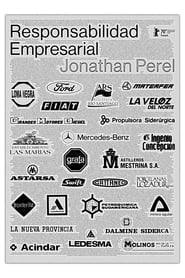
Corporate Accountability (Responsabilidad empresarial)
Scarica il sottotitolo English
Informazioni sulla release
Tag
Anteprima dei sottotitoli in English
Le prime 200 righe.
Repression of Workers during State Terrorism."
First edition: November 2015. still pending.
Publishing house: Ministry of Justice and Human Rights.
This book allows for total or partial reproduction,
storage in a computer systems,
transmission in any form or by any means,
including electronic and mechanical methods, photocopying or other.
CORPORATE ACCOUNTABILITY
Main sugar refinery in the province of Tucumán to this date.
26 workers were victims of crimes against humanity.
21 workers are disappeared.
Economic benefits.
Close political links between Bussi and the refinery owners,
the Paz family.
Proven supply of company vans
and information for repression
and abduction of workers inside the premises.
After the coup,
the union was left in the hands of the military
and the union building was used as a clandestine detention centre.
The victims had an important role in the union.
Operations conducted with company vans.
Abductions carried out inside company premises.
Benefits obtained by the company
under the protection of the repressive system.
Substantial increase in production and decrease in workforce.
The company provided information to Intelligence Department D-2
through its private security agency.
Bussi set up his operations base at the Concepción refinery.
He had a bedroom where he'd spend the nights.
Workers were abducted inside the refinery premises
without any report from the sugar factory.
Significant contributions by the company
to the Patriotic Sugar Fund.
It helped finance Bussi's public works.
$700,000 dollars.
At least 11 out of the 26 victims accounted for
were related to the union as members of the works council.
Refinery with the highest increase in production during the dictatorship.
The company improved its efficiency and productivity
with a rise in production and a 56% decrease in workforce.
At least 25 workers were victims of crimes against humanity:
2 were murdered, 9 disappeared,
14 were abducted and later released.
At least 7 had joined the works council
and the representative body.
Involvement of the company in abductions, tortures and forced disappearances.
Supply of logistical and material resources.
Abduction of union members and politically active workers.
Abduction of workers in workplace.
Dismissal of workers.
Economic benefits.
Significant increase in profits.
Acquisition of the Bella Vista sugar cane mill.
They were taken to the military unit located in the refinery.
The company allowed the repressive forces to use
part of its premises as a clandestine centre.
It provided vehicles for the abduction of victims.
The army requested company managers
to cooperate with a census of the town residents
and information about unionists.
Involvement of butlers in identification of workers.
11 workers were arrested in La Fronterita company premises.
A large number of abductions in the refinery premises
with no due reports from managers.
About half of the 25 workers turned victims at La Fronterita refinery
were part of the works council or the representative body.
Existence of black lists prove the persecution.
Benefits obtained by the company between 1976-1983:
30,72% increase in production.
Significant decrease in workforce.
Contribution by La Fronterita to the Fondo Patriótico Azucarero
$400,000 dollars.
Managers and high-ranking officers at Ledesma got involved in abductions,
some of them conducted inside the factory.
Use of vans and lists of people to be arrested
provided by the company.
Close links between the managers, including owner Pedro Blaquier,
with repression agents.
Key role of ex-army men as corporate officers.
Selective dismissal of main activist workers.
Ledesma was literally occupied by the security forces.
An arrest warrant was issued against works council members
just for being part of the union.
"We, the managers at Ledesma,
have invested a large sum of money
to stage a coup d'état in mid March '76.
In exchange, you must get rid of troublemakers."
The orders came from Blaquier.
The use of vehicles was registered on the logbooks
at Gendarmerie Unit No. 20.
The signatory officers ratified the supply of vehicles
in exchange of security in the premises.
Ricardo Arédez saw through his bedroom window
when his father was loaded onto a van
with the Ledesma logo printed on the doors.
Mario Paz had the lists.
They admitted to the victims or their relatives
that the company financed the repression.
Blaquier gave $250 million to companies from Argentinean army men
who financed the fight against terrorism.
The company provided gas and housing to officers.
Its adherence to the National Reorganization Process
was expressed in the local media.
Mario Paz declared that in order to neutralize union activity,
Ledesma had collaborated with money and men.
After the coup, workers were arrested in their workplace
and inside the mining complex.
They were taken in company vehicles to different armed forces offices.
Strong links between the company
and gendarmerie personnel that operated in the mine.
Responsibility for the arrest of 31 mine workers.
They had orders to arrest the members of the union board.
They were put in vans provided by the company,
arrested inside the mining complex,
mostly in their homes and workplaces.
Most of them were union leaders and representatives
and had taken part in disputes.
The managers indicated which workers to arrest.
They provided personal data for the arrests in their homes
and inside the mining premises.
It was known that the Aguilar gendarmerie received double salary:
from the State and from the company.
Several arrests were conducted in the workplace.
In some cases, managers were present.
Personal files and lists were used to conduct arrests.
A slip of paper with the company letterhead
listed the people to be arrested.
The personnel manager went to the gendarmerie office
and released a worker under arrest.
That demonstrated who gave the orders and who received them.
Gendarmerie monitored the entrance to and exit from the mine.
The restriction of movement in El Aguilar mining company
was publicly known.
There were private checkpoints along the access route.
You needed company authorization to enter the mine
and had to ask for permission to leave El Alguilar.
There was only one closely-guarded access to the mining campsite,
for which you needed the managers' authorization.
At least 22 workers at La Veloz del Norte were victims of crimes against humanity.
They were all arrested in January 1977
and taken to Police Station No. 4 in Salta City.
They were tortured during arrest.
The company had a great deal of information about the arrests.
Significant evidence shows its direct responsibility.
Supply of material resources such as personal vehicles and buses,
and storehouses for the abductions.
Managers present in areas where the workers were tortured.
Supply of lists.
Some victims have declared witnessing
the owner and managers' participation.
Levin was present during the ride.
Levin was seen walking down a corridor in the station.
Levin could be seen on two occasions.
Levin was seen in the police station.
Marcos Levin was seen at night in the station.
Victor Hugo Bocos was recognized as a high-ranking police officer
working as inspector at La Veloz del Norte.
Bocos himself stated that Levin went to the station
while his company personnel were under arrest.
Some witnesses mentioned the existence
of lists used for arrests.
According to survivors' testimonies, the organization of work,
the bus timetables, the travel schedules,
and the drivers' shifts were planned
so that the arrests could be conducted.
Many workers from La Veloz del Norte were arrested
during their runs
or upon arrival at bus stations.
A great deal of evidence points out
to the fact that the arrests were conducted
because of the workers' union activism.
Some statements mention a retribution given by Levin
to the police forces in charge of repression.
La Veloz del Norte circulation routes were notoriously extended
during that time.
The company retains today the concessions granted at that time.
Almost a hundred workers and other people related to the company
were victims of crimes against humanity.
18 were murdered, 8 are currently missing,
69 were arrested and then released.
Acindar board president was Jose Alfredo Martinez de Hoz.
He then became Treasury Secretary of the dictatorship.
The company was not only aware of human rights violations,
but also provided the repressive forces with resources.
Militarization of factory.
Arrest of workers in workplace.
Supply of means of transport. Supply of files.
There were abductions, tortures and forced disappearances.
Some took place in the company lodging house for singles,
serving as a clandestine detention centre.
A big part of them did union-related tasks.
Close ties with police force through bonuses.
Acindar lodging houses accommodated officers who tortured and murdered.
The police arrested him in his house
carrying a picture of him taken in the plant.
During the arrest, they were holding Acindar orange file.
Only the company management had that information.
"In case I needed a doctor visit."
Several witnesses mentioned the existence of lists
Commenti
No comments yet. Be the first to leave one.