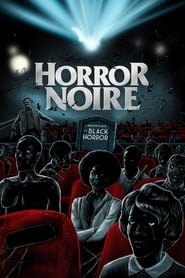
Horror Noire: A History of Black Horror
Scarica il sottotitolo English
Informazioni sulla release
Tag
Anteprima dei sottotitoli in English
Le prime 200 righe.
We've always loved horror.
It's just that horror, unfortunately,
hasn't always loved us.
Zombie! !
What have we got here?
Terror and voodoo and all the weird black magic
that the white man seldom see.
- I'm gettin' outta here now!
You can be the boss down there.
I'm boss up here.
Yes! That's history.
"The name is Blacula!"
- -
- Is there any more scary imagery than this?
I wanna hear you scream.
- It's cool to see yourself on the screen.
- There's something so powerful about scaring someone.
Oh, my goodness.
Allow me at least a kiss.
- I've been waiting for you, boy.
Phew!
Oh, my God.
Yes, get rid of that, son.
Isn't that beautiful?
It's crazy.
You got me all here in this creepy, confusing ass subarba.
You all so serious, though?
I feel like a sore thumb out here.
Lakeith. Oh, yeah.
Walking down the...
Walking down the sidewalk at night.
- In a suburban neighborhood. - In a suburban neighborhood.
On the cellphone by himself.
Yeah, yeah, yeah.
- Shit! - All of that.
- I've been there. - Yeah, yeah.
- It was the perfect black horror story.
Yeah, really.
I've never felt so ill at ease
because, for me, there was so much riding on this film
in that is he going to get this right,
not just in quality,
but for the way that we understand black people.
- If there's too many white people,
I get nervous, you know?
When I found out they were gonna let me
actually direct "Get Out",
I knew something big was going to happen.
I thought there was a chance something very bad could happen,
that I would get run out of town, that, you know,
I thought there's a possibility that people, you know,
don't want to see entertainment about something that...
you know, has been traditionally dealt with
with a certain reverence.
But I also thought, you know,
this is the movie I wanted to see.
To have a black protagonist,
first of all, just in a horror trailer,
had my attention.
"Huh? Wait, he might survive this."
He might not be the magical Negro
or the sacrificial Negro or the first to die
and all those tropes, so it's like,
"This is a story through a black lens by a black artist
and it's horror."
I thought I was in heaven.
Jordan Peele, "Get Out".
This had never happened before
to have an Oscar-nominated black horror movie.
And I think it really shows
how horror films can really talk about things
that are affecting us.
Black history is black horror.
Before we think about horror
as we know it today, we can go back to the films
that perhaps wouldn't be on our radar as horror.
There's a character, Gus.
Gus is a white actor in blackface
who was depicted as being in pursuit of
a young white girl.
Gus is essentially lynched by the Klan.
"The Birth of a Nation" was a horror film,
especially if you were a black person.
Most people, at that point,
were getting to know what African Americans were like
through that film because they lived in communities
where they had no African Americans.
This was the only source of information
and a lot of people got the wrong impression
of who we are, certainly.
It's one of the first films
to be screened in the White House,
in Woodrow Wilson's White House.
Didn't help that Woodrow Wilson said,
"That's exactly the way it is."
Oh, you know, I mean...
You know, he was a contributor to the problem.
- With the endorsement of the president,
it feels like policy.
There were even advertisements and promotions
that said this was essentially based on a true story
and it was as close to fact as one could get.
The Ku Klux Klan
is being heralded as the solution to the black menace.
- This is a movie that really solidifies
that there's this sort of
odd black lust on the part of black men
towards white women.
You see it time and time again then
throughout the horror genre,
from "King Kong"...
...to "Candyman".
- It reigned as the picture of black life
for so many years.
Hollywood could use its messaging
to create fear around black people,
especially fear around black men.
- It sets up black life and culture
as so deficient and so deviant
and I think we see that kind of history
in forming race relationships even today.
Dr. Clinton?
Filmmakers in this period
really want black actors to be what they think blackness is.
- Don't bite on this time, Ms. Yoga.
These are the kinds of films
that are coming out in the '20s and '30s,
leading up to Oscar Micheaux and Spencer Williams
sort of saying, "Enough."
Oscar Michaeux,
who was one of the first African American directors,
who would, like a lot of people
doing today in the independent world,
he would have his own film crew, he would gather his actors,
he would write a script around the actors.
What Oscar Michaeux's films do
is say, "Don't engage in these behaviors,
don't engage in these acts,"
which ultimately could sort of bring down the race
or sully the reputation of the race.
Oscar Michauex's making arguments
that we are equal and to be respected
and to be valued as human beings.
Spencer Williams' film
from 1940, "The Son of Ingagi", is as interesting case.
Its genesis was a little bit odd
because there was a film called "Ingagi".
"Ingagi" was an earlier
low budget effort by a white director.
Which basically purported
that black Africans were mating with gorilla-like creatures.
"Ingagi" promises
that it is a true story and that this mating
has produced half-ape, half-human babies.
The whole thing is a scam.
- Even whites were like, "But that's not true, you know."
The "Son of Ingagi" is basically considered
the first black-made horror film.
The makeup isn't great,
and they didn't have much of a budget.
- But Spencer got it made. - Got it made, exactly.
- And I look at that to this day as a testament.
- It stars a black woman as a scientist.
She has a scientific lab in her basement
and there is this ape-man that resides there
that she has been taming
and sort of helping this ape-man to thrive.
- If it does what I think it will,
I've done more for humanity than anyone else on Earth.
So, Spencer Williams actually
kind of does the first black women in stem kind of film.
You really get to see the black middle class
on full display.
You're seeing a bunch of black folks
coming back from a wedding.
It doesn't sound revolutionary, but in that era, in 1940,
when did you ever see black people just being themselves?
It was a way to show that not all black people
were the way they had been depicted in films
up to that time.
So we have a doctor and a lawyer,
everyone is well-spoken, and in that way,
it was a slice of black life that, to me,
is one of the most important aspects of that film.
- And if you know anything about television,
Spencer Williams sounds familiar, right?
He starred in the television situation comedy "Amos 'N Andy".
Oh, Andy, I love jokes!
- Then you gonna like this one
because I bought this gun at a joke store.
So, what's sad about that
is that people will always know Williams
as from "Amos 'N Andy",
but what Spencer Williams contributes
to the history of film is absolutely unmatched.
He sets up what we really probably think of is
modern black cinema today.
By this time, Hollywood realized
that horror was big business,
especially during the Great Depression.
More English subtitles for Horror Noire: A History of Black Horror
- Horror Noire Astory of Black Horror 2019 1080p x265 AAC MVGroup org · 71 downloads · 2021-04-26
Commenti
No comments yet. Be the first to leave one.