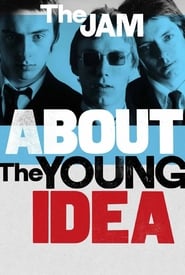
The Jam: About The Young Idea
Scarica il sottotitolo English
Informazioni sulla release
Tag
Anteprima dei sottotitoli in English
Le prime 200 righe.
Put your hands together for the best band in the fucking world, The Jam!
When I first saw The Jam, it was almost like a hit my soul kind of thing,
almost like a spiritual thing.
If it hadn't been for The Jam, I'd have probably still been a window cleaner,
or probably serving time, a ne'er-do-gooder.
So, they kind of elevated and changed my life for the better.
I remember often playing those songs when I had to climb into a different mood.
Songs like that were a beautiful solace. Better than the meds.
The Jam definitely inspired me to look beyond the burbs.
I know every lick of those records.
I know every lyric of those records. I know every beat.
It's definitely a huge part of who I am.
Paul Weller. Born Woking, Surrey, England, 1958.
Coming from Woking, which is a little suburban town,
I think it just gave us a different perspective.
We were never sort of looked to as being sort of trendy,
and I guess we were kind of outsiders from that point of view,
because we were from this little hip town from outside London.
This is what used to be Woking Working Men's Club.
Obviously derelict now.
This is where I did my first gig when I was 14. Me and Steve Brookes, my mate.
It was me and him that started the band off.
We got a little gig on a Wednesday evening,
which my dad managed to blag off the fellow who run the club.
So, there was about maybe six people in there. Eight with us.
Steve Brookes. Born London, England, 1958.
- We were better than that, weren't we? - I don't know if we were.
Well, we first hooked up in school, at Sheerwater.
And I'd just moved into the area down from London.
He was definitely cooler than most of the other kids.
Thought you were going to say, "He was a twat."
He was a bit of a twat as well, but I found that out subsequently.
But, no, he was definitely cooler.
And I think it's that sort of, you know, when you're that age
there's a sexuality thing that's waking up in you,
and you're sort of like, you don't know,
is this the boy you wanna be or the boy you wanna have?
What is it? But it's an attraction, whatever it is. I don't know what it is.
- You didn't tell me that before. - No, I kept it to myself.
Yeah, so, we started knocking up sort of a few little, old '50s songs mostly,
wasn't it, Elvis and stuff like that?
- Yeah, rock 'n' roll tunes, R&B, weren't it? - Yeah.
- We didn't play them particularly well. - Yeah, three chords.
But there were only three chords and we felt like we were doing a reasonable job on them.
Some may differ.
We never considered being a duo. We wanted to be a band.
Yeah, so, it was really hard to find other musicians in Woking.
There was maybe two drummers in the whole of Woking that were our age group.
One of them we tried out, which didn't work, a big lad called Nell,
who was more into brass band music, really.
And then we found Rick.
Rick Buckler. Born Woking, Surrey, England, 1955.
They were looking for a drummer,
I sort of pretended to be a drummer at the time.
The first thing that I was struck by was the fact that,
"Hey, there's somebody who can actually play guitar properly."
Then you start to realise that you can form songs.
And there is the possibility, then, of playing proper gigs.
One of the first shows was at the Sheerwater Youth Club.
And Paul said to me, "Well, look. There's a stack of albums.
"Listen to all of these, learn as many as you can."
And so, we came up with a set.
Fuck, it's been a long time since I was in here last.
Must be over 40 years.
I remember there wasn't a huge crowd of people in here, really,
just the usual youth club lot,
with everybody just going bananas,
and probably too much drink for our age at that time.
But weird being back in here because I haven't been back in here since then.
Probably that was what set the seed of, "I think we wanna do more of this."
We wanted to be bigger than The Beatles, definitely.
That's true. I mean, that's what we wanted to be.
The next Beatles. That was the scheme.
And we weren't.
My dad started managing us, right. He just loved it.
No one said, "You're the manager." That just came about.
Obviously, everybody knows he's my son, Paul.
And you have to know his talent for music.
So, I said, "Well, I'll push you."
I can't give him an education. I can't give him money.
So, I give him what I can give him. Inspiration. Shall we say that?
Or a push, whatever a father can do in that cause.
He was just always encouraging, weren't he?
And he was always hustling, trying to get a gig, or get a van,
or a bit of equipment.
John was always out sort of hustling for something on our behalf.
I think he was great.
John took on the role of chatting to the right people at the Working Men's Clubs
and the CIUs, and what have you, and putting us forward to play there.
It was just three-piece for a long time, weren't it?
Yeah, two guitars and drums for quite a long time, with no bass.
The original plan was that Paul was gonna move onto bass
because Macca was his big hero.
And that was the sort of lineup we envisaged, with another guitar player.
Me on guitar, another guitar player, Paul on bass, and drums.
Bruce Foxton. Born Woking, Surrey, England, 1955.
I think I saw some sort of ad about The Jam were looking for a rhythm guitarist.
So, I went along for that, and met Paul, and Rick, and Steve Brookes.
And it just clicked, and we got on well.
And they were gigging, which was right at the top of my shopping list.
You know? I wanted to get out there and play.
Originally, I was playing bass when Bruce came around
and he was gonna play rhythm guitar.
But Bruce wasn't a powerful enough rhythm guitarist, really, for what we wanted.
Paul, I think, suggested to me, he said, "Well, look, why don't you have that,"
gave me his bass, "and I'll take over on rhythm/lead guitar?"
And it just worked. You know?
We disparaged everything that was current during that period.
'Cause we had Gary Glitter and the Bay City Rollers.
And we were really, really, totally against all that sort of stuff.
So, we didn't model ourselves at all on anything that was current.
The only band that made any sense was Dr Feelgood
because they had that kind of brash, aggressive R&B for a start as well,
but violence to it, and it was everything you want as a kid.
When we saw them we just went,
"God, this is just something totally different.”" Nothing like we'd...
And it was just hard-edged R&B. Real sort of distinctive.
Paul and Steve were very close, they were really good mates.
So, it was a bit of a blow when Steve decided that he'd had enough and he wanted to leave.
I mean, we weren't earning a great deal of money, but we were working quite hard.
So, it was sort of understandable that he had enough of that, really.
With Steve leaving, it kind of
allowed me to become the leader of the band.
- I guess is right. - Yeah.
I think that's another reason we parted,
was because we were sort of struggling for dominance.
- Yeah, I guess so, yeah. - Do we do this one, do we do...
Whereas we'd always agreed on what we were doing.
I just think it's that thing, unless you are totally united,
every band needs a leader in it or someone who can focus
and have a vision for the band.
I came late to The Who, right.
I have no idea why, but I don't remember them from the '60s.
And then I managed to get a copy of their first album, My Generation,
which is still my favourite Who record.
And by far, the sound was amazing.
Again, it had that kind of real edge to it and sort of violence to it,
or aggression, however you wanna look at it.
But anyway, it caught my imagination for sure,
and so much so
that I tried to rewrite the record, really, on our first album.
Sorry, Pete.
I'd had this vision from God saying, "You shall be a Mod from this day onwards."
And that was it for me, mate. I was fucking off. I was away.
So, I said to the others, "Look, this is where we're gonna go,
"this is the direction, we need to have a look. I mean, this is gonna be it."
And luckily they went along with it.
It was a good image and it felt sharp.
The look was very important. It reflected a lot about us. It worked.
During the '70s, I was kind of waiting for our time, really.
Not just me as a person, but I mean our generation.
And I found that when I saw the Sex Pistols.
And just to be in the audience, seeing those bands
and seeing all people my age, which you just didn't have that scene in Woking.
I tried so hard to be nice.
Then I saw the Pistols and Clash and all those bands.
I felt there was a connection there, really.
I thought there was a connection between what I was into and the whole Mod thing,
but it was also a contemporary connection as well.
Not that I thought we should go off and be a punk band,
but I just thought, "This is such a great scene.
"This is people our age, we can play to these people."”
Once we discovered that there was a good scene in London,
and it was only an hour drive, it was definitely the place to head for.
So, our aim was to get into London, hopefully get a bit of press,
get the name about a bit more.
Possibly get record companies down.
They weren't really that prepared to come out to what they saw as the sticks.
Adrian Thrills. Born London, England, 1958.
First time I saw the band I was 16.
It must have been around September '76. And I went along with a couple of friends.
We'd heard about them through the grapevine.
So, we went along expecting another down-the-line punk band,
so it was quite a surprise when you saw this group.
One of them had pretty long hair, which just wasn't the done thing at the time,
wearing sharp black suits and having strong '60s influences,
and being slightly more melodic,
maybe slightly more musicianly than most of the punk bands.
After the gig, my friend, Shane MacGowan, and I, we started chatting to Paul.
He just seemed very much like the kind of kid I was at school with.
We're doing this film.
And I was living in the new town of Stevenage at that time.
And Paul was from Woking, almost...
We were kind of kids from the satellite towns coming up to the Big Smoke.
And there was definitely a bond there.
We had a four-week residency at the Red Cow, right,
which was a pub in Hammersmith.
The first week there was 50 people, maybe.
And the next week there was 100 people.
And then by week three and four, there was fucking queues around the block,
and I thought that was sort of amazing.
You could just feel this thing growing, organically growing.
In 1976, The Jam wouldn't really get much of a look-in in the music press.
And so, it was left to the likes of myself and Shane MacGowan,
who were doing some of the early punk fanzines.
This one's mine, 48 Thrills,
in which you have, possibly, the first-ever Jam interview, perhaps.
It wasn't really until the publicity that the punk thing was getting
that I think the record companies,
their attention was turned to what the hell's going on here.
Commenti
No comments yet. Be the first to leave one.