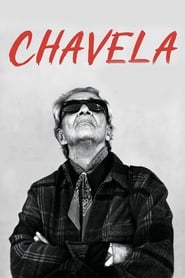
Chavela
Scarica il sottotitolo English
Informazioni sulla release
Tag
Anteprima dei sottotitoli in English
Le prime 188 righe.
Let's start with where I'm going.
At my age, it's more interesting for everyone
to ask where I'm going, not where I've been.
It will make your documentary more impactful.
So tell us, where are you going?
We can start whenever you're ready.
Well, you might think it's corny,
but not everybody knows your story.
Ask me anything you want.
Greetings to all the women.
I send all my love and respect to all the women of the world.
All my love.
My name is Chavela Vargas.
- - Don't forget it.
We won't forget it.
Can I ask a question? How old are you?
- Honestly? - Yes.
Seventy-one.
I remember seeing you on TV as a kid,
this lady with a long braid "singing like a man," as people used to say,
with her bottle of tequila and her poncho.
And a guitar.
And a guitar. That was Chavela Vargas.
But now I'm more intrigued by your life.
At the beginning, where did you sing? In bars? Cabarets?
In what places?
At the beginning of my career I sang at El Cuid,
the most elegant club in Mexico.
I worked at the Greek Tavern.
I performed for seven years at the very famous club Catarí.
And I also worked at The Echo.
They called it Chavela Vargas's hideout, where the high society used to go.
At first I dressed like a woman, with long hair, makeup and high heels.
But it didn't work.
Dressed like a woman, I looked like a transvestite.
Really.
I'm telling you about a time in my life when I dressed as a woman...
- - ...in a strapless dress.
- How could I sing like that? -
I raised my hand, looked down and I was naked!
I had to walk down the steps.
I thought, "This isn't going to work, but I'll try."
I rehearsed, like, 80 times, and when the time came,
I fell down in front of everyone.
But suddenly I dressed differently, and things took off.
And everyone wanted to know, "What's up with Chavela Vargas?
She doesn't dress like a woman,
or wear makeup like a woman."
Time stood still.
"What's up with this woman wearing pants before the 1950s?"
When women didn't wear pants.
If you wore them, people would yell at you on the street.
- "Butch." - "Butch."
- "Dyke." - Horrific, no?
- But I wore pants... -
And the public was stunned.
Both women and men were into me. Everyone!
Seeing her on TV was a big event,
because she broke the mold of the traditional ranchera singer.
Chavela said no to earrings.
No to dresses full of ribbons.
No to braids. No to shawls.
No to hoop skirts or jewelry.
Or to flirting the way girls did in classic Mexican movies
where they put their hands on their hips and moved their little heads like this,
to say, "Long live rice milk!"
Or hibiscus tea.
And, "We're happy to be on display."
But Chavela had such
a strong, serious presence.
And she sang so differently.
Hers wasn't a sweet, crystal clear voice.
She wasn't a little fountain.
She was more like this...
tremendous canyon.
And she always sounded like she'd been torn apart.
As if she'd been born with the wounds of life and death.
She only needed two or three guitars...
two or three guitars and her voice.
Chavela would linger for a while, raise her arm like this,
and then start the song.
Sometimes she would sing it.
Other times she would speak it.
She would strip...
all of the happiness of Mexican music
and synthesize it into what it's really about.
It's the music of desperation.
That's what José Alfredo Jiménez composed.
She got rid of all the embellishments
and turned it into music of the soul.
The wounded soul.
The tragic end of love.
Okay, talk to me. I'm rambling on like a crazy woman.
No. We came to hear you.
When did you start singing?
- What do you mean? - Singing for real.
- When I was young? - Yes.
I've been singing since I was eight years old.
That's how I entertained myself at home.
I'd sing at school, church, everywhere.
I was born singing.
I was born on April 17, 1919,
at the end of the world. In Costa Rica.
I never played with dolls.
I wasn't the playful little girl with lots of friends.
I was a dreamer.
I was the girl who got up in the middle of the night without permission
to follow the music of the serenades,
to look at the moon and wonder about what was beyond my world.
I was a very sad little girl. A lonely girl.
One who didn't have her parents' true love.
So I grew up alone.
I was very alone.
Her own parents saw her as a strange girl.
They realized she was a boyish girl.
Her movements, her hands and her body language
were manly.
I grew up in a typical family of the times.
They were very religious and very prejudiced.
They had a lot of fear about fitting in and what people would say.
And they wound up with a rebellious daughter.
Chavela experienced many cruel moments.
She told me a really sad story once.
When she was about seven,
she walked into church, and in front of everyone, the priest said,
"That girl can't come in here. Get her out right now."
And at home, her parents hid her when they had guests,
so people wouldn't see her.
They hid her like she was a rabid dog.
My parents were separated, then divorced.
I was sent to live with my aunt and uncle.
I never saw my mother. I didn't even know where she was.
I didn't see my father. I didn't see anyone.
And I started feeling...
Not fury or hatred.
But every artery and vein in my body
started to fill with a rage that was so strong,
I swear I could have ripped the walls off
that house with my bare hands.
I became obsessed with leaving.
Morning, noon and night: "I have to leave."
It was a very strange journey.
- I was still a child, very young. -
It seemed like an eternity.
I was anxious to get to Mexico.
Something was calling me. Someone was waiting.
That mysterious being called "art" was waiting for me.
- -
Mexican actors were hugely famous
because of the black-and-white movies
of the golden age of Mexican cinema.
And Chavela fell in love with Mexico.
This is a country...
you can't help being seduced by.
Everyone dreams of Mexico.
Everyone says, "Mexico!"
Mexico draws you in with its music.
I dreamed of a paradise called Mexico.
Mexico taught me to be who I am.
Not with hugs and kisses, but with punches and slaps.
Mexico grabbed me and said, "I'm going to make you a woman.
"I'm going to raise you in the land of men.
"I'll teach you how to sing. You want to sing?
Then you will have to confront the best in Mexico."
My mother went to a cabaret
called The Afro.
And that's where she saw Chavela Vargas.
My mom said, "I think she would sing José Alfredo's songs beautifully."
My father was on tour, and when he came back,
my mother told him, "Let's go see this woman I saw with my uncle
who sings so beautifully."
The first time I met José Alfredo was...
in a bar.
They introduced us and I said, "Nice meeting you, sir.
I admire you very much."
My father had won Composer of the Year,
and his songs were very famous.
So Chavela obviously knew who he was.
They were both very happy.
And that's how their friendship started.
José Alfredo is ranchera music
but in the deepest form of pain.
"The day she left, she abandoned me."
"I loved you so much, but you ignored me."
In his songs, he would say...
His woman would leave him, and he'd say,
"I hope everything goes well for you. I hope your grief disappears."
He never condemned the woman.
More English subtitles for Chavela
- Chavela-2017-1080p-WEBRip-x265-RARBG · 22 downloads · 2021-06-05
- Chavela 2017 LIMITED DVDRip x264-BiPOLAR · 34 downloads · 2018-04-26
Commenti
No comments yet. Be the first to leave one.