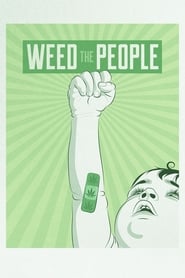
Weed the People
Scarica il sottotitolo English
Informazioni sulla release
Tag
Anteprima dei sottotitoli in English
Le prime 200 righe.
We went in, and they said, you know,
"This tumor's had such a growth spurt
that we need to make sure that this isn't a high-grade glioma."
And I said, "Well, what if it is?"
They said, "Your daughter will not live
to see her 2nd birthday."
Thank you for allowing people to open their minds, Lord,
to see that this is your gift to us, your gift from heaven,
that you have given us this medicine to treat our babies.
When we found out about Sophie's brain tumor,
I had no idea this would be the gift from God to her.
- Amen. - Amen.
When your kid's got cancer,
the rule book goes out the window, really.
You need to get them well, and you need to do
everything that you can to make them well.
And I wouldn't feel right
if I didn't explore everything that there was.
They found over 20 tumors in his chest.
At that time, Dr. Storch told us,
"Now is the time to do alternative medicine."
People have been using cannabis as a medicine
for 5,000 years.
THC has always been kind of the star of the show,
because it's the most psychoactive.
But then research started showing
that there were a lot of other cannabinoids in the plant
that had as many, if not more, therapeutic effects.
For me, one of the most exciting areas is,
is cannabis an anti-cancer agent?
The number of different ways
that cannabis and cannabinoids in the test tube
seem to suppress cancer is quite impressive.
In oncology, we often say,
"The plural of anecdote is not evidence."
Cancer cells plus cannabis together in a Petri dish.
We know what happens there.
There's a lot of studies that show that.
- Right. - We do not have human studies,
and certainly, we don't have studies in pediatrics.
Blood pressure's perfect. Yeah.
If we want to use marijuana as a medicine,
we need to make it a medicine. We haven't done that yet.
My friend dying from pancreatic cancer can't wait for studies.
Yeah. That's the problem.
My child can't wait for studies.
The controversy about it kind of makes me mad,
because it's at the cost of our children.
You know, it's at the cost of our loved ones.
A lot of people don't want to try this
because of the reputation.
One can argue that there's a human right
to have the government provide you with a medicine.
But at the very least, there has to be a consensus
that the government should never deprive you of access
to a medicine which can be helpful.
Why as a society are we denying people
the use of something that I have seen firsthand
over and over and over again be helpful?
You ready to kick cancer in the butt?
Yay!
Oh, so excited!
It started off with a swollen tonsil,
which I just thought was a throat infection,
so it didn't concern me too much.
So, then the lump didn't go away with antibiotics.
So we got admitted. And that's when they thought
he had 10 days before it blocked his airways,
and 8 days later, he got the diagnosis.
I was really surprised when the doctor came in
and handed me this treatment plan.
And I just thought,
"That's really odd that it's already been designed."
And then I realized that it was one-size-fits-all
for that particular diagnosis, that type of cancer.
Then I was quite worried when he said,
"Oh, this was devised in the '70s."
And I said, "What, it's not been changed since the '70s?"
And he said, "Oh, well, yeah, slightly, you know,
but fundamentally, because kids' cancer is quite rare,
not much research gets done," which I find quite worrying,
because you'd hope that with medical advances,
things would have changed slightly.
He is the single worst case of chemo-induced nausea
that they've ever seen.
Literally, we've tried everything that they have
on their list of options. We've tried everything.
And then there was the marijuana.
And marijuana's the only thing that's really...
I mean, it doesn't work all the time,
but when it works, it really, really works.
Then I started reading about cannabis oil
and the anti-tumor properties of it,
and I thought, "Well, if we're using it to treat the symptoms,
we might as well give him the anti-tumor dose
at the same time."
It's all about supporting the side effects
and helping the chemo
to do its job of getting rid of the cancer.
They're the two main things that I'm trying to do with this.
When we first came here, I was kind of clueless.
I had no idea what pediatric oncology meant.
So that was terrifying.
Even though I've done this like more than 100 times,
I still get a little afraid of the needle.
Hello.
Come on in, A.J.
- Hi, Rosemary. - Hi. How are you?
Tired, but good. How are you doing?
Good. Thank you.
That's good.
We're gonna count one to three. Ready?
Yeah. And then "three's" when you put it in, like always?
One, two, three.
A.J.'s 17 years old now.
We first found out that he had cancer... He was 13?
- Mm-hmm. - He was 13 years old.
We found out that it was osteosarcoma cancer...
Bone cancer.
By the time that they caught it, he was already stage IV.
I believe it was his second chemo,
his lungs collapsed,
because the cancer had spread to his lungs,
also being stage IV.
That trip was like six, eight weeks solid
in the hospital, that she lived in the hospital with him.
It came back again, and it was basically in his spine.
I think they took out two, three, and four
and then put a steel cage in.
And they removed his ribs.
And then they removed some of his ribs
where it was attached to,
I think one or two on each side?
- Two on each side. - Two on each side.
Since my hand has kind of been messed up
after one of the surgeries on my back...
They had to sever some of the nerves,
and those nerves were going to my hand.
So, my fire button
used to be my mouse 1.
But I changed it to looking into my dinosaur's inventory instead.
Month and a half after the surgery,
he was sick. He didn't feel good.
They found over 20 tumors in his chest.
It was very bleak at that point,
and A.J. does not know how bleak it was.
We've never told him that.
He's a 17-year-old kid.
He needs to concentrate on getting better.
Bronto is down for the count.
Hey, survival of the fittest.
This is the raw oil form that we get when we buy it.
When we started using it, we had to get a permit,
and then we could start actually getting it from the dealer,
I guess is the right term... Distributor?
I'm not sure what the correct term is
to not make it look bad or sound bad.
Sheila and A.J. get out and go upstairs,
and I'm driving the truck in Beverly Hills,
circling the parking lot, trying to find a place to park.
I can't. I can't even find a place to park.
She gets in the truck. A.J. gets in the truck,
and she's got this little, teeny bag
and I'm like, "Okay, so, what was it?"
And she's crying, and she's like,
"I wish you could have been there
because of all these questions."
And I'm like, "Okay, so, I'm curious.
What is this stuff? What is it?
What is it, and how much did we spend?"
- Yeah. - And so she pulls out
these two little syringes
that are like 10 grams or 10 milliliters.
It's supposedly all the same or something like that.
And there's two of them. And she goes,
"This was $1,010 for those two."
And I'm like
It's our son. What do you do?
Hi, Tracy. - Hi.
- So nice to meet you. - So nice to meet you.
Thank you so much for coming all this way.
Oh, honey, it's my pleasure.
- This is Sophie. - Hi, Sophie.
We just got her up from her nap.
Yeah, she's still waking up.
Ohh!
- Oh, she is. - Yeah, she's quite
- the special little baby. - She's always been that way.
Neither one of us could imagine
putting our tiny, little baby through chemo.
And the day that we decided to not do chemo
was the day that I felt like I could breathe again,
and I'm sure he would say the same.
Oh, yeah. - It's just so counterintuitive
- to do it. - Ugh.
We got the scans,
said it was an optic pathway glioma.
Here's the core of the mass
sitting right there on the optic cross.
These are excellent pictures.
Weed the People subtitles in other languages
More English subtitles for Weed the People
- Weed The People 2019 720p AMZN WEB-DL DD2 0 H 264-AJP69 · 19 downloads · 2019-03-08
Commenti
No comments yet. Be the first to leave one.