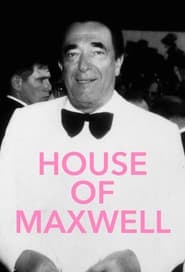
House of Maxwell
Scarica il sottotitolo English
Informazioni sulla release
Tag
Download English Subtitle Files for Mobile (3)
Anteprima dei sottotitoli in English
Le prime 169 righe.
-All right. Good morning, everybody!
And welcome back to "True Crime Loser."
I hope you're doing well.
So I have an exciting new update
regarding the Ghislaine Maxwell case.
Her trial is right around the corner,
and it's time to find out
what's going to happen to old Ghislaine.
This is a sinister-looking place.
This is where she's been,
out in Brooklyn, for the past year.
[ Indistinct shouting in distance ]
Listen to it. You can hear it --
people screaming and clapping and moving around.
Not where you want to be.
Ghislaine went from private jets all over the world,
private islands hanging out with royalty, academics, scientists.
Now she probably feels very alone.
50 years this family has been in a scandal.
First, the dad, then it's the brothers,
and now here we are,
Ghislaine is on the chopping block.
Stay tuned.
-Like I said, it's always sad when you lose a parent,
but you have to go on.
-Married -- Happily married for 42 years.
We have seven children.
We have seven children.
We're very proud of them.
We worship them. We're very proud.
I still have ambitions which I intend,
with God's help --
...with God's help, to fulfill.
-It's nearly 6:00 on Sunday, the 3rd of November, 1991.
And this is the last known image of Robert Maxwell --
alive.
He's on the yacht named after his daughter,
the Lady Ghislaine.
Sailing off the Canary Islands,
he's filmed relaxing by his staff.
But across his vast media empire, the mood is different.
Something is worrying his senior executives,
which Maxwell knows...
...because he's secretly bugging their phones.
-These recordings have never been made public.
They've been revoiced to protect identities.
-What happens to Robert Maxwell over the next 48 hours
send shock waves around the world
And changes the destiny of his family forever.
-I mean, what drives you on? Why did you do this?
Sorry.
-Jesus. No, that's unwelcome visitor.
Fuck off.
-In the early hours of this morning,
a victorious Robert Maxwell emerged
from Reed International's London headquarters
after clinching the multimillion pound takeover deal.
At last, he'd achieved his lifelong ambition
to own a Fleet Street newspaper, and he went straight
to the Mirroroffices to claim his prize.
-First thing that happens is, he calls all the executives
into the main executive restaurant at The Mirror,
saying, "I am your saviour. I'm a wonderful person."
He promised everything.
But that morning that Maxwell arrived,
we had none of us any idea
the way the whole thing was going to be shaken up.
-Lean this way. -Thank you.
I keep on repeating --
I'll say it for the last time.
I'm not on some ego trip.
-Could you look this way? -
-To be honest, I'd never met a man with a bigger ego.
But who could blame him?
A self-made millionaire, a brilliant businessman,
a former member of Parliament.
And to top it all, a war hero.
If he moved into a room, the crowds parted like the sea.
He was extraordinary.
I mean, you would be on your toes all the time,
wondering what was going to come next
and from what direction it was going to come to.
-Again, the subtitle is missing.
It's been mislaid, I'm told.
-Bang bang. -I promise it, sir.
-Up to now, sales have been pretty dismal.
And he had his sights set on our greatest rival.
Could you come a little bit closer, please?
I am committed to getting The Mirroron top of The Sun.
I have set myself a target of two years to achieve the goal.
-We were all right behind him. We wanted to --
We wanted to win as much as he did, obviously.
And there was a great deal of enthusiasm for things
that he wanted to do.
The Sunwas the biggest selling tabloid.
It was owned by Rupert Murdoch,
and Maxwell and Murdoch were sworn enemies.
-Fleet Street is caught up in its first all-out,
no-holds-barred circulation battle since the 1970s.
The proprietors of The Sun and Daily Mirrorare in sudden
and fierce competition for readers.
I don't know that I relish war,
but the public likes to see these fights,
and let's see how it ends.
I intend to beat Mr. Murdoch fair and square
in the market-place.
I mean, yesterday,
Mr. Maxwell called me a mouth-eating kangaroo.
Well, uh...
Never got quite to that stage.
-He could see how it could be a big commercial success.
And he did make it a big commercial success,
and it was making a lot of money for him.
And his way of doing things was very different.
-Everybody who works in circulation
will have it as his or her duty --
Now, I'm astonished to see no woman at all,
by the way. Is that so?
-Yes, that is so, at this branch.
-Well, I do promise you that I will want to see women
recruited into this profession.
Why are there no women in this?
-Well, I think one of the basic problems is
that the number of occasions when a chap has to get out
early in the morning and lug bundles of papers about
to make good shortages, and it's a matter
of physical strength, more than anything else. And --
-Many women have been kept out of interesting jobs
on this notion, that they can't lift a bundle.
When did you last lift large quantities of bundles?
-Before I went to The Sunday Mirror,
I'd worked for Rupert Murdoch,
and he used to ask me what it was like to work for Rupert.
And his whole life was a competition with Rupert.
-It's tiring and tough on the toil to the top.
But some women have already climbed aboard
the high-speed elevator to the executive floor.
Eve Pollard took command of The Sunday Mirror,
and she's got a masterful way with a meeting full of men.
We're waiting for Tony Frost.
Thanks.
-You want to clear the door? -Yeah.
It was certainly a brave decision to hire a woman.
It was my first newspaper editorship,
and editing the newspaper
is about the most fun you can have.
And he did not make my life difficult.
I think, being a woman, I got away with
slightly more than the men did
because it wasn't a challenge to his masculinity.
It was his whole dream about being a newspaper publisher.
There was the image, you know, Rolls-Royces everywhere,
champagne at receptions, big events that he would have.
And he liked the part of king, Bob.
But of course, he was clever.
I mean, there's no doubt about it.
And of course, he was a crook, but I didn't know that then.
I mean, he was quite smart. He was interested in politics.
And he lived in Headington Hall, this great house in Oxford.
And it was a beautiful big old house.
Apparently, it belonged to the Council,
and he leased it.
never occurred to me to think that it was owned
by Oxford Town Council
and that he was just paying rental on it.
I just thought, "Well, obviously
done terribly well with the papers.
It was sort of a mini Hollywood through Oxford.
It was not like a British family.
More English subtitles for House of Maxwell
- BBC House of Maxwell 1080p HDTV x265 · 22 downloads · 2022-05-18
Commenti
No comments yet. Be the first to leave one.