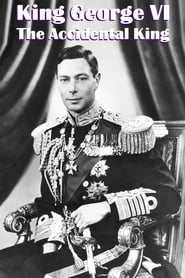
King George VI: The Accidental King
Scarica il sottotitolo English
Informazioni sulla release
Tag
Anteprima dei sottotitoli in English
Le prime 200 righe.
George VI.
An unlikely king whose closest family relationships shaped him.
From a brutal father who instilled fear...
George V set out to emotionally terrorise his children.
...to a brother whose selfish actions forced George
onto a throne he never wanted.
Bertie was absolutely horrified with him because he said,
"l just have no idea of kingship. I've not been trained to this role.
"How can he do this to me?"
He rose to the challenge, thanks to the support of a steadfast wife...
She gave Bertie a massive emotional support.
Elizabeth was literally the power behind the throne.
...and raised a daughter who would carry on his legacy.
Queen Elizabeth learned a lot from her father.
He has so much shaped the Queen that we see today.
This is the story of how a fearful and timid man overcame the odds.
George Vl's legacy is ultimately that we can be flawed,
we can be ordinary,
and you can still be great.
At 9PM 0n May the 8th, 1945, King George VI delivered
a speech that would inspire a nation and go down as one of the crowning
moments in the history of the royal family.
Today, we give thanks to God.
For Germany...
...the enemy who drove all Europe into war...
...has been finally overcome.
He rallied the people and this was their victory speech.
He had gone from being regarded as a pathetic creature to somebody
who was actually treated with great reverence
all over the world by people.
His reign is defined by a series of hugely important
close family relationships.
How did this shy, stammering spare to an heir come to such a defining
moment and become one of the most admired monarchs in British history?
George VI was born Albert Frederick Arthur George
on the 14th of December, 1895.
Known as Bertie, his childhood was dominated by an overbearing father.
George V set out to emotionally terrorise his children.
He said, "l was afraid of my father,
"and my children are going to be afraid of me".
And they were.
Bertie was also left-handed,
and he was forced to write in his right hand.
He had knocked-knees, he had to wear braces.
So he's really grown up with a lot of physical ailments.
What you had was an already nervous and quite sickly boy then developing
a speech impediment, and at the time it was considered a sign
of a lack of intelligence.
So I think that contributed to Bertie's lack of confidence
when he was growing up.
Bertie's confidence as a child was not helped by comparisons
to his brother, David, the heir to the throne.
His elder brother was the golden boy.
Everything came to him easy.
He was just the most captivating personality,
while Bertie was the absolute opposite.
And of course, being in his brother's shadow simply
made his failings even more apparent to onlookers.
I think to some extent there was a bond between the brothers,
but of course they were competing for their father's affection,
for their father's respect.
In 1909, at the age of 13, Bertie was sent to Naval College,
where it was hoped his actions could speak louder
than his stammered words.
It was the expectation that he would join the Royal Navy like his father,
like his brother, although he struggled with the entrance exam.
He really wasn't very bright.
Despite his failings, in 1914, Bertie, along with his brother
David, was called upon to serve his country in World War I.
The contrast between the brothers would, for the first time,
be in Bertie's favour, resulting in admiration from an unlikely
source - his domineering father, George V.
Because he was not the heir, it allowed him
to have more direct experience in conflict than his brother David.
And so Bertie was in a Battle ofjutland,
which was the last huge naval battle.
And, in comparison, David was back behind the line,
not able to engage in this kind of combat.
What was interesting is the quote that emerged from George V,
about his son, saying that Bertie had more guts
than the rest of them put together,
was a reflection of the fact that, although this boy had struggled
and had been sickly and had had a stammer,
he had always tried to overcome things.
But then the unfortunate boy was struck down with dreadful
stomach pains, and he had to be retired temporarily out of the Navy
and go back to his father and mother
and really sort of work from home, as it were.
And he carried out a few duties, and his father
was very pleased with him.
He won the respect of his father.
So this, I think, was the beginning of a turning point.
It gave Bertie a sort of sense of inner steel, inner strength.
Bertie still had much to learn about showing outer strength.
This began to change when the most important woman entered his life,
his future wife.
Lady Elizabeth Bowes-Lyon was the daughter
of the Earl and Countess of Strathmore.
And she was a very gorgeous, charismatic young girl.
And she was sort of the toast of the town.
There was a party at the Ritz in London, and that's when Bertie
first really set eyes on her.
I think Bertie saw a lot of what he lacked
in Elizabeth Bowes- Lyon.
You want to, of course, have a partner for life
who can support you, who can nurture you and who can have the strengths
that maybe you lack.
And that's exactly what Elizabeth had.
But, like everything else for Bertie, securing Elizabeth as a wife
was not going to come easily.
I don't think she hardly noticed him.
There wasn't that exciting spark about him.
And also she had absolutely no desires to marry
into the royal family.
Nonetheless, he just went on, and on, and on.
He'd fallen hook, line and sinker for her
and nobody else interested him.
She said no to him twice, but he did a very good job
in charming her, and she eventually said yes.
Bertie, now Duke of York, and Lady Elizabeth Bowes-Lyon
were married at Westminster Abbey on April the 26th, 1923.
And with it, the increasingly gutsy Duke had secured a partner
to support his shortcomings.
Elizabeth was determined that if she went into this marriage,
she was going to make a success of it.
And she saw that he needed massive emotional support.
Elizabeth really did then become his great source of strength
in the years that followed.
It was in these coming years that Bertie would need
all of his wife's strength and support
as he faced his fear of public speaking...
Inside Wembley, he was horribly nervous.
Elizabeth was willing him to get the words out.
...and be forced to lead a monarchy
by a brother who threw away the crown.
The country was horrified that their king was leaving.
Instead, they had in his place the stammering, shy younger brother
who obviously knew nothing.
By the mid 1920s, Bertie Duke of York was taking
on more royal duties. Unfortunately for a stammerer,
more duties meant more public speeches.
Ladies and gentlemen...
...l'm very glad to come here this afternoon...
...to welcome to King's Field.
I'm sure...
"that we are all...
--haPPY to feel...
He wasn't confident speaking in public.
And he used to approach the microphone
with a feeling of abject dread.
That... That the generosity of His Majesty...
...has set an example to all...
I mean, there are speeches, aren't there,
in which you can actually look at King George's face and see
a tick, you know, from sheer rigidly suppressed tension.
It meant that on occasions in speeches, people would literally
hold their breath, waiting for the next word
to come out of his mouth.
In 1925, over 100,000 people would hold their breath
when the Duke of York, with Elizabeth by his side,
was ordered by his father to give a speech
at the closing of the Empire Exhibition.
Inside Wembley, he was horribly nervous.
Elizabeth was sitting very, very close to him
and she was willing him to get the words out.
But it was very, very awkward.
And he hated it.
Absolutely hated it.
Bertie's speech wasn't recorded, but the tension was remarkably
imagined in this 2010 film.
We all saw it on The King's Speech, didn't we?
His difficulty in getting the words out was so palpable and so painful.
I have received...
WORDS ECHO
You could feel the entire huge audience in agony with him.
From His Majesty...
"the... The...
I mean, how that would have affected his self-confidence.
I can only imagine.
Thank goodness, you know, he had Elizabeth by his side.
And I think that's really where their relationship forged
into something bigger and stronger.
Bertie's dutiful wife, Elizabeth, took it upon herself to seek help
for her shattered husband.
It was something that Elizabeth knew had blighted his life
and it was really at her instigation
that she took Bertie to Lionel Logue,
the Australian speech therapist.
I'm willing to work hard, Dr Logue.
Lionel Logue's diaries enabled these private sessions
with the Duke of York and his supportive wife to become
vividly portrayed on the big screen.
The exercises that Lionel Logue taught Bertie were actually,
I suppose they were off the wall.
Rolled him around on the floor.
He taught him about the deep breathing and to drop his shoulders
and to relax. His methods were unconventional, but they worked.
While the Duke of York's speeches would improve, he was happiest
out of the royal spotlight and at home with his wife.
The two became three in 1926 with the birth of Princess Elizabeth.
Commenti
No comments yet. Be the first to leave one.