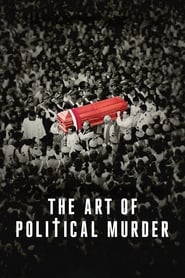
The Art of Political Murder
Scarica il sottotitolo English
Informazioni sulla release
Tag
Anteprima dei sottotitoli in English
Le prime 161 righe.
MIKE AFRICA JR. I've been livin' in a prison for 38 years
because my mother and father are both in prison.
Four minutes of gunfire,
one policeman killed, and members of group MOVE
have been routed from their house.
So, this would have been her cell?
Yeah.
The MOVE organization experienced so much hate
and anger from the system.
What can I do about that except just keep on pushin'?
Bishop Gerardi was the parish priest
at the church of San Sebastián
in an old historic center of Guatemala City.
It's location is super interesting
because it's only blocks from the, uh, National Palace,
uh, the Presidential... you know, offices.
Uh, the... It's inside
what they call the security perimeter.
It's also only a few blocks away from the cathedral,
where the offices of the archdiocese,
office of human rights were located.
San Sebastián is a, uh...
old-fashioned neighborhood parish.
He shared his duties there with another priest,
Father Mario Orantes.
Why would they kill someone as eminent as Bishop Gerardi?
A 78-year-old bishop,
two days after he's released this human rights report
that has captured the world's attention.
Given Guatemala's history, everyone's going to assume
it was the army that did it.
That's gonna be... that's what I first thought
when I first heard it.
You know, everybody was gonna react that way.
This is a country that had just come out of
more than 35 years of war. It signed peace accords.
And so for him to be murdered in the way he was,
a lot of people really felt that it was gonna restart the war.
Church and human rights leaders fear the Bishop's murder
could jeopardize the work they've been doing
to uncover Guatemala's savage past.
That victims may now be too scared to come forward
with their stories.
Too scared to fight to prosecute the perpetrators of the crimes.
Because they say, "If a bishop who was searching for the truth
can be murdered, then no one is safe."
Joan Leishman, CBC News, Guatemala City.
CLAUDIA MÉNDEZ ARRIAZA: You will read the papers,
you know, see the TV news shows,
and see a lot of voices claiming for justice.
The murderers cannot get away with this murder.
This murder happened inside the security circle
of Álvaro Arzú.
I mean, it happened two blocks away
from the presidential house
of the most powerful man in Guatemala.
So, you know, the intelligence services must know something.
Whether out of incompetence, panic,
uh, some devious design,
uh, the crime scene was very seriously mishandled.
If you were going to make video to show
future forensics people how not to handle a crime scene,
I guess you could show them a video of what happened there
that night.
They did everything wrong.
When they did finally get around to putting up
yellow security tape, it was way too small
and protected too little space and it was just--
People were allowed to just come in
and literally tramp blood all over the place.
'Cause imagine what a bloody crime scene it was
and anyone that came into the garage
and walked anywhere else in the house was gonna be
tramping blood around.
So the crime scene itself, in terms of
the kind of forensics you expect were gone.
The first thing and the first hypothesis
that you're tempted to think of is it's political.
But as an investigator, you have to try and--
you really have to try hard to remove that
from your thought process
and you have to go through the evidence
and you have to follow the evidence.
So in those first days, as we were all sad,
we were all shocked,
but on those first days of the investigation,
we talked a lot about being objective
and to follow the evidence and to follow the leads.
RUBÉN CHANAX:
Monsignor Gerardi was killed on a Sunday.
Monday, some, um, media outlets already had theories
of what happened.
ARTURO AGUILÁR: Theory about this being a crime of passion.
People got confused, and they're confused even today.
I mean, just go out...
to any Guatemalan in the street
and ask, "Who killed the bishop?"
I mean, they are confused. They can't say, like,
"Oh, it was in a homosexual thing.
There were things going on inside the church."
Or, "It was a gang."
I mean, they don't have an idea of, you know,
what was the real cause.
I think Bishop Gerardi always represented justice to people.
in a country where there was no justice.
I think he represented a figure of authority and power
who would listen to people
in a country where nobody who had authority and power
would listen to anybody.
And when the archbishop's office of human rights,
ODHA, gets established in 1989, which is to say,
through all those long years of the war,
Guatemala had basically been without
consequential human rights groups.
Whenever one would form,
either their leaders would be murdered,
or chased into exile.
Uh, why was this different?
Because it was the church.
The army can't move against the church,
and the church has incredible reach throughout the country
through all its parishes, through all its churches,
through all its people who work for the church.
It has trust in all the communities, basically.
And because of that, this human rights group
is capable of doing what no other group
had ever been able to do, which is sort of gather
information from everywhere.
REMHI was the first
really ambitious full accounting
of the human rights violations of the war
that anybody had attempted.
The army and the powers that be in this country
never thought it could amount to what it amounted to,
never foresaw such a thorough undertaking.
In the end, it was a four-volume report.
They identified specifically, you know,
something like 435 massacres.
The final volume lists by name 50,000 of the war dead.
It had extraordinary volumes dedicated to unprecedented
investigation and analysis
of how various military units had operated.
The conclusions of the report
were that the military committed
far and away the vast majority of atrocities in the war.
The report had made it seem
that this terrible reign of silence and terror
could finally be broken.
Let the truth be known, which is incredibly liberating.
NEVER AGAIN
WE CONDEMN THE MURDER OF MONSIGNOR JUAN GERARDI
Bishop Gerardi spoke publicly
about the importance of having that hope
and the importance of at least creating some conditions.
by which justice could be achieved.
they had a fight, and the other man kills Gerardi.
The prosecutor's office thought that Father Mario
had, um, sort of a relationship with Monsignor Gerardi,
and that because of that relationship
they had gotten into an argument, into a dispute,
and it escalated all the way up
More English subtitles for The Art of Political Murder
- The Art of Political Murder 2020 1080p AMZN WEB-DL DDP5 1 H 264-TEPES · 13 downloads · 2020-12-18
- The Art of Political Murder 2020 1080p AMZN WEB-DL DDP5 1 H 264-TEPES · 14 downloads · 2020-12-18
Commenti
No comments yet. Be the first to leave one.