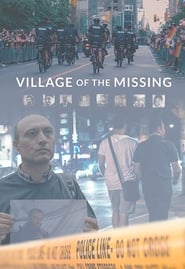
Village of the Missing
Scarica il sottotitolo English
Informazioni sulla release
Tag
Anteprima dei sottotitoli in English
Le prime 200 righe.
but about the LGBTQ community's relationship
of trust with the city in general.
How is it that they were able to go missing?
Dubro: Because they were Middle Eastern or South Asian,
we kind of said, hmm, maybe they had their own
reasons for disappearing.
Houston: Are they linked? Is there something more to this?
Why are these brown men going missing?
I often ask myself why.
Ling: It's not just a matter of us sitting back and saying,
well, we hope the police figure everything out.
The evidence today tells us that there is not a serial killer
based on the evidence that's involved.
A lot of times what we see is that serial killers are able
to get away with killing repeatedly
because the people that they target are marginalized
in some way, shape or form.
They're much more likely to slip through the cracks.
Woman: Andrew Kinsman has been missing for 10 days now,
and tonight, Toronto police say they cannot rule out
or nor can they rule in the possibility
that his disappearance may be linked
to three unsolved mysteries,
three men who disappeared from the gay village
and have never been found.
Man: It's known as The Village, and for decades,
this neighborhood has been the heart
of Toronto's LGBTQ community.
But after a series of unsolved deaths
and suspicious disappearances, it's now a crime scene.
Vella: I'll start from the beginning.
Back in September of 2010,
the first person went missing, a 40-year-old man
who was at a bar in the Church and Wellesley Street area.
He left with an unknown man,
but what the investigation 51 division did,
they looked at other similarities of other cases.
So they came up with two other missing men.
They frequented the Church
and Wellesley Street area as well.
Woman: Police announced their fears that the disappearances
of those three men were suspicious and connected.
They created a task force and dubbed it Project Houston,
but the men have never been found.
The obvious question with the disappearance
now of another middle-aged man from The Village,
could Andrew Kinsman's case be connected.
Dating back to 2010, 2012,
there was preconceptions that hindered investigations
into missing cases around gay men.
If a man goes missing, the assumption is,
well, he's left of his own accord
because men have agency and men make decisions
and they decide to go missing.
Whereas if it was a woman, it would be suspicious
and would be automatically considered something abnormal
because, you know, women don't just decide to go missing.
Houston: We noticed that people fit a certain profile.
They were men of color, largely new Canadians,
or at least what we perceived to be new Canadians.
The discussion was, are they linked?
Is there something more to this?
Why are these brown men going missing?
It there --- or are they connected in any way?
So there was a lot of questions, but very few answers.
Ling: They sat there and reviewed old missing persons cases
to find linkages, and they found linkages.
They -- they linked three cases that were incredibly similar,
both in terms of age, sexuality, ethnicity,
bars frequented.
In some cases and one particular case,
it was even personal connections.
They all had a connection to a guy named Bruce McArthur
that led them to interview Bruce McArthur.
Houston: I remember in 2013, I was out on the street
reporting on this issue and talking to people,
and police were doing the same.
From where I was standing, they were doing their job,
but now we hear that people were dismissed.
In some cases, I've heard that they were even mocked
because of their suspicions of a serial killer.
And it is really in keeping with a relationship
that the queer community has had with -- with the police.
I've been living in Toronto, the gay area in Toronto.
The gay are being near Church and Wellesley
for about 48 years now, and it's changed enormously.
I mean, it wasn't The Village back in the '70s
where the gay areas were over along Young Street
between Carlton and Wellesley.
The gay life in the '70s is very different than today.
It was a very secret world.
It was kind of a, well,
in some ways it was a gay fantasy land.
I mean, there were all these secret.
It part like being part of a cult, you know?
You wanted to meet men, there were clubs.
The police were very...
It wasn't a priority for them to go after homosexuals,
but when they did, they were quite nasty
because they -- they considered homosexuals criminals.
A friend of mine, George Hyslop, at the time,
tried to talk to the police in the
'70s, 60s about having liaison with the gay community.
And they said, "Liaison?
Why would we want liaison
with a criminal group, you know?
Homosexuals are criminals.
Why would we want liaison with criminals?"
That was the mindset
of a lot of people, for whatever reason,
still hold those negative beliefs
about certain marginalized people.
Saunders: I worked homicide for eight and a half years, ran homicide,
and I can tell you there is no diminishment of investigation
due to type of lifestyle or individual.
Every single case was aggressively investigated
with as much passion and as much, uh, vigor
necessary to solve the case.
Woman: What led you to conclude that there might be a serial killer
behind the disappearance of these men?
So, one case by itself might not be a big red flag.
When you have three cases in the span of less
than two years of three guys who share so many similarities,
who are tied to one relatively small geographic area,
it's so incredibly unlikely that they would just disappear.
A lot of times what we see is that serial killers are able
to get away with killing repeatedly
because the people that they target are marginalized
in some way, shape or form.
They're much more likely to slip through the cracks.
They target certain populations that they know
are not going to elicit a lot of public attention,
whether from the news,
whether from community members or even the police.
Richmond: There is no evidence at this point in time
which in any way establishes the disappearances
of Selim Esen and Andrew Kinsman
are linked to the disappearance of the males
from the Project Houston investigation.
The evidence today tells us that there is not a serial killer
based on the evidence that's involved.
One more question.
I remember reading and hearing about men going missing
and police investigations with different names and so forth,
and you can't look in detail
at every single file that's going on in the city,
but you assume that the system is working as it should,
that everything is being investigated
that possibly can be, that that maximum effort is being made.
And it is only later, sometimes with the benefit of hindsight
admittedly, that you realize that, you know,
things were not as they should have been.
This morning, at approximately 10:25 A.M.,
police arrested 66-year-old
Bruce McArthur of the city of Toronto.
He is self-employed as a landscaper,
and he lives in the Thorncliffe Park area.
He has been charged with two counts of first-degree murder
in relation to Mr. Kinsman and Mr. Esen.
And we believe he is responsible for the deaths
of other men who have yet to be identified.
In other words, we believe there are other victims.
It'd be hard to define a more gruesome way
to dispose of someone after you've killed them.
It's one thing to kill them.
It's quite another to dismember them,
and it's quite another to really, quite callously,
put those remains into planters
on properties of different people around the city.
Fraser: They say the investigation still centers on this home
here on Mallory Crescent,
as well as the Thorncliffe Park apartment.
But here they've been seizing planters
containing human remains.
And yesterday, police charged Bruce McArthur
with three more counts of first-degree murder.
Idsinga: And we believe there are more victims on top of those five,
and as we identify those victims, I --
I can't give you any idea about a number,
but I do expect more charges to be laid.
When I heard that Bruce McArthur would volunteer
as Santa Claus during the holidays,
you know, it immediately reminded me of John Wayne Gacy,
who was a clown at children's birthday parties.
And, you know, a lot of times serial killers will don a mask
that is so far removed from the secret and dark fantasy life
that they have because they get a thrill out of tricking people.
Idsinga: As you know, on January the 18th,
Bruce McArthur was arrested.
He has been charged with six counts of first-degree murder.
One of the focuses of the investigation
has been on human remains
found within planters from Mallory Crescent.
I can now add that the pathologists have identified
the remains of Selim Esen, Dean Lisowick
and Abdulbasir Faizi.
Detective Sergeant, having worked on
Project Houston and today for the first time
saying that all three of the people
who were being investigated are dead and allegedly murdered
Commenti
No comments yet. Be the first to leave one.