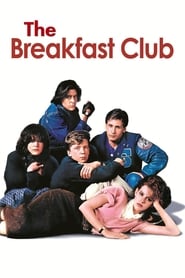
The Breakfast Club
Scarica il sottotitolo English
Informazioni sulla release
Tag
Download English Subtitle Files for Mobile (4)
Anteprima dei sottotitoli in English
Le prime 200 righe.
Some interesting things about John.
Here I was, this 15-year-old, little, scrawny kid,
and he was just so cool about the whole process.
With John Hughes, he had his pulse on adolescence.
You know, in general, he had a really good sense of it.
There was always this feeling that John never really grew up,
you know, that he was one of those characters
who still could think like a teenager.
He remembered what it was like to be a teenager.
He knew that when you're an adolescent,
the world is so centered around what you're going through
and everything filters through that.
I mean, these are all things that you can be clinical about,
but he wasn't clinical about it.
You always felt like he lived it.
I think that John,
because of his work in Lampoon
and because of his sort of vivid imagination and writing style,
was not too far apart emotionally from the teenage years,
and there were things that had happened to him that he'd remembered.
So, whether he had a pulse on teens at that time,
he had a pulse on teens of his generation,
and he spoke to some sort of truth.
My experience of John is that he is an incredibly...
He was very open when we did Breakfast Club.
He is very sensitive, very funny, really excited about making this movie.
And not a person who is cut off from how he feels about anything.
Just sort of delighted by everything.
I just don't feel that there are a lot of filmmakers out there
with the same affection for youth culture
that John Hughes clearly had.
John probably felt that
he was maybe sick of the term "kids' movie" being a negative term.
Meaning, if it's a kids' movie,
then it can't really be about anything,
then it will be frivolous.
Whereas, I think we all remember
some of our most serious times in our lives have been in high school when...
You know, you look back and you go, "What an idiot."
But it's, like, things were very serious.
Things were of great concern to you in high school.
I don't think anybody can copy him, is what the problem is.
You know, he's just so original,
and pulling the people in and his ideas.
And I know that there are lots and lots of movies and television shows
about the kids in high school, the group in high school,
but I don't think anybody can quite get that particular style
that he has and that he always had,
so, you know, what are you gonna do, 'cause it's only him.
I think John's narrative voice
took everything in another direction,
because he had a great ear for dialog, for talent,
for character, for everything.
He was able to sort of see it all and put it all together.
He must have known that he had essential stories to tell
about high school,
and he must have been so aware of the moment
that he was living in, the mid-1980s,
because every detail in his movies even now looks right.
It's like going through your yearbook.
And I think that's why kids my age loved those movies so much
was because they really... I remember when The Breakfast Club came out,
and I was a junior in high school.
It just seemed like finally someone made a movie about
what I think about and how I feel.
And you sort of identify those songs not just from a period,
but from periods in those films.
I remember, at the time,
part of the myth of John Hughes that we all knew about
as young filmmakers was
he sat at a desk and he played all this great music all the time
and that, you know, the music was a big part of what he did
and that that was his sensibilities.
Now, I have no idea if there's any truth to that.
I have no idea whatsoever, but that's what we all believed.
The way John does things, it's like he pin-drops sounds,
and he pin-drops attitudes.
That's how he makes his films, which is highly unusual,
because he's on the pulse of something.
He had his ear to the curb, so to speak, in terms of music.
Yeah, he always sort of integrated that into the writing
and also the producing of the films.
It's the way the songs were juxtaposed with the scenes that made them effective.
I mean, the songs themselves are not super cutting edge,
but they're used so well, they're not just dropped in there.
You know, the timing is always impeccable.
And I always appreciated that there was the David Bowie quote
at the beginning of The Breakfast Club.
Even though I don't believe we actually hear that song Changes.
It's such a great quote.
My proudest thing about Breakfast Club?
It's more than anything, performances or characters or anything else,
that David Bowie quote was mine.
I found that David Bowie quote in the beginning of the movie,
and I showed it to John, and he thought it was great.
And then he never said another word about it.
And I saw the movie for the first time,
and there it is, like, right in the front of the movie.
That's my proudest moment.
And Don't You (Forget About Me) is amazing,
because it's just this, like, soaring anthem,
and you get that sense of triumph at the end of the movie,
with Bender, you know, pumping his fist in the air, and it's...
I mean, if you think about it, it was just a movie about a Saturday spent in detention,
and yet you feel like some kind of battle has been won.
You know, that's effective use of music.
Yeah, that song, I can't believe it.
That song is still... You know, it's around all the time.
It's funny when you see a new generation discovering things that are so familiar.
"You know, have you heard this amazing song by Simple Minds?"
"Yes. Yes, I have."
Hughes wrote a great script.
It's not like he's precious about each word.
He is precious about his own sense of truth.
Do you want the truth'?
Yeah, I want the truth.
I think he said that he had written Breakfast Club
a really long, long, long time before,
and he had it in the drawer or something.
You know, in the industry, it's called a talking heads movie,
where, you know, there formerly had been films like My Dinner with Andre,
or, you know, maybe European films, where it's so simplified.
But with that it was really like filming a play.
John said something like that he wrote the first draft in a weekend.
And both Emilio and I, it was almost simultaneously,
I was like, "First draft. Okay, how many drafts do you have?"
And Hughes said, "Well, I got a few. Why?"
And Emilio and I were like, "Could we read them?"
This is during the rehearsal process.
So, he was like, “Sure.“
We read them. I was like, "John, how about if we put this?"
He was like, "Sure. Let's try it."
John was awesome about making sure we had rehearsal time,
which is a foregone conclusion these days, you don't have that.
You just show up on the set. "Where's my trailer'? Where's makeup?"
But with that, we rehearsed it.
We really sat just the six of us in a room,
while the sets were still being finished and made,
and, you know, we all had a lot of time to talk about it
and share our insights about what we were gonna do and how it could play out.
But the rehearsal was key.
Yeah, I really thought that that's how they made movies.
It certainly is the best way to go about making a good movie, I think,
assuming everyone's on the same page and confident and ready.
He just wanted everybody to come in with their character
and start playing around. That's how he shot it.
I mean, he was so open to anything that anybody brought in,
or anything that happened in the scene, you know,
any riff that you'd do off his writing.
He wasn't precious about anything.
Claire'? Want to see a picture of a guy with elephantiasis of the nuts'?
"Elephantiasis of the nuts" or whatever'?
Judd came out... I don't know where that came from.
John let us have five, six takes.
I mean his shooting ratio was pretty high.
And then he would let us go off,
and occasionally what went off would be used.
There was a lot more improvisation.
We had a script supervisor, Bob Forrest, I think his name was.
How are you doing, Bob, if you're out there'?
I think Bob came out. He was cajoled out of retirement
to do The Breakfast Club.
And shortly after the completion of Breakfast Club,
he, for sure, retired.
Molay really pumps my nads.
Moliére.
He stopped taking notes and brought in a little tape recorder
that he would like turn on, 'cause it was just...
'Cause Hughes would put that 1,500 foot mag on the camera.
And that stuff, like, Anthony Michael Hall, it's just genius of him,
when he's getting stoned.
"You know, chicks, they can't hold their smoke." And he's just going on.
And we did a few takes of it, and he's literally going on and on.
You can hear eventually the click, click, click of the film
in the mag, 'cause it's run out,
and it's just going around. We're all aware,
but it's not like Hughes doesn't know what that sound is.
But we're gonna watch Michael for a while. Why not'? He's great.
Chicks cannot hold their smoke. That's what it is.
It's hard to try and recreate teen-speak when you're not a teenager.
It is. And it's hard to make it sound authentic.
And I don't think there is a false note
in terms of the vernacular in any of John Hughes' films.
Can you hear this'?
You want me to turn it up'?
I think a lot of it he made up.
Like, in Breakfast Club, like, what does he call the guy'?
Like a magma zoom dweebie or something.
I don't think that was like a preexisting insult.
But it's so awesome and people remember it.
...face it, you're a neo-maxi-zoon-dweebie.
Neo-maxi-zoon-dweebie.
Every single character pretty much in the movie has him in it.
He said Allison is me, but he also said that everybody's me.
Just in terms of
telling the story of these five specific stereotypes,
what worked is,
no matter who you were, you can put yourself in one of those boxes.
So that made... Right from the start, it makes the film very relatable.
Everybody's gone to high school.
The Breakfast Club subtitles in other languages
More English subtitles for The Breakfast Club
- The Breakfast Club 1985 2160p UHD Blu-ray Remux DV HDR HEVC FLAC 1 0-CiNEPHiLES · 307 downloads · 2025-10-21
- The Breakfast Club 1985 30th Anniversary 1080p BluRay x265-YAWNTiC eng · 569 downloads · 2025-06-03
- The Breakfast Club 1985 30th Anniversary 1080p BluRay x265-YAWNTiC eng SDH · 304 downloads · 2025-06-03
- The Breakfast Club 1985 30th Anniversary 1080p BluRay x265-YAWNTiC eng Commentary · 280 downloads · 2025-06-03
- The Breakfast Club 1985 REMASTERED 1080p BluRay x265-RARBG HI · 428 downloads · 2024-03-29
- The Breakfast Club 1985 WEBRip Amazon · 684 downloads · 2023-04-12
- The Breakfast Club 1985 WEBRip iTunes · 312 downloads · 2023-02-01
- The Breakfast Club 1985 30th An RM Bluray 1080p DTS-HD x264-Grym · 352 downloads · 2022-08-13
Commenti
No comments yet. Be the first to leave one.