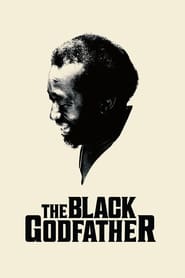
The Black Godfather
English 字幕をダウンロード
English字幕のプレビュー
最初の200行です。
This is Bill's new album.
Is it your first album you've done?
Yeah, that was my first singing, period, anywhere.
I didn't sing before.
I-- I was into another thing altogether.
What did you do before you sang?
Well, I had been in the Navy for nine years,
and then I got out and I worked in aircraft.
I made toilets for 747 aircraft.
One of the reasons I'm here is that...
I met Clarence Avant.
I have a lot of respect for Clarence.
What he's done is a very unusual story.
That's why we're sitting here talking.
He puts people together.
And they do what they do.
How do you put together a life...
from knowing people?
I've never seen him with a tool.
His tools...
are his...
you know, ability to...
manipulate people.
I don't mean that in a bad way, necessarily.
And if he needs to do it in a bad way,
he's probably good at that, too, you know?
Meet Clarence Avant.
Clarence's name kept coming up.
Who is this guy that I keep hearing about?
His name would come up, Clarence Avant.
Say Clarence Avant's name, and the doors open,
and the seas part.
Oh, man. He was too fly. You understand me?
He talked the talk, walked the walk, dressed the part. Played it, you know?
Clarence knew everyone.
-Everybody. -Everybody.
He's a celebrity's celebrity.
Writers, with singers,
with record companies, with business deals...
He was just all over the place.
He was in the mix.
He finds a common ground
between people who are different.
This mysterious figure...
that everybody respected.
Like, a person from the street to the White House, he was known.
One of the things he understands
is there are different kinds of power.
There's the power that needs the spotlight,
but there's also the power that comes from being behind the scenes.
He wasn't there, but he was right there.
Clarence Avant is a complete original.
A badass and a legend.
He's a very incisive thinker.
A historian and a maker of history.
That's who Clarence is.
Clarence Avant,
from a two-room schoolhouse in North Carolina
to the boardrooms of Motown, and MGM, and everyplace.
James Brown told me, "White folks just, you know, respect him.
They scared of that nigga. Scared of him."
His advice, per word,
is probably worth more than just about anybody I ever dealt with.
You knew if you were making a deal with Clarence, there was something there.
You always got the truth from Clarence. You got it straight. You got it quick.
I don't know anybody else like Clarence.
Clarence is the final word.
He became that mentor for us all.
He became that godfather.
The godfather.
Clarence is the godfather.
I can't make speeches.
That's not my-- That's not my life.
I make deals.
This is interesting.
Absolutely no fucker's giving me a check...
for doing this. I might say anything now.
That's the goal.
Well, no. Then I'm gonna-- I'mma say I don't know anything.
Mm-hm. Fortunately, there's other people who will tell us stories as well.
You don't know anybody who can tell my story.
Yeah, well, I don't know about that.
Clarence is one of my favorite guys.
I think Clarence exemplifies...
a certain...
...cool,
a certain level of street smarts and savvy...
that allowed him to move into worlds that...
nobody had prepared him for
and say, "I can figure this out."
Do you remember the first time someone ever said you're the godfather?
People call me that. People can call me anything.
People have called me a son of a bitch, so what? That's part of life.
I was managing a club in Newark, New Jersey.
Teddy Powell's Lounge.
Teddy was a concert promoter.
He had Sam Cooke and Jackie Wilson, people like that.
Teddy Powell was a legend.
So these legends-- He was like a sponge.
He absorbed the best of everybody he saw.
I was in my 20s, I guess.
So, Joseph G. Glaser came in one day,
and he owned a company called Associated Booking.
He represented Dinah Washington.
And Dinah was rough.
So Mr. Glaser heard me argue with her,
and he was laughing, so...
And he wanted me to be an agent.
He said, "You're a great salesman." What did I want to be an agent for?
You know, Clarence was a guy who...
wasn't looking for the job he ended up with.
I said how the fuck was I gonna be a goddamn agent,
and writing reports up and all that shit, and--
You know, that's not my life.
Not at all.
But he, um, he's the guy that really made Louis Armstrong.
Joe Glaser was Louis Armstrong's agent, manager, and...
You know, they were together for virtually all of Louis' life.
He managed Dave Brubeck, Duke Ellington, Sarah Vaughan,
and Billie Holiday.
He had a lot of acts.
And he talked Clarence into getting into show business as a manager.
Joe Glaser was tough...
He was a tough guy.
Joe was connected.
They were all Al Capone's folks.
Prohibition creates
the modern entertainment business in America.
The underworld creates
a network of restaurants, speakeasies, places where you can get drinks,
and they provide entertainment.
So, when Prohibition was repealed,
the structure created by Prohibition remained.
Now we have all this talent, and they need management.
And so, the gangsters who were involved with the speakeasy world
are still there, and now there's a legitimate business to be run.
I was too young to know about Al Capone.
The fuck did I care about Al Capone, man?
I mean, shit. I wasn't worried about nothing like that.
No, I don't ask Mr. Glaser questions.
I just learned from him.
I think we had, at one time,
about 70% of all the black talent in America to book.
They owned everything: the booking agencies,
the publishing companies, record companies, and the clubs.
Business people...
Not mafia. It's business.
Oh, please.
Please, Clarence.
Somebody was holding a guy by his heels
-out of the window, - Remember that.
and his overcoat fell all over his head. And I said, "What's going on up there?"
They said, "Jackie Wilson's trying to renegotiate his contract."
-True story. Nat Tarnopol. - It's true.
Those were some heavy days, man.
True.
Yeah, I used to walk Joe Glaser home at night.
We would talk about people who came in the office,
how bright they were or how dumb they were.
Did they belong with us?
Um, did-- did we want to be around them?
And Clarence was one of the favorite guys.
Clarence was an honorable, decent, hardworking guy
who tried to do the right thing.
And, you know, in the agency business, with managers and people like that,
it's hard to find a person quite like that.
I think that Joe recognized this about Clarence
and thought, "This is a guy who should be looking out for artists."
I think that possibly, culturally, the guy was smart enough to think,
"You know, if I'm gonna have all of these great artists,
Louis Armstrong and Sarah Vaughan,
wouldn't it be great to have an African American,
or a black, or a Negro-- or whatever we were at that time--
uh, be, you know, a conduit for them?"
Clarence became the manager of Little Willie John,
and later on, Jimmy Smith.
The thing I was always most impressed about Clarence with--
was that he once represented Jimmy Smith.
The greatest jazz organist who ever lived by a country mile.
Jimmy Smith was a genius with the organ.
He was a creative guy,
but a character.
Very eccentric.
Quincy and I became friends
because after Jimmy made that "Walk on the Wild Side,"
everybody wanted Jimmy.
The first time we met, I had just convinced Philips Records
to start a record label called EmArcy.
We gave $100,000 to Dizzy Gillespie,
to Art Blakey,
to Gerry Mulligan, to Cannonball,
to Clark Terry, et cetera.
And so Clarence came in, and he wanted $450,000 for Jimmy Smith.
And I said, "Wait a minute, man. You gotta be crazy, man.
You're smoking something!"
And he went out and got half of that.
He didn't get 450,
but he got half of that from Creed Taylor.
We were on then.
What was your first impression of Clarence?
The Black Godfather subtitles in other languages
コメント
No comments yet. Be the first to leave one.