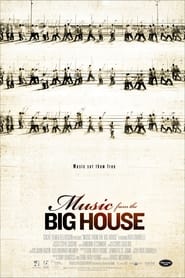
Music from the Big House
English 字幕をダウンロード
English字幕のプレビュー
最初の198行です。
It was sometime after the civil war...
I want to say the early 1870s... that there was a
colonel James who had been in
the civil war on the South side,
but he'd end up buying this plantation called Angola.
It's about 6,000 acres.
Slavery was out, and he had no labor, so somehow or other, he
bought off the Louisiana legislature, and they agreed to
lease him their prisoners.
He paid a fortune for them, but considering what he would have
to pay to pay somebody to do the work, it was a great deal for
him, and it was a great deal for the legislature 'cause they just
got rid of their worst problem.
It was a very brutal, nasty place... snakes, mosquitoes.
Imagine how bad it is now, with
air-conditioning and everything.
Imagine how bad it was then.
And in some years, over 100 died.
There was just rampant abuse... prisoners raping each other,
murders, corrupt guards.
It was just a horrible thing.
10 years in that is more
suffering than anyone should ever have to do for anything,
and I'm not sure of any of the years.
I mean, I hadn't had Louisiana history since 1977.
But somewhere after about late
'60s, early '70s, the federal
government got involved, and they had to clean it up.
My name is Rita chiarelli,
and I sing the blues.
10 years ago, I was on a
pilgrimage down highway 61.
I wanted to visit the birthplace of the blues.
I came across Angola prison,
that has its own musical history, so I went in to check it out.
And that's when I realized that
there was new music coming from
behind those walls, and the
songs that I heard were, you
know, raw and real.
And the trueness totally moved me.
It was funny because, at first, my idea was that I would put on
a concert for these guys, you know?
And then I started listening to
their music, and I jammed with a few of them, and I realized
that, rather than me putting on a concert or a show for them, it
would be them and I putting on a show together.
I mean, that's the vibe.
That's what grew out of this thing.
I thought, you know, let's get these guys heard.
People need to hear this.
You know, there's incredible music coming out of this place.
Hey, hey, hey.
This here is klsp 91.7 and 102.3.
It ain't the night shift, and it started the groove yet.
We're still doing a little gospel.
We got a live broadcast.
I'm Goldie, and I'm your host.
And you know I take you all the way to the morning.
Do it like you like to have it
done, but right now, tell you what we're gonna do.
We're gonna take a little break...
That's right... we got the lady herself right here, and what I'm
gonna do is I'm gonna allow her
to introduce herself and just say what she says.
Do what you do.
It's Rita chiarelli.
I'm from Canada.
We've been working on this for a long time.
I've been coming down here to see everybody and get this
organized to put this concert on.
Tell me something, Rita.
Tell me something.
What type of music do you do?
What type of concert is it gonna be?
Well, I usually do blues and roots music, prentice.
You've been here before, right?
I have indeed.
Have you sang here before?
I have indeed.
You have indeed.
Well, you know, I had some of the guys play for me, you know,
so I wanted to hear what was going on here musically.
So I sat in with them.
They were so great.
I just jumped up and started.
Okay, that's a consummate musician, when you're able to get in.
Pure heart messengers are gonna be in the house tomorrow night.
Yep. Who else is gonna be?
- The jazzmen? - The jazzmen and little country.
Little country. All right.
Something for everybody, huh?
Y'all gonna play it old, y'all gonna play it new.
Whatever you do, fellas, y'all know it's for y-o-u.
You should have a packed house tomorrow night.
I hope so, yeah.
Yeah, yeah. We do, yeah.
I think it's gonna be really good.
I want you to know that Wednesday night, live in the
new main prison chapel, we got
none other than the lady from
Canada herself, miss jazzmen.
Talking about Rita chiarelli.
She's gonna do her thing with some of the bands, so be there.
Goldie's gonna let you know
when it's all coming down the pipeline.
But as you look outside, oh, it's not summer, and it's not
winter, so you better get right
tonight if you're planning on stepping out on call-out.
You and the fellas do it down
there in the chapel Wednesday night for the living word ministry.
You got to do it right tonight.
My picture was that this was the place where, you know, some
blues music had been recorded.
And, you know, there were musicians in this place, historically.
There were, you know, recordings
from the '40s and '50s, maybe even earlier.
And, you know, that it seemed
that a lot of musical inmates
passed through here.
Robert Pete Williams,
hogman maxey, Freddy Fender, and
lead belly were here.
The story is legendary that, at Angola, lead belly played for
the governor and was pardoned and released.
And also, early on, they had women that stayed here, so there
were some women recordings...
and one recording by
odea Matthews, in particular.
And they recorded her while she
was still working, so it's just her voice.
And some people say it's the wash machine and that she was
doing the washing, and some people say she was sewing... you
know, one of those old sewing machines.
So that's all you hear is her
voice and one of those machines.
I'm just excited that this
concert may become part of that history.
How you doing, guys?
The jazzmen.
How are you again?
Hello again, everybody.
How you doing? How are you?
Nice to meet you again.
- How are you doing? - Good.
How are you doing there, buddy?
Texas, as always.
- Hey, how are you? - Great.
Good.
Nice to see you guys again.
You gonna be singing?
I'm a blues singer.
How you doing?
My name's Ross.
Rosie?
Ross. Ross.
Oh, Ross. I'm sorry.
I'm Canadian, you know.
We hear funny.
I'm Rita.
Yeah.
I'd like to do a blues tune that I think I've done with you
guys... well, with you guys before.
We'll do a straight 12-bar blues, you know, and get real groovy.
I'll do a couple of verses, and then maybe you could yell something back at me.
Okay. Get your first chance to yell.
We'll start from the five, go down from the five, right?
Like "G," you know.
You can play something, maybe, piano man.
You want to play something there?
Okay.
Yeah.
Okay. One, two, three, and...
My name is laird veillon.
All my friends call me magic.
I'm a bass player.
I was basically growing up with
a lot of country... you know, old country... and I really
didn't like that very much.
And I was more of a rebellious spirit, so I took to the hard
rock, you know.
Like, the first vinyl album I've
ever bought was "mothership connection," which
is straight-up funk, you know?
I don't really know the connection, but I was really
digging it at the time.
"Mothership connection"... who's that by?
Parliament.
Okay. Wow.
Wow. That's right. Wow.
What drew you to that vinyl album?
Was it the cover?
What was it?
I heard somebody bumping it in their car and was curious
about who it was.
And they told me the name of the
album, and I just went and bought it.
But it was the first actual vinyl that I'd ever bought.
コメント
No comments yet. Be the first to leave one.