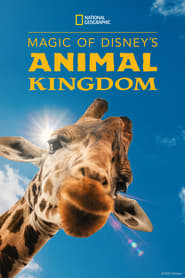
Magic of Disney's Animal Kingdom
English 字幕をダウンロード
リリース情報
タグ
Download English Subtitle Files for Mobile (8)
English字幕のプレビュー
最初の200行です。
For the first time ever, we go behind the scenes
at Disney's Animal Kingdom Theme Park.
I'm hoping, hoping, hoping that she might be pregnant.
To meet the most unforgettable animals...
-and the team of devoted experts... -That was awesome! I'm psyched!
...whose mission is to care for their lives, tell their inspiring stories,
and protect their wild habitats around the world.
The fun is just beginning. (LAUGHS)
The sun shines down on the Harambe Wildlife Reserve.
A moment of serenity for the 34 species that call it home...
including this herd of 11 Masai giraffes.
But out here, the peace never lasts for long.
Got all the giraffes running behind us right now,
all of the kids.
And that's Kenya.
Keeper Rory has a soft spot for 11-year-old super mom, Kenya.
I've known her for four years and I would like to think
she thinks that we're best friends.
But she's a giraffe, so I don't really know
what's happening inside that head of hers.
Kenya's a great mom. Kenya has had four kids here at Disney,
three of them are still on property, one of them is over at the lodge,
his name is Maximus. And then Amira is Kenya's daughter.
And then this is Mara, Kenya's other daughter.
The park has had success breeding Masai giraffes just like Kenya,
with 11 born in just five years.
Giraffes are a vulnerable species, so every new individual
is important for the species as a whole.
Each giraffe has an absolute individual personality,
but Kenya, I... I just... I feel a connection with her.
Who doesn't love a best friend with a purple tongue?
Before coming here,
the animal training I did was all big cats.
When you start working with giraffes, it's like a totally different world.
Giraffes are a prey species.
So whenever there's something new or something weird,
the giraffe usually will pick up on it.
The patience level is so much bigger, but I love it.
And Rory better love it
because Kenya will take all the time she needs.
Kenya is a healthy giraffe, with some hoof issues.
She has had an issue for a long time where she has overgrowth
on her front hooves, particularly her front left.
To help Kenya’s hoof problem...
I'm gonna bring the tools.
...behind the scenes, the team goes above and beyond
to create a special program for its giraffes.
Right now, a simple hoof trim requires sedation.
It's not the easiest thing in the world to anesthetize a giraffe.
It's a really big deal.
They're very big, there's risk involved there,
so if we can do all these hoof trims
without ever having to take a single medication
then that's the ideal scenario.
-Rory... So cast members
attempt something remarkable.
She is our first giraffe that we've trained
for voluntary hoof trims, um, ever in the history of Animal Kingdom.
Oh, this one might be good.
We've been trying over a long period of time
to get Kenya into this chute and put her foot on this block.
If the team can pull this off with Kenya,
it could bring a hoof health revolution for the whole herd.
Let's do this one.
But training this girl to just take a few small steps
has taken eight months.
I can't say giraffes are stubborn,
they're just really good at being giraffes.
They're not gonna do something that they don't want to do.
Giraffes tend to do things on their own schedule,
and so, this has been a slow process.
Everyone good? I'm ready.
All right, let's rock and roll.
Good morning, Kenya.
Hey, baby girl.
Typically, there is one thing guaranteed to get a giraffe moving...
Food.
But today, mm, maybe not so much.
She's like, "What is going on here?"
She's very aware of her surroundings,
so anything that's different, she kind of stops.
We might be here a while. I've got nothing but time.
Good girl, Kenya.
That's a good girl, come on.
Come on, look at all the food.
I saw that, a little glimmer in your eye.
Kenya, I implore you.
All right, last try, Dan's got two minutes, Kenya.
Look, she's toying with me.
With Kenya unwilling to play along...
I think that might be all she wrote.
...the team must figure out another plan.
I think we're done. -We're gonna regroup a little bit.
Back onstage in the land of Africa...
out on the savanna,
the biggest resident in the whole park wants his breakfast.
All right, here he comes.
There he is, in all his glory.
He's obviously the biggest and oldest male that we have.
So, yeah, he's humongous. (LAUGHS)
And where five-and-a-half-ton Mac goes...
others follow.
So here we go, yeah, okay, so we have Jabali walking up now.
Oh, we have Tsavo coming up.
Our kind of hierarchy is,
Mac's first, obviously, he's the biggest, largest, oldest.
Underneath him is Tsavo, you know, he's the next oldest, next biggest,
and then Jabali kind of follows in at the bottom.
At feeding time, elephants here chow down on hay and grass.
A bull Mac's size can eat up to 300 pounds a day.
And Mac makes the rules at this breakfast table...
Mac has a bubble around him, that's his space right now.
They're communicating right now, we just can't hear it.
So, he's basically already told these boys
that this is where he's going to be eating for a little bit.
So don't come in this bubble just yet.
But some rules are made to be broken.
Tsavo's approaching Mac, in the center of the yard.
Tsavo's a little bit more courageous, you could say.
He knows that there's some more green stuff, some goodies, closer to Mac.
He's cautious, he's kind of reaching his nose out
to sort of see where Mac's at...
testing the waters to see what kind of mood Mac's in.
We'll see how close he wants to get to Mac.
Pretty brave.
And apparently, it's not worth it... ...so he'll keep moving on.
Mac wants to enjoy his meal in peace.
But the boys have other plans.
We're at the sparring point already this morning. (LAUGHING)
It can look really intense but they can handle it, basically.
Mac regulates a lot of what happens out here,
so if that gets a little too rough,
he might take a step or two in that direction and maybe break it up.
And enough's enough.
Oh, Mac's moving a little bit.
Here we go. Yeah, Mac's approaching a little bit.
He's basically telling the boys to move off.
Just that little step or two from Mac, and the little boys kind of moved away.
Just little stuff like that, they're communicating with each other.
Tsavo and Jabali are learning different social cues,
and physical cues, and growing up, and learning around Mac,
how to be a bigger bull.
Mac may be the model patriarch,
but he does have a few miles on the odometer.
And today...
Michele, whenever you guys are ready, I have Mac.
...he heads backstage for an inspection by Dr. Ryan.
The check-up for an elephant
involves the same thing as it would for a person
or, you know, your dog or cat.
We just really need to get a good overview of how they look, how they move.
Hey, bud.
Elephants are a little challenging
just because of their sheer size.
They let you know when they're not very comfortable
with what's going on, so you have to be really careful.
First up, a check of the cooling system.
Mac, ear. There, good boy.
All right, going up.
Good boy, Mac.
There's a whole bunch of visible blood vessels
that can give me some ideas about blood pressure,
they use these blood vessels to increase blood flow to their ears
to help blow off heat. So cool.
Really, we're not seeing anything out of the ordinary.
-Can I touch his tail? Yeah.
He's got a couple broken off hair shafts here,
but they look fine.
Mac, foot!
Foot health is incredibly important in elephants.
Most people don't realize
that if you look at the elephant's skeletal structures,
is they actually stand up on their toes.
A balanced built-in suspension system
makes it possible.
There is a large cushion under their foot,
so that cushion absorbs a lot of the shock.
Mackie, more foot!
Thanks, bud. -(WOMAN LAUGHS)
You walk around, you're that big and you have toenails,
you're gonna knock 'em, and... and nick 'em,
and crack 'em every once in a while.
You know, if you look, my nails aren't perfect.
-He needs a manicure. -(WOMAN LAUGHS)
The exterior checks out. Now for a look under the hood.
All right, let's move on to Mac's mouth.
Mac, trunk.
-Good, steady. Very good.
Good boy.
If you can see in this thing up here,
that little hole there, that's not supposed to be there.
Good boy. I don't know what that is.
The spot has Dr. Ryan stumped.
We'll figure out how to get a better look at it.
Backstage, off the savanna...
it's take two for Kenya.
As she attempts a first for the park's giraffes,
a voluntary hoof trim.
Can I have a Kenya, please?
Despite months of trying, the team won't give up.
Magic of Disney's Animal Kingdom subtitles in other languages
More English subtitles for Magic of Disney's Animal Kingdom
- Magic of Disneys Animal Kingdom S02 DSNP WEBRip DDP5 1 x264-EDITH · 23 downloads · 2023-04-02
コメント
No comments yet. Be the first to leave one.