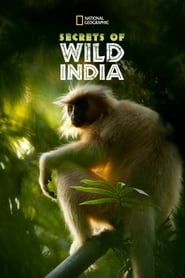
Secrets of Wild India
English 字幕をダウンロード
リリース情報
タグ
English字幕のプレビュー
最初の157行です。
India.
A country swathed in mystery.
Each dawn unveils a land exploding with life.
Populated by giants...
and predators.
A place of beauty,
rarity,
conflict...
and vulnerable new life.
All wrapped up in a land of extremes.
January.
It's still cool,
but summer temperatures will eventually exceed 38 degrees.
- -
For now, an early morning mist cloaks a primordial world
of forests, hills, rivers and pools.
In a remote clearing,
a 30-year-old Indian elephant, heavy with milk, guards her newborn calf.
Only hours old, she was born under the cover of darkness.
The females of the herd gather to witness her first tentative steps.
They will stop at nothing to protect her.
Even with their vigilance,
she faces six months of drought, fire and flood.
And two of the most extraordinary predators...
the Bengal tiger...
and the king cobra.
She's been born into an ancient land, where civilizations lie one on another,
back into the mists of prehistory.
India is home to over a billion people,
almost one fifth of the world's population,
living on only two percent of the Earth's surface.
Congestion, madding crowds,
religious devotion...
...all on an epic scale.
But India still has a wild side.
Secreted away in the state of Assam,
160 kilometers south of the Himalayas,
live the last herds of giant grazers.
Indian elephants, the largest land animal in Asia.
The endangered one-horned rhinoceros.
A survivor of 37 million years of evolution.
The Indian wild buffalo,
a volatile temper makes it one of the most dangerous animals anywhere.
Their story begins over 6,000 meters up in the Himalayas.
This is the source of one of Asia's great rivers,
the Brahmaputra.
Fed by billions of drops of melting ice,
it winds its way across Tibet into India,
where its nutrient rich waters create grasslands
that range over an area larger than California.
These are India's Wild Plains.
A savanna more African than Asian.
A place of contrast and variety.
The early morning sun warms a family of smooth-coated otters.
These are the largest otters in Asia.
This group is made up of a breeding pair and their young from last year.
Standing two meters tall and weighing 2,000 kilograms,
the Indian rhino is a formidable beast.
These plains are the only place in the world
where rhino and otter exist together.
Two very different creatures both beautifully adapted to their environment.
Leaving the rhinos behind, our otter family swim into a beel,
where they begin to hunt.
Thick soft insulating fur keeps them dry and warm.
Nostrils and ears close when diving.
Powerful tails propel these perfectly evolved hunters.
Special muscles make the lenses in their eyes more spherical,
improving their underwater vision.
Herding fish into the shallows, the group pick them off.
Waters teeming with catfish keep the family fed and playful.
Close by, a flock of cormorants employ otter-like fishing tactics.
Surprisingly for aquatic birds,
cormorant feathers are not waterproof and need regular drying.
They don't have external nostrils,
so must breathe through their open mouths.
After such an energetic feeding, they cool off by flapping their throats.
Having exhausted this body of water, the team moves off to fish elsewhere.
There are countless beels, small lakes, dotted across the plains,
each surrounded by dense tropical forest.
A refuge for some,
killing ground for others.
Prime territory for ambush specialists...
...and home to the world's largest venomous snake.
The king cobra's Latin name ophiophagus means "snake-eater."
It eats almost nothing else.
Consuming them head first in one long slow methodical mouthful.
Beyond the forest shade, the plains are baking hot.
It's 32 degrees and rising.
Indian elephants can eat 130 kilograms of vegetation every day.
They have a prehensile lip at the end of the trunk for grasping.
The herd keeps moving,
and our month-old calf must keep up.
The deep sun-baked tracks of last year's wet season make it tough going for her.
They can drink 100 liters of water every day just to survive.
A buffalo matriarch leads her clan to water,
along corridors created by generations of elephants.
On the outskirts of the herd lurks a colossal male.
These leviathans weigh over a ton,
and are armed with the biggest horns of any animal on earth.
Grazers are rarely alone at waterholes.
The herd gathers around the calf.
This rhino sniffs the air.
Danger!
The large male tiger alarms even the mightiest of beasts.
Tigers will attack and kill young elephants...
but with this mobile fortress, the calf is safe for now.
However, there is one threat out here
that even her aunties can't protect her from.
The dry hot wind fuels a fire.
It spreads rapidly through the tall elephant grass.
Embers carry on the wind.
New fires spring up all around.
Crisis for some. Opportunity for others.
Birds gather around the fringes to feed on insects
and small creatures flushed out by the flames.
Our calf has escaped but the struggles for survival never end.
The plains resemble a barren wasteland...
but almost magically, the land regenerates.
Red silk cotton trees burst into life,
their large flowers dominating the landscape
and attracting pollinators from kilometers around.
A clearly successful strategy,
bringing salvation to smaller species,
while keeping their prizes beyond the reach of the larger grazers.
For the next two months,
daytime temperatures will reach 35 degrees.
The Brahmaputra river is now perilously low,
but at nearly 3,000 kilometers in length and three kilometers wide,
it's still an impenetrable barrier for most animals.
Many species on one bank,
have never been seen or heard on the other.
Restricted to the south bank,
the hoolock gibbon is India's only ape.
Thirty meters up in the treetops,
their hook-like hands and incredible strength
propel them through the trees, with leaps of over six meters.
Females are brown and the males black.
With only 5,000 left alive,
this exhilarating sight is now rarely seen.
On the north side of the river, India's most endangered monkey:
the golden langur.
They're also confined to a life in the trees,
but their movement could hardly be more different to that of the gibbons,
using all four legs and their long tail for balance.
The Brahmaputra ensures that the hoolock and the golden langur will never meet.
On the forest floor, an untidy pile of sticks
is home to one of India's rarest mammals.
The world's smallest pig, until recently thought extinct.
They spend their days rooting for nuts and insects.
Newborn piglets weigh less than 200 grams,
about the size of an apple.
They're perfect prey for many of the plain's many predators.
Indian rock pythons can weigh 90 kilograms
and grow to five meters long,
or nine pygmy hogs, nose to tail.
They hunt by stealth.
Parental grunts keep the piglets close.
More English subtitles for Secrets of Wild India
- Secrets Of Wild India S01E03 1080p DSNP WEB-DL DD5 1 H 264-NTb · 48 downloads · 2022-04-30
- Secrets Of Wild India S01E03 1080p DSNP WEB-DL DD5 1 H 264-NTb · 38 downloads · 2022-04-30
- Secrets Of Wild India S01E02 1080p DSNP WEB-DL DD5 1 H 264-NTb · 34 downloads · 2022-04-30
- Secrets Of Wild India S01E01 1080p DSNP WEB-DL DD5 1 H 264-NTb · 34 downloads · 2022-04-30
- Secrets Of Wild India S01E03 1080p DSNP WEB-DL DD5 1 H 264-NTb · 48 downloads · 2022-04-30
- Secrets Of Wild India S01E02 1080p DSNP WEB-DL DD5 1 H 264-NTb · 29 downloads · 2022-04-30
コメント
No comments yet. Be the first to leave one.