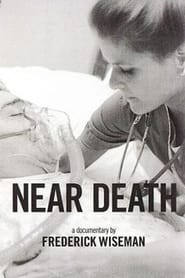
Near Death
English 자막 다운로드
English 자막 미리보기
처음 200줄입니다.
Good afternoon, Beth Israel Patient Information.
May I help you? - Room 616.
He's in room 588, take the blue elevators there
to the fifth floor, when you get off, take a left.
Kim to the cardiac room.
Kim to the cardiac room.
Maybe just to adjust to get his respiratory
settings changed in such a way that he
doesn't look like he's breathing so hard.
I think it's a little bit disconcerting for
the family to come in here and see him struggling like that.
So that's just an idea, just a passing idea.
What we should try is if we think
he stands any chance of being estivated,
I'm gonna call his family and tell him that
this is a situation, I'm spoken to 'em before.
They know the situation.
Tell them that it seems as though he's breathing on
his own and we should make an attempt, take out the tube,
leave it in God's hands, see what happens.
Okay.
I don't know where you're at with that.
He has a heart rate of 140, he's got dependent crackles,
diffused wheezing, he may not fly.
So make sure that you and the family are quite clear
about whether this is sort of a we're gonna stop
ventilating him once and for all or we're gonna
try it and just see but make sure you've
decided before exactly what you're dealing with.
I want you to understand the situation
and sort of where we stand.
I think what seems to make the most sense
to me at this point is that since his brain,
since he's never gonna wake up,
that it wouldn't make sense to continue on in this state.
Now we could try stopping the ventilator and if he breathes,
then he breathes and if he doesn't,
then it's in God's hands now.
Now I know,
but not knowing really how you felt on this,
I wanted to call and find out and we
hadn't actually spoken in awhile, so.
He is, so he may breathe on his own
and that's certainly a possibility but
it's hard for us to actually know that for sure
and I'm saying if we take it out, we may find out
that he doesn't, in which case he would,
if it were somebody who were alive and well,
we would put the tube back in but I think
given all the situation which you seem to understand,
it wouldn't make much sense to put
the tube back in because his brain is gone.
I know this is a very difficult topic.
You know what the date is?
What month is it?
Is it winter time?
I'm gonna just slide you over.
Ready, one, two, three.
How you feeling this morning?
What's that?
Can you look over here, look at my fingers?
Can you follow my fingers?
We'll let you do your work too.
I'm gonna get you weighed Mr. Toomey on a special scale.
Just lifting you up in the air.
86.2.
A special gift for ya.
Yeah, I mean whatever.
I think it's important that everybody
feel comfortable with what we're doing.
I personally think that his antibiotics are,
you know it's like
a pea shooter against an atomic bomb.
I mean the guy is not, if you look at
the natural history of what's happened here
and what his prognosis is and what we know about
the terminal lung cancer, there's not anything
any of us is gonna be able to do and whether
you give him the antibiotics or not I think is
sort of more how you feel personally about it.
I guess the issue that's gonna become
a major issue is that everybody feel
comfortable with sort of withdrawing his care.
I certainly do, I mean I think that on Friday night,
I've never thought that when the guy arrived here
that he had a chance of pulling through but
I do think it's very important for the family
to give them the feeling that we're doing
everything that we can 'til the point that they
come to the realization that, I mean there
are a lot of unresolved issues here.
Never dealt with his feelings with his younger daughter.
A lot of anger on both of their parts evidently
and both, you know he's been married for 34 years.
A lot of other, and I think they all,
they didn't have a chance to say goodbye to him
and that was the thing that was really irking them.
I think they sorta knew intellectually that
he wasn't gonna make it but emotionally on Friday,
they were just not prepared to accept that
and I think now that they've really evolved
to a different stage in their own feelings,
I think that we've gotta sorta take that into account but
always in a situation like this there
are four or five different groups of people here.
The nurses know, knew from the moment he
walked in the door that he wasn't gonna make it
and I think that the family was a bit angry that
they were getting that message from the nurses.
I sorta knew that too but I didn't give 'em the same
message, I sorta said yes, we're gonna do all this stuff.
But everybody's gotta feel comfortable that we're,
before we sort of embark on a course of
action here that we're doing the right thing.
I mean nobody likes to lose.
But this is not something that
we have a lot of control over.
But I think if people feel different about it,
now's the time to say so because I think that we're gonna,
I'm gonna have to talk to the family
sometime today about withdrawing support
and my own personal feeling is that
I don't think that we have, it's just a question
of he's dying today or dying three days from now.
I mean the acute deterioration on Saturday
is really what turned the family around
and since then they've really, it sounds
like they've just really evolved in
their feelings and in their wishes.
But I was really
asking the question for everybody here.
Well it was my feeling before he had
this deterioration on Saturday that if he
were to stop bleeding long enough, presumably
he could eventually mobilize that blood,
re-expand and potential come off the vent.
In which case he'd be at XRT and if he
didn't re-bleed, he could have a couple of months.
But now he's showing that he's just
bleeding again back to where he was before.
He's not gonna stand a chance of ever getting off the vents.
Yeah, as somebody who treats a lot of lung cancer,
I don't think there's anything in the medical
literature that would justify the optimism of the radiation
therapists in terms of what they said even on Friday.
But the oncologist too.
We've got the oncologist down there.
I mean Annette said "Well, he could've gotten
"three days of XRT by now but now it's too late."
And I said that wouldn't have made any difference.
He bled Saturday morning.
Okay.
Mr. Gavin, he did not report any chest pain yesterday.
His CPK from the previous day is ruled out.
His VEA was at baseline yesterday.
Over the course of the day, he remained on
the drips he was on yesterday, ranged with
dopamine, pyrrobutamine and his nitroprusside
had increased over the course of the day
and tolerated a blood pressure of about 80.
Keep doing that and one dose of diuretics in the morning.
Hang on.
All right, it's charged.
Unplug her from the EKG.
Turn it on. - I got it, I got it.
All right, let's shock, check her blood--
Wait a second.
Clear.
There's no pulse.
Continue with CPR.
Towel.
Wait, I need this.
Is there something disconnected?
Yes.
Full CPR for just a second.
All right, that's it.
Unless anybody has anymore ideas.
But he has told us that he
does not want to live on the tube.
Right. - Okay.
That he's made clear to me, he's made clear to you.
That's been his major concern all along.
So that if at some point you're saying
we can't wean him, then I think that
per se is,
to me at least that per se in an indication to stop,
to DC the tube.
What he is saying, what he has indeed said is
"I do not want to live on the tube,
"I don't want the tube if I can't get off the tube."
Right.
So if you hit that point, then yes, you DC him.
They got in touch with her son
who insisted that everything be done.
So they looked for everything but,
I mean everything, a septus and a ruptured viscous
to explain her acidosis, hypotension and decreasing crit
and it became clear as she became
recurrently hypotensive with this distending
abdomen that this was a ruptured aneurism.
댓글
No comments yet. Be the first to leave one.