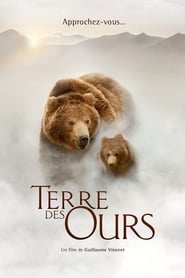
Land of the Bears (Terre des ours)
English 자막 다운로드
릴리스 정보
태그
English 자막 미리보기
처음 200줄입니다.
Kamchatka.
Far away on the edge of the earth,
to the far east of Siberia.
Nature's wildest wilderness.
A spectacle of raw and sometimes brutal nature.
300 volcanoes, 30 currently active,
belching out torrents of lava.
Streams of fire amidst rivers of ice.
A lost land far from man,
far from everything.
One people rule this immense land.
They're out of sight.
But in fact, they're everywhere.
There, at the bottom of the valleys,
in the mountains,
in the heart of the forest,
15,000 to 20,000 bears are still hidden
under a blanket of snow.
They are waiting
for a never-ending winter to come to a close.
Eight months. Eight long months.
In their dens, life has slowed down for the bears.
Only the newborn cubs are moving around - clumsily.
Bears don't live in groups or with a mate.
They live all alone in their own dens.
Along with their mother,
who will take care of them for three years.
The cubs are still unaware of the natural environment
just outside the den -
the snow,
the mountains,
the freezing wind.
They'll have to wait until the spring,
when their mother decides it's time to leave,
to discover the world.
For now, the weather is too brutal.
And yet, in the bitter cold,
one young, inexperienced bear is already out of his den.
He's four years old -
old enough to spend his first winter alone,
away from his mother,
away from the twin sister he grew up with.
He probably didn't eat enough before the first snow
and hunger has brought him out of his den too early.
He has to find food.
His life depends on it.
But how can he do it now that his mother
is no longer at his side to guide him?
What could he find in this vast, frozen land?
Beyond the cols and the volcanoes,
hidden in the heart of the mountains,
there is a place like no other.
If bears could talk, they would certainly recount the legend -
the legend of the Valley of Geysers.
The legend of a fire brewing under the earth,
of hot water gushing from the depths of the earth,
of dozens of steam vents dancing in the wind,
warming everything around it.
Here, it's already spring.
A haven of greenery and warmth appears out of nowhere
in the dead of winter,
and all around it, cold and snow.
The young bear knows the valley.
His mother used to take him there every spring.
So he tries to find the trails he trekked down following her.
And little by little, as he continues to search,
he remembers.
He's getting close.
He feels it.
He was right. The first buds are already out.
He has found the trail leading to the valley.
He can finally eat, graze, and graze again.
He's not eaten for months.
His body has to get used to it again with plants and fibre.
That's all he can digest for now.
But is the young bear really alone in the valley?
No. He senses something.
Like all bears, he's near-sighted
but has a highly developed sense of smell,
and that's how he knew another bear was near,
even before seeing it behind the thick steam
in the heat of the geysers.
He approaches carefully.
It's been months since he's seen another bear
and he doesn't know how this one will react.
This odour, he knows well.
It's the sister he left behind 10 months ago,
before winter began.
The sister he lived with for three years
before they were separated.
The sister he used to play so many games with.
For them, sniffing is like a hug or a kiss.
They're happy to see each other again.
They grab each other, hold on to each other,
hit each other,
displaying both their affection and their strength.
The young bear's sister is with him again.
Now he can fully take advantage
of what the valley has to offer.
Time goes by. It's slowly getting warmer.
And other bears have also found their way to the valley.
A family - a mother and her cubs.
They don't have to worry about anything.
They're still nursing.
The mother bear is very attentive,
constantly on the alert,
and keeps her cubs away from older cubs that are too rough.
All of the other mothers behave the same way,
keeping an eye on the other bears -
the young ones in particular,
whose playful games can turn violent.
And indeed, for the young bear and his sister,
as the days pass,
competition, conflict and brutality
eventually overshadow their affection.
They can't live together anymore.
It's the law of their species.
Inevitably, they separate.
They must accept their destiny -
to live alone, away from the other bears,
away from their family.
Not far away, at the top of the mountains,
a huge 600-kilogram male is also awake.
He's 12 years old and very experienced.
He ate a lot before winter came
and waited for the right moment to leave his den.
He is not in a rush.
He is calm.
His survival does not depend on him finding food.
So he strolls along
and dawdles about.
He enjoys being in Contact with nature again.
The water.
The soil.
The snow.
The trees.
As if he were seeing old friends again
after spending months in his den.
When we see how gracefully he moves,
it's hard to believe that bears have long been considered
as wild, ferocious beasts.
No. Bears are a combination of power and gentleness.
The big bear is calm
and enjoying his solitude, his tranquillity.
In the valley, the young bear seems to be bored.
At his age, it's not so easy to find something to do
when you're by yourself.
He'll have to grow up and learn how to make it on his own.
The young bear passes by the mother and her cubs
one last time.
Maybe he's thinking about his own family...
...and the joyful life the three of them had.
One that he'll never experience again.
He takes one last look at the valley
he spent the latter part of the winter in.
The one that probably saved his life.
He passes through the cols
and goes beyond the valleys and the snow-capped mountains
to roam the enormous Kamchatka territory
and live out his bear destiny.
In the valley,
the big bear knows that it's not time to leave yet.
However, he's unaware of the fact
that his future, and the future of the other bears,
is being determined at that very moment
thousands of kilometres away from Kamchatka.
There, in the depths of the ocean,
the salmon of the Pacific are waiting for a signal.
500 million salmon,
many of which were born in the rivers of Kamchatka.
They've made it to the ocean
and have been growing for four years,
feeding off of the abundant food.
They have reached maturity.
They are now ready for the long, 4,000-kilometre journey
to lay their eggs in the rivers
at the same place where they were born.
How they find their way in the huge ocean
remains a mystery.
But the survival of all the bears from Kamchatka
depends upon that mystery.
The bears have suffered through winter.
They have spent six to eight months in their dens
without eating.
They have had only herbs and roots to eat
for the past two months.
And now they have to wait for the salmon
to swim thousands of kilometres to get to the coast.
Another long month is spent
grazing and wandering about Kamchatka.
The wait is long.
So long.
They're all watching the river,
waiting for the salmon,
waiting for the flutter of a fin,
a sliver of silver reflection.
A body slithering through the water.
Waiting for that first fish.
Hunger has made them irritable and less tolerant than usual.
They have to be in the best position
Land of the Bears subtitles in other languages
댓글
No comments yet. Be the first to leave one.