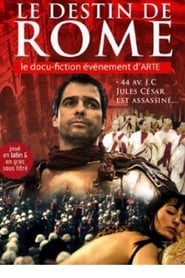
The Destiny of Rome (Le Destin de Rome)
English 자막 다운로드
릴리스 정보
태그
Download English Subtitle Files for Mobile (2)
English 자막 미리보기
처음 155줄입니다.
44BC, the vast Roman Empire stretched
around the entire Mediterranean.
Julius Caesar proclaimed dictator in perpetuity
assumed full powers and governed like a king.
The new regime was despised by the majority of senators
who remained faithful to the Republic.
Cassius and Brutus, leaders of the
discontented, prepared to repost.
On the Ides of March, the 15th,
Caesar's right-hand man Mark Antony accompanied
the dictator to a meeting at the Senate.
In an attempt to save the threatened Republic
Brutus and Cassius assassinated Caesar.
Antony, the second most powerful man in the empire,
had good reason to fear for his life.
Meanwhile Rome was plunged into panic, the city divided
between Republicans and supporters of Caesar.
According to the Plebs a god had been
murdered and Rome was doomed, people feared a bloodbath.
Cleopatra, renowned mistress of Caesar
and pregnant with his son,
discovered the terrible news
and like Antony saw her world crumble.
A few hours after the assassination Antony learned that
Caesar's murderers had foreseen no replacement system of governance,
the Senators plan stopped at killing the tyrant.
Rome's seat of power was vacant,
an opportunity Antony had to seize.
The city slept beneath a blanket of fear, of civil war.
Antony we managed to call a meeting
at a very agitated Senate.
Tension was palpable between
the assassins and supporters of Caesar.
Antony had avoided a civil war, making him
in the eyes of many the man who reestablished public peace.
Filled with great confidence he
demanded the reading of Caesar's will.
Antony had lived and fought alongside Caesar.
He was a military genius who Caesar had left to govern
Italy in his absence, he therefore had good reason to
hope to be strongly favored in Caesar's will.
Caesar's funeral would serve as the ideal occasion for Antony
to convince Rome
that he was the rightful guardian of Caesar's heritage.
At the end of his speech Antony
approached the improvised funeral pyre.
Swept up in a fervor the crowd set fire
to the pyre and threw on arms, clothes and jewelry,
setting the premises of Caesar worship.
Faced with a vindictiveness of the people
Brutus and Cassius were forced to flee Rome
leaving the path clear for Antony.
But they weren't the only ones to depart,
someone else had already gone before them.
Cleopatra returned to Egypt.
The kingdom of Egypt
was the most important country in the East,
the granary of the Mediterranean.
Alexandria was rivaled by Rome alone
and was proud of its port, the biggest in the world.
Cleopatra was free thinking and intelligent,
she knew she was under threat.
At the same time Caesar's heir arrived in Rome.
Octavian was ambitious.
He launched propaganda against Antony,
flattered senators, bought off veterans
and sat to the morale of the legions.
He handed out donations financed by his father's inheritance
to form his own party and army,
asserting his qualities as an adopted son.
Octavian was just 19 years old.
For a year and a half Brutus and Cassius,
still wary of Rome, rallied their legions in the east.
Brutus took control in Greece and Macedonia,
Cassius in Syria.
They hired all the old soldiers they met,
raised heavy tributes and established a
domain which would enable them
to see off their enemies in case of conflict.
Faced with a growing Republican threat
Antony joined forces with Octavian,
despite their marked differences.
They formed a triumvirate with
Marcusemelius Lepidus, Caesar's main lieutenant.
This the so-called second triumvirate
was a legally established authority with power to be shared between the three men
for a period of five years.
Avenging Caesar was the surest
way of maintaining this power.
Many of the proscribed were stripped of their assets
and new taxes were levied, which provided
the money needed to confront the Republicans.
Panic swept through the aristocracy
causing many of them to flee Rome.
The alliance between Antony and Octavian
unleashed a reign of terror.
From then on they would be known as the Caesarians.
They went in search of Brutus and Cassius
across the Adriatic
from Brundisium to Dyrrachium, then onwards to
the plain west of Philippi in Greece.
Antony and his legions were first
to seek out the Republicans,
quick marching his men over 500 kilometers in 10 days,
to the great surprise of their enemies.
Treated as brothers in arms,
his troops pushed on, surpassing their limits.
Antony, Rome's greatest warrior,
was therefore ready to cross swords
with a powerful legions of Caesar's assassins
and to deliver a merciless battle on the plain of Philippi.
Urged on by their leader, a model of high esteem and worthiness,
Antony's legions eagerly embraced the cause
in spite of facing fellow Romans.
Brutus and Cassius took up position
on high ground close to the town of Philippi.
Brutus's camp was protected
by dense forests and steep embankments.
While that of Cassius was bordered
by a seemingly impassable marsh.
Antony set up camp two kilometers away
making do with a desolation of a plain.
The two Republican camps sat either side
of the Via Anyatta, the only road that crossed
the eastern Roman Empire.
From one camp to the other Brutus and Cassius blocked
the road with a rampart and ditch.
About 10 kilometers away was the port of Neapolis,
facilitating communications and refitting.
The well supplied and well protected Republicans
would be capable of waging a drawn-out war, while the
Caesarians had no water and no nearby towns.
Antony asked Cleopatra for help.
She was to send a hundred ships
to Neapolis with reinforcements.
Antony couldn't establish access to the sea
which was indispensable for resupplying his troops.
Cassius built a huge palisade ahead of his camp
to protect his forces.
He believed the natural lie of the marshland
offered further protection to the south.
Antony knew he had to breach Cassius's palisade.
In under 10 days he secretly
built a causeway across the supposedly
impassable marshes, which would enable
him to go round the palisade
and attack Cassius on several fronts.
But Antony wasn't alone, he had been joined
by the young Octavian and his legions.
His mission was to lead a charge on Brutus's camp.
If only he hadn't felt so weak.
Octavian had arrived on a stretcher two days earlier.
Antony gave out battle orders, Octavian was to attack Brutus
but Octavian showed no signs of recovering
from the illness he was stricken with
댓글
No comments yet. Be the first to leave one.