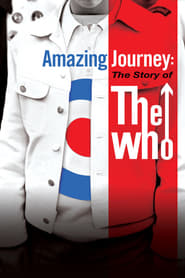
Amazing Journey - The Story of The Who
English 자막 다운로드
릴리스 정보
태그
English 자막 미리보기
처음 200줄입니다.
* I'm not tryin' to cause A big sensation *
* Talking 'bout my generation *
Whatever happened that day when Keith Moon joined
John, Pete and myself on the stage,
something happened.
There are billions of people on this planet.
What the fuck put four
total individuals together
on the stage in Greenford to make this music?
What the fuck did that?
Towards the end of the war, everything was secret.
You never knew whether you were winning or losing,
and most of the time they were saying you're winning when you felt you were losing.
I was born into that world.
I was born in the hour that Albert Speer was arrested.
He was Hitler's premiere architect.
I don't mean war architect. He was an actual architect.
My father got these two messages.
One was "Speer's been captured," and the other was,
"It's a boy, Mr. Townshend."
When I think about my childhood in the late '40s, '50s,
it's almost like the world was black-and-white.
It is very weird.
Very Spartan living.
We were still on food rationing.
No cars in the street.
After the war, there was bombed-out buildings
that had loads of bricks, so we didn't need Lego.
We had the real thing.
Practically everybody I know that I grew up with,
if they were wild and crazy and weird, or in a band,
the chances were that they had some weird shit happen to them when they were kids.
My parents were both working dance-band musicians,
I grew up with the music of my father, which was the Basie Band,
the Ellington Band, and great singers like Sarah Vaughan
and Sinatra and Ella Fitzgerald.
And I felt I couldn't even begin
to emulate or occupy their territory.
We were all interested in traditional jazz at the time.
To me, trad jazz was something
that was already a rebellious threat to the kind of serene
dance-hall dance music that my father played.
The first connection between the four talents of The Whocame in 1959,
at a West London boys' school.
I met John at Acton County Grammar School.
Big guy. Funny.
Very sharply dressed.
John and Pete didn't really get to know one another well
until they started up playing instruments together.
Right from the beginning and right the way through our life,
he was a great musical ally.
-Right over here, and you're, um-- -John.
You're John? And you're from-- London too.
From London too? Yeah.
He was calling himself John Allison
because his girlfriend was, of course, called Allison.
We thought "Entwistle" was a really strange name
for a band member.
And we tried John Brown, and we thought, well, no.
He's John Entwistle.
The Who wouldn't have been The Who without Entwistle.
He would fill the sound up with the bass.
If you actually listen to any Who record
and you isolate the bass, it's pretty astonishing what he's doing.
It's nothing to do with what a normal bass player would do.
* I'm a-gonna raise a fuss I'm a-gonna raise a holler *
Entwistle stood still.
You had Pete swinging his arm around like a windmill.
You had Roger throwing his microphone around all over the place.
Keith smacking away at the drums, and Dad stood away in the corner playing quietly.
* The boss said * * No dice, son You gotta work late *
I used to get cross
that they didn't show John so much on the television.
The cameras were always on Pete and Roge.
He was, like, the central point in the spinning world, you know?
I think a lot of people don't understand is that what he was doing
is he was playing like a Bach organ.
It was huge, massive, rich sound.
So I used to find my way inside there.
I used to sit with John and sit inside,
and he would follow me and support me, and we'd play together.
John had such facility as a player, and really very unique.
I don't think anyone had really gone into lead bass playing.
He wasn't actually a quiet guy.
He was just a very sardonic guy.
Very cynical. He was very funny.
But in that sort of laid-back way.
Entwistle was uncompromising
in leading his own life, you know.
Afraid John takes after me.
I like music, dancing, enjoying myself.
Drinking. I love partying.
I never, ever felt that
John had any addictive problems at all, except one,
which began with an H.
It's a big shop in London called Harrods.
That was his one addiction.
He could never buy one pair of shoes.
He always bought a dozen in each color, and the shirts and the trousers.
He was certainly well dressed.
Don't know about that skeleton fuckin' leather thing though
that John Entwistle was-- What's all that about?
He was very musical right from the age of three.
He knew all the pop songs that were in the charts,
and he'd sing for hours.
My first date with John was to go to a Boys' Brigade thing
at the Albert Hall.
He used to play the bugle.
He joined the school orchestra.
He wanted to play the trumpet, but they didn't have any left.
The only instrument left was the French horn.
He practiced in the loo.
He became quite proficient.
John Entwistle was the only one of us
that kind of had any musical training at all.
He made his own first bass with his own hands, you know.
What he realized was that he had the power
to change the fuckin' instrument.
You know, you don't change the trumpet.
But the bass guitar was relatively new.
He started to play it differently, hold it differently.
Being on stage with a guitar, with a big amplifier,
it became his voice.
I was walking down the road one day, coming home from work.
I worked in a sheet-metal work factory.
I noticed this guy coming towards me who I recognized from being at school.
And across his shoulder, he's got this strange-looking instrument.
So I said to him, you know, stupidly, "What you got there?"
He said, "It's a bass."
They all went to the same school.
Roger was at the same school, but he got expelled.
I think he was accused of setting fire to the school.
Roger was a bit of a tearaway.
It's been said that I was a bully later on in my school career,
but I don't think I actually was.
I just loved to fight.
Still do.
When I first met Roger,
he was one of the most powerful, charismatic,
and literally powerful men I'd ever come across.
You know, he was like Elvis Presley.
Elvis, to me, was the guy I wanted to be.
But realistically, the guy who showed me
that I could, instead of just dreaming about this
could actually go out there and do it, was a guy called Lonnie Donegan.
* Sweet 16, goes to church Just to see the boys *
Lonnie Donegan was a big influence on a lot of people.
It's the rhythm, the beat and the freshness of it.
* She's only putting on The style *
* Yeah, putting on the agony Putting on the style *
It had that kind of rock-and-roll sort of pace to it.
Skiffle is really basically
early American folk songs.
It was so easy. Anyone could make a skiffle group.
You could do it with home objects.
For drums, we had an old washing board.
Tea chest bass, which is basically a tea chest
with a piece of string and a broomstick.
It lifted the music from, like, big bands
into people's parlors.
You could do it yourself, like.
Every street in Shepherd's Bush had it's own skiffle group.
On Fielding Road, Roger Daltrey founded The Detours
with a guitar he made himself at the sheet-metal factory.
At the age of 17 or 18, you know,
he was the king of the neighborhood.
So anyway, I'm walking home from work one night, and immediately
I kind of felt a bonding with this guy.
So I said, "You in a band?" And he said, "Yeah, I'm in a band."
I said, "Have you got any work?"
He said, "No." I said, "Well, we have."
I said, "Do you get paid for your work?" He said, "No."
I said, "We do."
I was lying.
I said, "We're looking for a bass player. Would you like to join?"
Shortly after, Reg Bowen on rhythm guitar left the band,
and John said, "Well, I know someone who's a good rhythm player."
So we said, "Well, bring him along."
John was very important for me because he never let me go.
He could've done. A couple of the other guys did let me go.
John was very encouraging to me and nurturing
and used to constantly say to me, "No, you're a good musician."
He was just vital to me in those days.
By 1962, The Detours were playing pubs as a five-piece--
John on bass, Doug Sandom on the drums,
Pete played rhythm guitar, Colin Dawson singing,
Roger playing lead guitar.
It was Roger's band. The Detours were Roger's band.
Roger was the driving force. Roger supplied all the energy,
and he drove the van and picked people up and arranged everything.
* Some way someday *
* I'll find a way *
* To make you see my way *
In '63, Roger gave up the guitar,
fired the singer and took over as front man.
When there was just the three of us as a band--
just two instruments, Pete and John--
the only thing with strings was Pete and John--
and I remember saying to him, "It sounds fucking great."
* You see my way *
More English subtitles for Amazing Journey - The Story of The Who
- Amazing Journey The Story of The Who 2007 PART1 DVDRip XviD-FiCO · 31 downloads · 2010-06-18
- Amazing Journey The Story of The Who 2007 PART1 DVDRip XviD-FiCO · 28 downloads · 2010-06-18
댓글
No comments yet. Be the first to leave one.