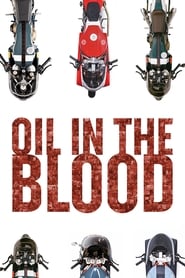
Oil in the Blood
English 자막 다운로드
릴리스 정보
태그
English 자막 미리보기
처음 200줄입니다.
I remember the first time that I got on a motorbike
I just had this incredible sense that I could go anywhere
do anything and you just want to ride and ride and ride.
If I have a bad day, I go ride my motorbike,
if I'm pissed off, I go ride my motorbike,
if I'm happy and it's a great day, I go ride my motorbike.
I think motorcycles are the most interesting
and curious mechanical phenomenon
because you straddle it, you ride it, it's a very intimate experience.
There's nothing like it. I think it just makes the relationship
with this machine, this curious kind of miracle of physics that is a motorcycle.
It makes that relationship a lot deeper.
It gets into your blood in a very real way
but it literally becomes part of who you are
as a human being and it starts to change you
and I think it changes people for the better.
When you can sit in a room with people who have devoted this much of their life
to it and look at what they're doing, you know they've got a screw loose
and they've got the same loose screw that I have.
When you're truly addicted to riding bikes,
like I am, you can't have a bike in the
garage and not ride it. I'm not even making the decision to be able to ride.
If there's a bike there, I'm already gone.
From a logical point of view, there is no reason for a motorcycle
and yet we have these infernal contraptions
which are difficult, uncomfortable, dangerous
and we're fascinated with them.
That's what I connect to now, that's what I feel passionate about,
that's what gets me up every morning and keeps me up late at night.
This two wheeled transport device that is the closest thing to flying.
It really is.
A custom motorcycle really is a piece of
mechanical art in the way that a car isn't
because you look at a car, everything is hidden, it's a body and four wheels.
A motorcycle, you can see it. You can see the engine,
everything is on display so that's a form of art really and doing the custom thing
kind of amplifies that art.
There aren't many ways to express who you are these days you know
it's an era of mass production. Everybody had the same phone,
everybody had the same car. You know, you live in a shoe box in a suburb.
But a bike is saying 'this is who I am, this is me as an individual'.
So this bike here, that was found in somebody's front garden.
It was the perfect example of what we could
take and turn into this bike over here.
The whole point is to work on your own
thing and make it individual to yourself
and not have something that everyone else has got,
to have your character stamped on something you've built.
Yeah there's bits that I've had to make for it.
There's some Heath Robinson stuff on there.
It doesn't function perfectly, it's not the quickest bike in the world
but it's my bike.
Having something unique is far cooler than having a mass-produced motorcycle.
Apparently.
It's about individuality and going into a Triumph dealership,
a Ducati or Harley dealership, and saying 'l want mine a bit like that'
it gives about as much individuality as getting a different colour phone case
for your iPhone, your generic iPhone.
I love seeing people doing stuff that no-one's seen before.
Good or bad, you just make the craziest thing you can think of every time around.
You know, like when people just go way outside the box.
Just throw the rule book out.
What we don't have enough of is actual real individuals
and I think someone like David from El Solitario is a great example
of someone who genuinely is a fucking individual.
I love David as a human being, he can be a total asshole
you know, but I love him to death. He's so genuine.
He's definitely put himself out there as far as bikes go.
His most hated bike was also, I think, his most publicised bike by far.
That BMW Nine T, you know. The thing looks like a shopping cart but
it photographed so awesome and it had so much vibe to it.
When Paul designated this formula, I know the world's most hated
motorcycle I found it really funny so I adopted it because it just made fun of it.
It took some of my grief out. We were a tiny company and suddenly
this huge monster calls us and says ‘hey we want to do a motorcycle with you,
we're going to pay you, you have creative freedom'. I wanted to make them proud.
I thought everybody was going to love it.
I never in my life thought everybody would hate it.
But I also understood, I knew enough that I had done something really amazing.
I just embraced my personality and tried to make a company out of it and
that's like a myth buster and I can... OK let's fuck it up.
I think it's defined very much more by the rider than the bike itself.
Everyone seems to be riding different bikes,
their interests go off in different areas
where there's some into choppers, some into flat tracker, some into racing
is that it's much more of a level playing field. It's less about money and budget
and what you can afford and what you can do.
The people who have spent their time doing stuff,
learning stuff, researching stuff, living motorcycling.
Today if you look at really what's happening in New York,
it's a bunch of $500 Hondas.
They throw the seat away and put a plank of wood on there that's this size
and that's a custom bike. It's like 'yvou go for it dude' and if that's who's
riding by then he's using his bike, that's cool.
I like the fact that people actually... they'll buy a motorcycle and cut it up
and do something and people are always asking 'how do you get started?' and
dude, just make the cut and then you've started.
Breathing life back into a dead engine is creativity by essence.
You breathe life back, you created life where there was no more life.
I didn't expect it to be a culture that
had so much depth on the engineering side
and the artistry and the community.
I think that trifecta is very relevant today.
It's like it doesn't matter if you're a race bike guy or a drag bike guy
or a street bike guy. Nobody judges.
Or some people do but who cares about them.
It's cool when people, they do what they want
and that's when the purest stuff comes out.
This cool thing that's happening, I think we're just really lucky to be around it
while it's actually happening.
The motorcycling world is becoming like an estuary where it's all mixing and
I think all these cultures are coming together
and there's going to be a lot of clashing
and a lot of people are going to hate that
that's happening get over it, it's happening.
The motorcycle world is changing and honestly
I think it's changing for the better.
The new, sort of, custom scene has empowered a lot of people,
it's democratised people to feel like they can make a motorcycle
which is huge because, from the 90s onwards, motorcycles had become appliances
they'd become so good, you didn't need to know how to do anything because
there was nothing to do. If it broke, you couldn't fix it anyway.
If you want to call it a new wave scene, then fine but I would just call it
an evolution of motorcycling.
Originally it was a conversation that John Copeland had with Jeffrey Shad.
There wasn't really a show that showcased
builders in the aesthetic quality that they appreciated.
So just giving a platform and opportunity to have people show off their work.
It's the invitational because we go out of our way to invite someone to showcase
something that they've created, that we really appreciate.
I think good work speaks for itself and it doesn't need to be a certain style,
a certain era, a certain period, you know, amazing work is amazing work
no matter what kind of bike it is.
A lot of people ask that we should get a bigger space, more bike and what not
but I think it's good to have that small amount of bikes, more exclusive,
and also you get to spend more time with each bike to just enjoy.
We want to kind of create the event that we can bridge those gaps,
celebrate the whole culture of motorcycles.
You'll see your Fortune 500 CEO sitting
right next to a Hell's Angel guy and
both of them are appreciating the same thing.
I mean, I never see them in any other context
other than that, things like these shows, like the invitational, do that.
It just forces people to participate in each other's world.
But there's no awards. There's no 1st place, 2nd place, 3rd place.
That's another thing that's cool.
You can't really judge these bikes against each other.
Because they're all so different so to me just being on the list and
having that recognition is just enough. It's all you really want. It's cool.
I think motorcycles themselves are counter-cultural.
They're intimidating, they're aggressive, they're fast, they're dangerous.
Ever since the first bike came, someone wanted to pull it apart, individualise it,
make it faster, tweak it, and put their own personality into it.
Motorcycles are cool, they've always been cool and if you had been alive in 1910,
you would have thought motorcycles were cool
because they were cool and guess what?
they still are cool. We're on this little
tip of the present and there's 150 years
of interesting stuff that's every bit as cool as what's happening today.
There's a history of bike that you need to understand and be aware of
but at the end of the day, you're a free person, you can do whatever you want.
But I think you need an understanding of what's gone on before you in some respect
and then you can make a judgement call on certain things
but if you just ignore everything, you're just a prick.
The historical roots in this, you could go back to after the second world war
in America where all the soldiers came back
and they chopped up Harleys and that's
where the bobber scene came from. In the UK it was from the 60s,
from the Cafe Racers, the Ton Up boys, trying to make their bikes lighter.
It wasn't about aesthetics then, it was making it as fast as possible.
It was back in the 50s/60s where, when there was no surf going on in California
they would get on their Triumphs and BSAs and Nortons and head off into the hills
so that culture moved on and then changing their bikes, adapting their bikes.
In the late 50s, California motorcycle clubs,
especially started to alter their motorcycles
to make them lighter and longer and more elegant and eventually these became
painted wildly and chromed as the 50s went
into the 60s they began to alter the frames
and they became choppers by the early 1960s
as we know them. And the ultimate expression
of the chopper were the bikes that you see in Easy Rider.
Exposure on television in the early 2000s really grew the awareness
for the general public to custom bikes. The Jesse James stuff,
Orange County Choppers, and people like that but 2008,
economic depression, and killed a lot of the custom bike world.
You know, same thing with us, I mean at a point, we're building huge ZX14 or
a Busa stretched thing, they're expensive
machines and then the market collapses,
I remember the photo shoot we were on when the market collapsed. It was a reset.
Customs had become kind of grotesque and then the reset happens
and you have a $1000 motorcycle with $500 worth of money put into it
from a guy who just learned how to weld two
weeks ago and you're looking at it going
... it's compelling. It may not ride for shit but it's a cool looking bike.
It seems like 2008 was the year, there was the big crash,
everybody had all those big bikes and they couldn't sell them.
And it took the whole industry back to square one and I think it made a lot
of us re-think what we were doing, what was important, not to be corny but
I think it brought back the soul of motorcycling.
People were buying cheap Japanese bikes 300/500, whatever the money was
More English subtitles for Oil in the Blood
- Oil in the Blood 2019 1080p BluRay H264 AAC-RARBG · 22 downloads · 2020-06-22
- Oil in the Blood 2019 1080p BluRay H264 AAC-RARBG · 19 downloads · 2020-06-22
댓글
No comments yet. Be the first to leave one.