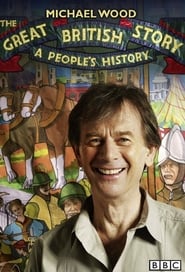
The Great British Story: A People's History
English 자막 다운로드
English 자막 미리보기
처음 200줄입니다.
In the story of the British people we've reached the 20th century.
Our time .
Through civil wars and foreign invasions
the British forged the roots of their democracy .
In the Industrial Revolution they invented the modern world.
Creative and adaptable, they built the first industrial society.
But the British would go through few more testing times than the 20th century.
The last hundred years have seen the greatest changes to our society,
and even to our character as a nation .
Through two world wars we've become a multi-racial country
and a post-industrial nation .
But the British people have remained hugely creative and inventive,
pioneers in technology, arts and sciences .
It's the last chapter of The Great British Story .
As we look at it now, the Edwardian Age, before the First World War,
was the high noon of British self-confidence .
During the previous century, we'd become an industrial, urbanised nation.
Now the power of the people was growing .
Horizons were opening up .
For the first time, the cinema showed us our own image.
But that imperial, industrial heyday was inevitably brief.
As it appears now, an almost incredible adventure
by the people of this small island off the shore of Europe.
The big story for the 20th century through two world wars
was the loss of empire and the dramatic collapse of the heavy industries
on which our wealth depended.
Just as the British people were the first nation in history to become an industrial country,
so they were the first to go through that and come out the other side,
forced now to reshape their identities once more in their history,
as workers, as citizens, and, indeed, as Britons.
The Edwardians ruled a maritime empire .
At its heart was shipbuilding .
And nowhere was that more clear than Glasgow.
To arrive in Edwardian Glasgow was to see the achievements of the age.
But its powerhouse was the teeming shipyards of Govan,
whose population had grown 30 times in three generations.
It was something of gold rush proportions, what took place here.
1864, I think, and a population of 2,500.
It was an idyllic village on the River Clyde
where people came to do watercolours and things.
By 1912, there was 90,000 people living in Govan.
Beyond that, there was people pouring in from outside Govan, from Glasgow, to work here.
By 1914, there were 48 shipyards on the Clyde .
Shipbuilding guaranteed the empire .
And the empire guaranteed the shipyards .
Glasgow really was prosperous when our trade was with America.
That's what built Glasgow.
Everybody either worked in the shipyard
or worked in an associated industry, like myself.
I started off in an engine works,
building engines for the ships.
We probably thought it would always last, but obviously it hasn't.
And what was made here was not only ships but an identity,
a solidarity in labour,
a pride in being a shipbuilder .
As in Belfast and on the Tyne,
in a few generations shipbuilding became part of the people's DNA.
Country folk mixed with traditional city-dwellers.
Eventually they merged to become a completely new tribe.
What were they? The Clydesiders.
They became Clydesiders.
From whatever Govan was before then, they came there.
They almost formed a different nation.
That is astounding, isn't it?
And shipbuilding meant more than earning a living.
It was something heroic -
the sum of a community's creativity .
The ship's just being launched.
It's gathering speed.
The drag chains hit.
The sound is horrendous.
It drags the ship right back.
That's her born.
She's born, ready to deliver.
It's a rush of adrenaline.
It's the apex of satisfaction. Remember, you built the ships.
You built yourself and your friends up for the day of the launch.
It's gone in and it hits the water.
And you say: Done it!
This was the time when the British defined themselves by their industry.
At Halesowen in the Black Country
in the workforce there were people whose ancestors had worked metal in Tudor times.
Grandad did it and my dad.
My brother works here.
He works in that department there.
All his brothers have worked in the steel as well, my dad's brothers.
Quite a few of them.
My father worked here, my grandfather worked here.
My uncles worked here.
I've also got a son here at the moment.
My great-grandmother worked here during the war.
She used to drive the crane.
The greatest expansion here was before the First World War.
3,600-ton steam hydraulic press.
How about that?
The old folks in Halesowen used to say that you could hear this wheezing and thumping
and feel it shaking the ground,
all the way through the night when they were on big jobs.
Britain's pre-eminence was reinforced by a sense of British identity.
The values of British society - hard work, deference, patriotism -
were articulated in a myriad societies, mechanics'institutes,
sports teams, Boys'Brigades, working men's clubs.
Together, at work and play, the British knew who they were.
And tennis rackets. But I didn't bring them today.
I didn't know what you wanted.
A wonderful archive of stuff.
A crucial social role was played by organised sport.
And the British, of course, had invented the rules.
They actually won the Suffolk Senior Cup.
I think they also beat Ipswich Town, as well.
Fabulous. Yeah.
That's the gardening club.
The gardening club?
Fantastic. These are amazing social documents.
Oh, yes.
The Cycle Volunteer Force.
First World War period. Yes.
I could name all those people.
But across Edwardian Britain, there was still a huge gulf between rich and poor.
In 1910, the chainmakers of the Black Country went on strike.
Now, pin back your ears and I'll sing you a song
Of a town that is dear to my heart...
The chainmakers were a cottage industry unchanged since the Industrial Revolution.
And everyone's mad about darts
They worked in conditions almost impossible for us to imagine now.
And the most exploited were the women .
Where factory wenches line all the park benches
Cradley Heath means home to me
If you was a chainmaker, how would you have felt and why?
You'd have felt as if you was a slave.
You worked 12, 13 hours a day
for next to nothing.
No wonder they was angry.
I get five shillings a week for what?
Working from seven o'clock in the morning till seven o'clock at night.
They had to buy their coal and their metal from a fogger.
Some foggers actually boasted that they could sell metal to the women
and then buy the made chain back for cheaper than the constituent components.
And in Edwardian Britain, women still didn't have the vote.
Any one of you that goes out on strike, you'll never work again!
The press called it "white slavery in the Black Country".
They didn't get a living wage or working wage. They were on starvation situation.
The first strike to appear on cinema news in Britain
was led by a young Scot called Mary MacArthur.
This hopeless, despairing struggle for survival will go on
unless we gather our strength and our determination
and we move as one.
Let us take to the streets and make our voices heard!
For freedom and the right!
So one side of life in Edwardian Britain was class struggle.
The first ten years of the century saw bitter strikes
and unemployment marches,
the rise of trades unions .
And from 1900, a Labour Party,
all fighting to better the conditions of the people.
And in no area was that more important than women's rights.
The Suffragettes were battling against one of the worst injustices of British society -
that women still didn't have the vote.
Women's franchise movements had a long history in Britain,
but now they found a national voice,
despite, at times, brutal repression .
But democracy was put on hold by the First World War.
Across the country the war had mass support, even in Ireland,
which was still then a part of Britain .
It was working-class patriotism that made the volunteer armies
in the first total war .
From the riveters and platers of Ulster, Tyneside and Govan
to the miners and steelmen of South Wales,
Britain lost nearly a million men .
No place in Britain was untouched .
The First World War is still a mystery .
Why a prosperous country at the height of its success,
the source and agent of wealth and civilisation,
chose to risk all in such horrors
and to create a lost generation .
In the industrial cities, where unemployment was already high on the eve of war,
the government encouraged volunteers from the same towns, the same streets,
so friends would fight together .
Pals .
One of these Pals battalions came from a small Lancashire cotton town -
Accrington .
On the first day of the Somme,
out of 700 Accrington Pals 235 were killed
and 350 wounded .
He's your grandad? He's my grandfather, yes.
An what happened to him?
He got killed on the Somme
on July 2nd, 1916.
They worked and played together and they died together.
Do you know what actually happened to him?
They just said he had "no known grave".
His body was never found.
All they can say is he went missing on that day.
There's a lot like that.
How it could have happened is still impossible for us to grasp.
The amount you just see here, on one panel, on one wall.
Sad. It is sad, isn't it?
Very sad.
Honestly, I'm a grown man, 76, and it brings tears to my eyes.
I know I'm very proud of him and all those who served and died with him.
More English subtitles for The Great British Story: A People's History
- The Great British Story S01E04 Most Releases · 39 downloads · 2020-01-18
- The Great British Story S01E07 Industry & Empire Most Releases · 41 downloads · 2020-01-18
- The Great British Story: A Peoples' History Complete (8 Episodes) Most Releases · 43 downloads · 2020-01-18
- The Great British Story S01E02 Tribes To Nations Most Releases · 33 downloads · 2020-01-18
- The Great British Story S01E06 The Age Of Revolution Most Releases · 44 downloads · 2020-01-18
- The Great British Story S01E03 The Norman Yoke Most Releases · 34 downloads · 2020-01-18
- The Great British Story S01E05 Lost Worlds & New Worlds Most Releases · 40 downloads · 2020-01-18
- The Great British Story S01E01 Britannia HDTV MVGroup · 41 downloads · 2020-01-18
댓글
No comments yet. Be the first to leave one.