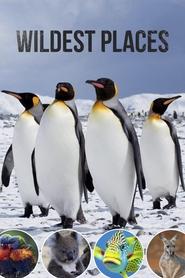
Wildest Places
English 자막 다운로드
Download English Subtitle Files for Mobile (4)
English 자막 미리보기
처음 200줄입니다.
Antarctica, a vast, icy desert.
In terms of rainfall, it's the driest place on Earth,
and yet the Antarctic holds more than two-thirds
of the planet's fresh water.
With plunging temperatures and powerful winds,
our southernmost landmass is an unrelenting habitat,
but life persists and thrives.
Once part of a connected southern supercontinent,
Antarctica is now isolated by a current
so powerful it creates undersea highways
back to each and every continent,
where extraordinary lifeforms answer the call of the seasons
on icy islands and on a land frozen by time.
This is the Wildest Antarctic.
Antarctica is surrounded
by the strongest ocean current on the planet.
It's a force that extends right from the surface
all the way to the sea floor.
It's one of the many variables
that keeps this continent isolated
and the coldest place on Earth.
Antarctica spans the South Pole some 15 million kilometers,
roughly the size of the United States and Mexico combined.
Here temperatures can plummet
as low as 90 degrees celsius below zero.
It's also the windiest place on Earth.
Wind speed on one cape has been measured
at over 300 kilometers an hour.
Some valleys have not seen rain in some two million years.
Antarctica was once as warm as modern California,
covered in lush forest and roaming dinosaurs,
when it was still joined to Africa,
South America, and Australia
in the ancient supercontinent of Gondwana.
Since freezing over completely some 20 million years ago,
ice has locked in huge mountain ranges,
frozen lakes in time,
and created enormous glacial structures.
The Antarctic Circumpolar Current
perpetually moves eastward some 21,000 kilometers.
It carries 170 million cubic meters of water every second.
It's the equivalent of 68,000 Olympic swimming pools.
The circumpolar current connects the world's oceans,
influencing currents to the north
and creating pathways for polar inhabitants
to travel to other shores.
Currents determine where this
extraordinary marine life will travel,
where they will mate, raise their young, and hunt.
These currents touch on the southern capes
of our continents, the countries where
lions share borders with penguins,
kangaroos overlook seal colonies,
and orcas stalk beaches under the South American sun.
Antarctica appears to have less animal diversity
than other regions, but the surprisingly varied terrains
force each group to adapt in different ways.
Brown Bluff is on the Antarctic continent itself,
near the tip of the Antarctic Peninsula.
The peninsula is a long arm of land and ice
that reaches out toward South America.
Excluding islands, it's Antarctica's
closest point to any other continent.
The bluff itself is a towering basalt and lava cliff
rising up from the beach.
The rock is a remnant of a massive ancient volcano
that erupted through ice over a million years ago.
The brown cliff is peppered with glass,
a result of the intense process of lava rising and cooling
so quickly in subglacial conditions.
It overlooks a three kilometer long bouldered beach.
Vegetation is sparse.
Lichen and moss cover rocks well up into the cliffs,
favoring areas of fresh water runoff
from the melting glaciers.
However, it's difficult to get a glimpse
of the terrain at Brown Bluff, as it's covered in these:
Adelie penguins.
East Antarctica is home to six million Adelies.
The few kilometers of Brown Bluff
is one of the largest colonies,
around 20,000 breeding pairs.
At 70 centimeters tall,
the Adelie is precisely mid-range
when it comes to penguin sizes.
Adelies have white rings around their eyes.
There isn't much noticeable difference
between males and females.
There are almost 20 types of penguin worldwide,
but only four of them actually live
on the Antarctic continent itself.
Adelies have soft feet with sharp talons,
designed to walk across ice and rocks
and to scale the steep slopes of these beaches,
though the cliffs here are more difficult than most.
In October, the start of the Antarctic warming months,
male Adelies come ashore in droves.
The transition from porpoising in the sea
to stumbling on land is less than graceful,
but this is the last leg of a race
to reach the Bluff Beach as soon as possible.
How quickly they can get to work
will have an important bearing
on their breeding season ahead.
The Adelie males make the opening courting overture
by building a nest.
Their goal is to woo a female
with the largest nest possible.
However these penguins aren't exactly
spoiled for choice when it comes to building materials.
The nest is simply a pile of small rocks
collected from the beach.
But it's where they stack their nests
that adds that little extra appeal.
The higher up the bluff, the drier the nest
and the more likely the female is
to choose that nest builder.
The long march from shore to the higher sites
can quickly become crowded
with industrious males and appraising females.
These penguins are not above stealing
from their neighbor if the opportunity arises.
When Adelies have paired off and laid their eggs,
both parents take turns at egg sittings.
They need to remain vigilant.
The further the penguins are from shore,
the safer they are from sea predators like leopard seals,
but they are closer to threat from above:
the Antarctic's ultimate predator from the air, a Skua.
Skuas are a large south polar bird.
They can reach lengths of more than half a meter.
Ferocious anglers, they'll hunt
fish and crustaceans close to shore,
but in the penguin breeding months,
eggs are a seasonal bounty.
It only takes one parent to be fishing at sea
and the other to take a brief break from nest duty
for a Skua to seize opportunity.
The Adelie sees the Skua at work
as it returns uphill to its nest.
There's only time for the briefest of pauses.
Adelies usually lay two eggs,
and there's still time to get back to the other.
An heir and a spare is the breeding
strategy of these penguins.
One chick will hatch just days ahead of the other,
but it will use the slim head start to full advantage.
The elder sibling dominates the nest.
It stands over the later arrival,
reaching in to the adult beak
for the best morsels of food.
It even maneuvers into position
to stay closest to the parent's warmth.
Often both chicks survive,
but if food is scarce the stronger one will be favored.
It takes just a few weeks for the chicks
to put on weight and reach half the size of an adult.
When parents change the guard for fishing and feeding duty,
they do so with noise and celebration.
This serenading ceremony of welcome and farewell
is thought to strengthen the pair bond
of the dutiful parents.
The males are also showing how robust they are.
A penguin can lose weight faster
in these long days without food.
A fat penguin is a noisy and healthy one.
With the bulk of nesting left to the males,
they'll lose weight in the early days of parenting.
By three or four weeks of age,
the Adelie chicks are large enough to be left on their own,
but their growing girth means they are ever hungry.
Both parents must go to sea now to hunt enough krill
and fish for themselves and their brood.
Warmed by thick brown jackets of down,
the chicks bide their time waiting for their next meal.
When their parents are away, the chicks form
tight creches to deter predators.
This is the Antarctic equivalent of a daycare center,
complete with guardian adults
making sure wandering youngsters stay put.
A freshly returned adult with a beak full of food
is always welcomed, at times a little too heartily.
It's difficult to distinguish one Adelie chick from another,
even for an Adelie parent.
To ensure it's feeding the right chick, their own,
an adult fending off a feeding horde will move backwards.
Usually the impostor will back away.
Sometimes a parent knows best
and will berate the unrelated chick.
At other times, it's just too difficult to tell.
Running away entirely from the hungry mouths
is simply the easiest option.
As summer darkens and daylight hours dwindle,
the falling temperatures signal
it's time for the Adelies to move on.
The brown feathers of the youngsters
are replaced with the highly waterproof feathers
these birds will need to explore
the environment they were born to live in: the sea.
After just seven weeks, the fledglings
More English subtitles for Wildest Places
- Wildest Places S02 WEBRip x264-ION10 · 8 downloads · 2020-05-02
- Wildest Places S02 WEBRip x264-ION10 · 9 downloads · 2020-05-02
- Wildest Places Antarctica S01 WEBRip x264-ION10 · 7 downloads · 2020-05-02
댓글
No comments yet. Be the first to leave one.